26 Things Economic Developers Need to Know This Week
The stories Dane thinks you need to see. April 9, 2026 edition.

Welcome to this week's issue of What Economic Developers Need to Know This Week, where we collect links, charts, and ideas about the economy and place.
This week: 26 stories, graphics, and rabbit holes that are mostly relevant to economic development.
If you are wondering what to do with the info in this newsletter: send one item to a board member who still thinks "economic development" is mainly a jobs number and a ribbon cutting.
Today's email is brought to you by Resource Development Group
Resource Development Group and Convergent Nonprofit Solutions have recently announced a merger of these two well respected firms. RDG is now operating as Resource Development Group, a Convergent Company and will lead the combined operations in economic development and chamber engagements. Meanwhile, the Convergent banner will take the forefront on efforts on supporting traditional philanthropic and higher education organizations
This merger maintains RDG's innovative and custom approach while also creating the deepest bench of economic development and chamber fundraising expertise in the industry, the most complete data set in the country regarding economic development and chamber funding, and the greatest flexibility to be able to support engagement models tailored specifically to every market, regardless of size.
Whether you’re a single county EDO ready to kick off your first fundraising campaign or a large regional organization on your third funding cycle, they have the team and experience to get you the results you’re looking for.
This Week On Econ Dev Show
1) Economic Development and Developers in the News # 238 - Econ dev news from 30 economic development executives and organizations in 19 states.

2) Podcast 214: The Bermuda Triangle of Economic Development with David Parker - When your niche is so good there’s no competition

3) 25 New Economic Development Jobs This Week - In 14 states, from $43k - $224k

4) 21 Things Economic Developers Need to Know This Week - The stories Dane thinks you need to see. April 2, 2026 edition.
5) Economic Development and Developers in the News # 237 - Econ dev news from 112 economic development executives and organizations in 39 states.


Most weak property marketing starts with weak site data.
How Strong Is Your Site Data?
Sitehunt has a free tool to help you find the gaps in your site data before a site selector does.
Upload your spec sheet, brochure, or property handout and get a review of what’s strong, what’s missing, and what a site selector would still need.
Strategy, Sites, And Industrial Geography
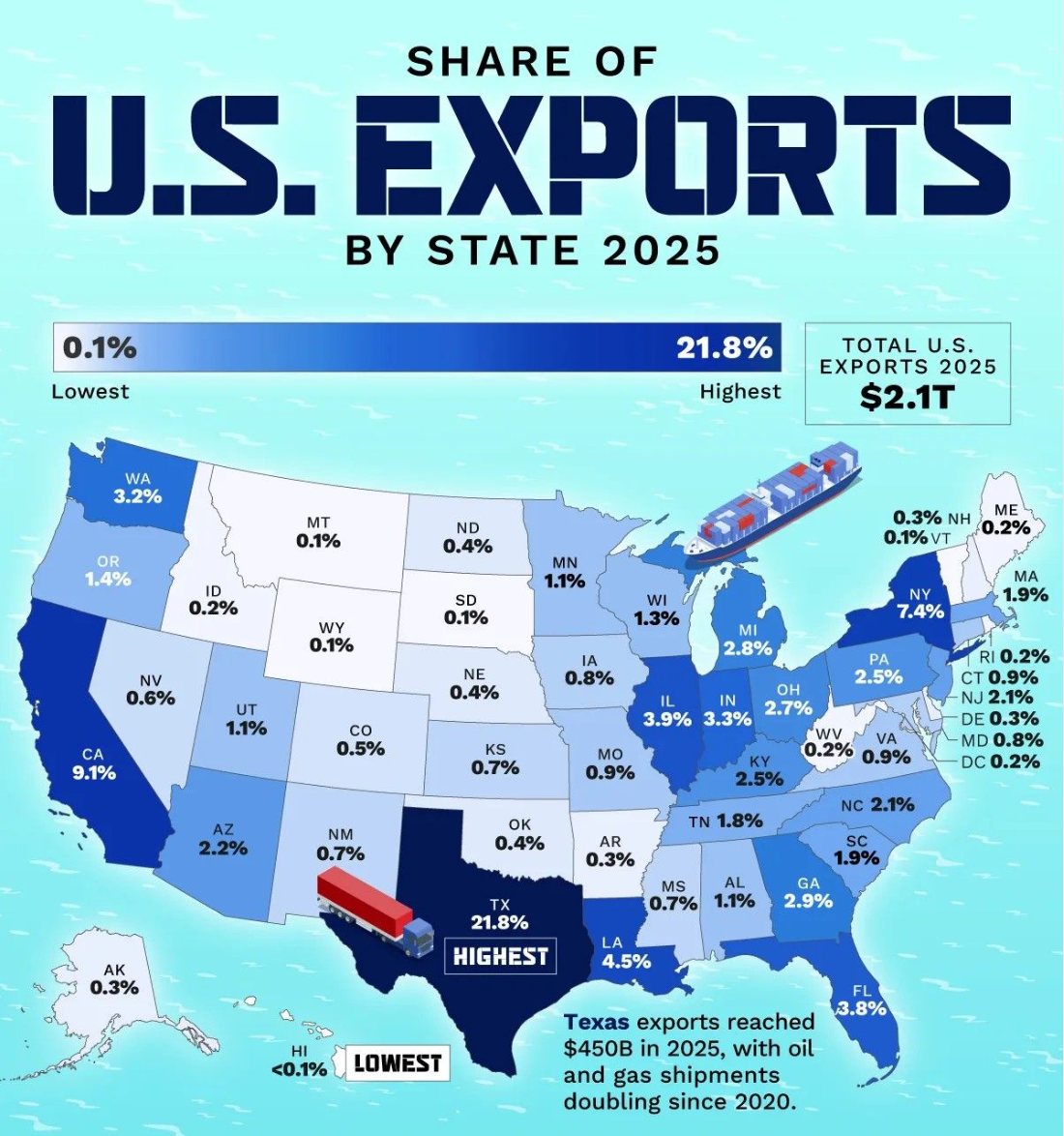
6) Export hubs: A useful land-market reminder, trade flows often tell you more about future industrial demand than raw population growth does. If goods are moving, warehouses, suppliers, and land absorption usually follow.
7) 40th Annual Corporate and 22nd Annual Consultant Site Selection Survey Results: The big shift is from low-cost chasing to operational certainty. Power availability, transmission capacity, permitting, and ready sites are now table stakes instead of nice-to-haves.
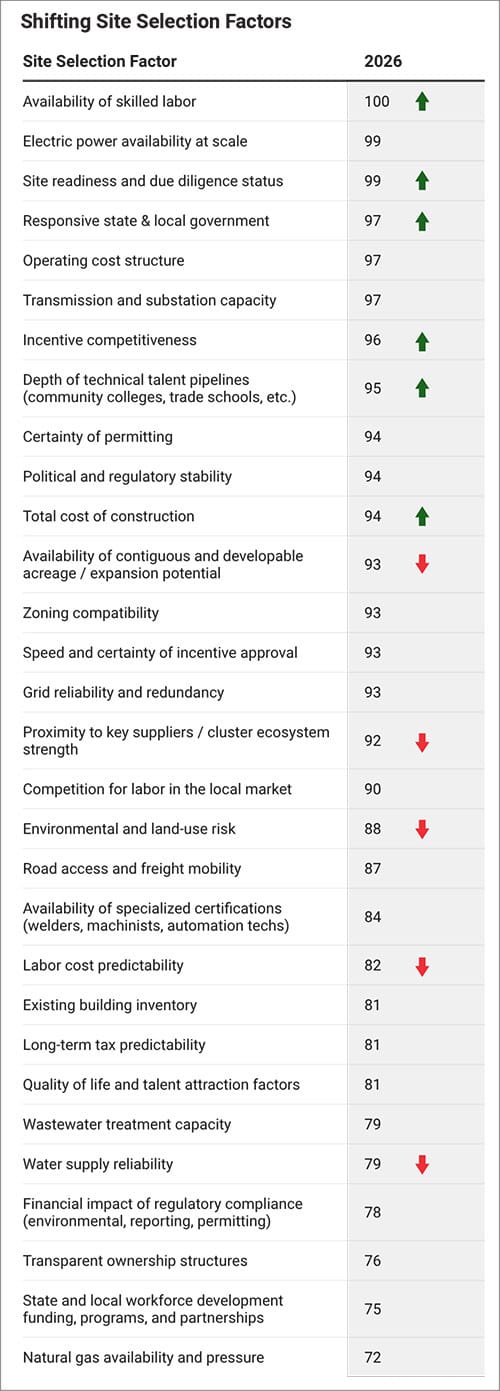
8) Jennifer Wakefield on Site Selectors Guild takeaways:
The rules of economic development are changing fast. For years, we’ve measured success in jobs. More jobs = better project. Simple. That’s no longer the full picture.Today’s most competitive projects (data centers, advanced manufacturing, defense) are bringing massive capital investment with fewer jobs. And the site selectors in the room said it plainly: ➡️ If we’re only measuring success by job count, we’re missing the real story.
9) Houston is still proving that the physical economy matters: The places that can still make, move, refine, and export things have more gravity than a lot of coastal narratives admit. Read: Houston Just Crossed a Threshold Nobody Saw Coming and The Prophet on X.
10) In Japan, the robot isn't coming for your job; it's filling the one nobody wants: A good piece on physical AI as a labor-shortage response, not just a tech demo. For economic developers, that means robotics adoption is becoming part of factory, warehouse, and infrastructure strategy in aging labor markets.
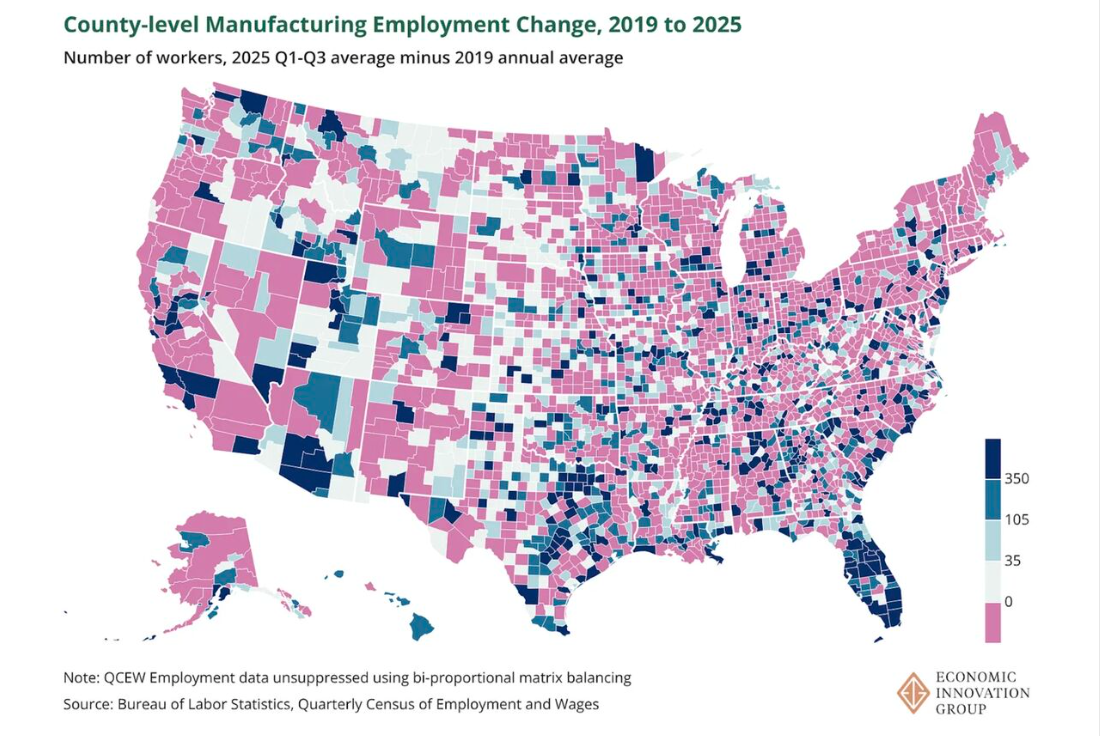
11) Brad Hargreaves on the manufacturing renaissance: The headline stat is brutal and useful, 354 counties account for 83% of manufacturing job growth since 2019. If your region wants in on the next wave, housing capacity and development speed matter as much as the factory recruitment pitch.
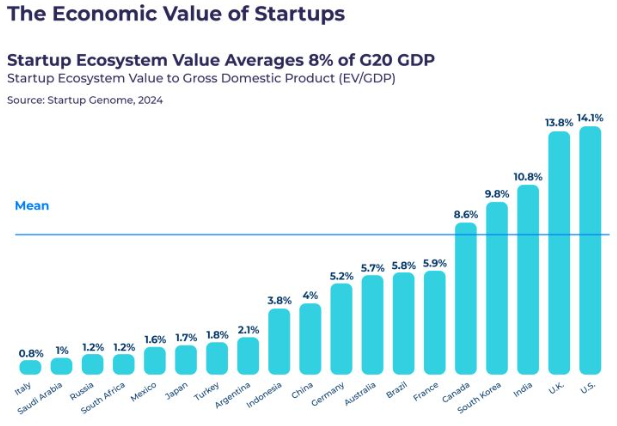
12) Jay Jayamohan on entrepreneurship and job creation: This is basic but worth repeating, young firms create a disproportionate share of net new jobs. If all of the local oxygen goes to chasing outside firms, you are probably starving the places where the next local employers come from.
13) U.S. Metro Economic Health Report rankings: A nice metro scoreboard to browse.
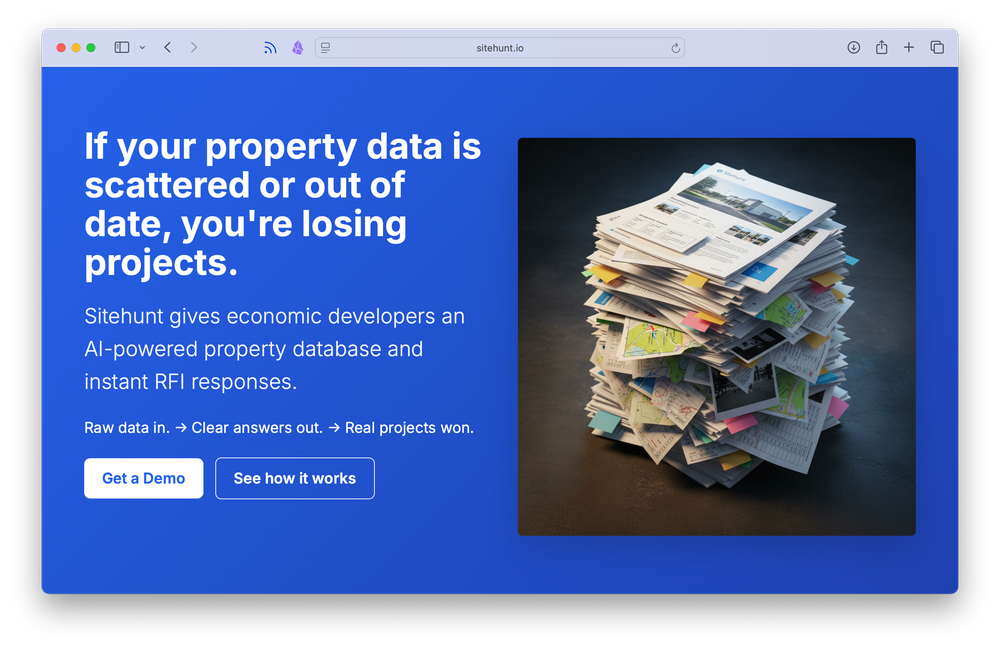
Stop managing sites in a spreadsheet disguised as a map.
Most tools help you store property listings and make them look good online. Sitehunt actually understands your sites. It pulls together infrastructure, utilities, zoning, and regional context from millions of real data sources to build a complete picture automatically. No manual data entry. No guessing. No chasing down answers when a project comes in.
When the RFI hits, speed wins. Sitehunt doesn’t just display your sites, it evaluates them. You can match properties to project requirements, answer detailed questions instantly, and move from “we think this might work” to “here’s exactly why it works” in minutes. While others are still assembling information, you’re already submitting a complete, confident response.
Place, Housing, And Community Signals
14) Top 100 Best Places to Live in the U.S. in 2026: Livability is leaning harder on cost of living and housing this year, which is directionally correct. The more interesting question for economic developers is how many places can still market quality of life without immediately running into a housing-supply wall.
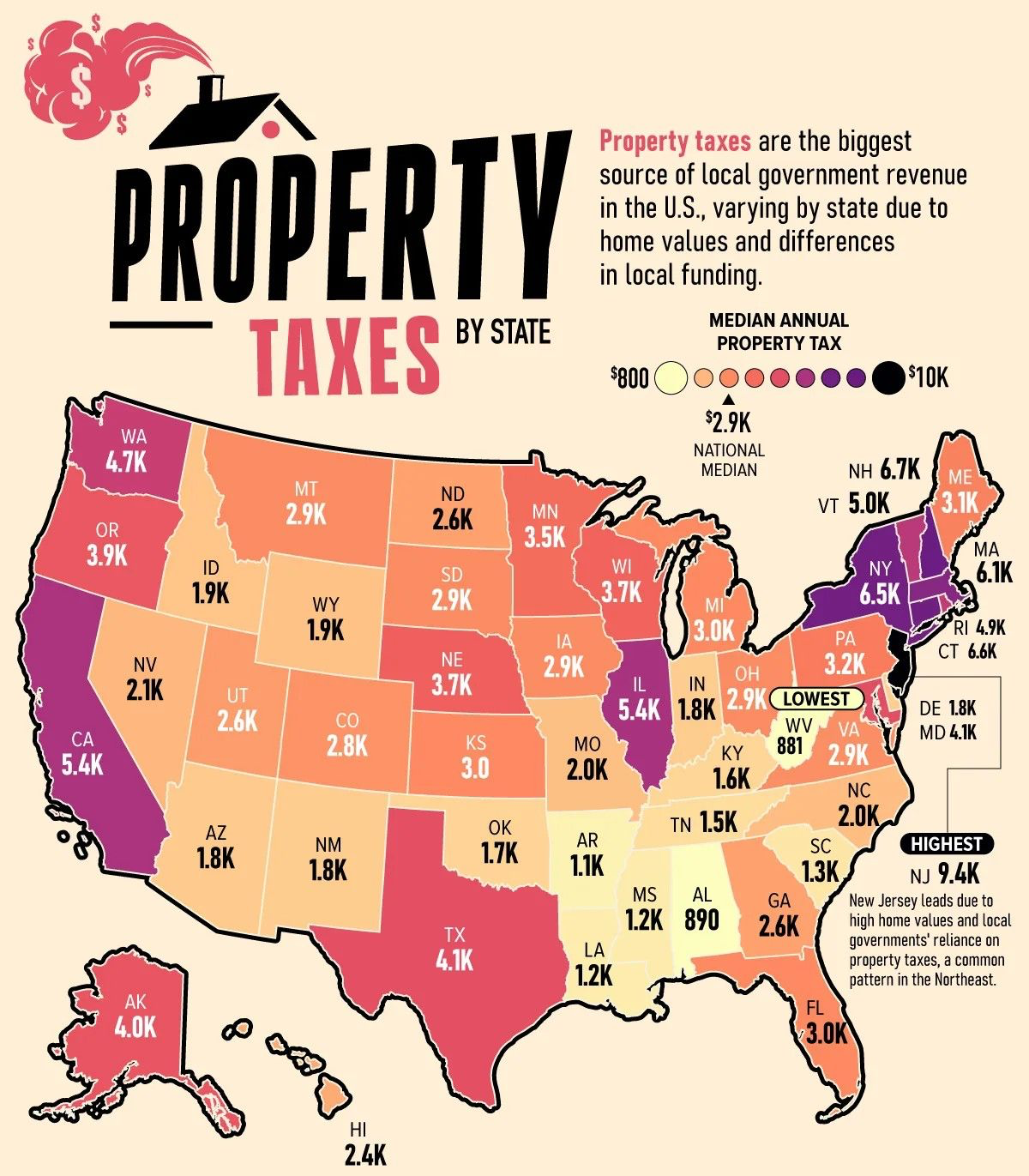
15) Rural population change is still a migration story, not a birth-rate story: Nonmetro counties only grew because in-migration offset natural decrease, and the new Datawrapper map is a good county-level companion. The broader lesson is that retention and attraction can still beat demographics, but only unevenly and not everywhere. Read: Rural Counties: New Arrivals Offset Natural Declines for Fifth Consecutive Year and explore Net migration of taxpayers, 2022-2023.
16) Changing a city one house at a time: A local pastor and volunteers built a house-ranking spreadsheet, started with easier wins, and got to roughly 48% improved citywide. It is a good reminder that neighborhood turnaround often starts with boring inventory work and people who will actually keep showing up.
17) Community Identity Is Your Most Underrated Economic Asset: Jim Gibson’s core point is right, identity lowers transaction costs. Places with stronger shared norms and clearer internal stories make it easier for firms, residents, and institutions to coordinate.
18) The Rules We Wrote, The Cities We Lost: The argument is that a lot of American urban decline is not cultural destiny, it is compounding regulatory friction that makes normal building and normal entrepreneurship too hard.
19) Is Tourism Economic Development?: The useful answer here is "sometimes, if it is organized like a system and not just a festival calendar." Tourism can matter, especially in smaller places, but only when somebody coordinates the regional product and the connective tissue.
AI, Data Centers, And The New Incentive Politics
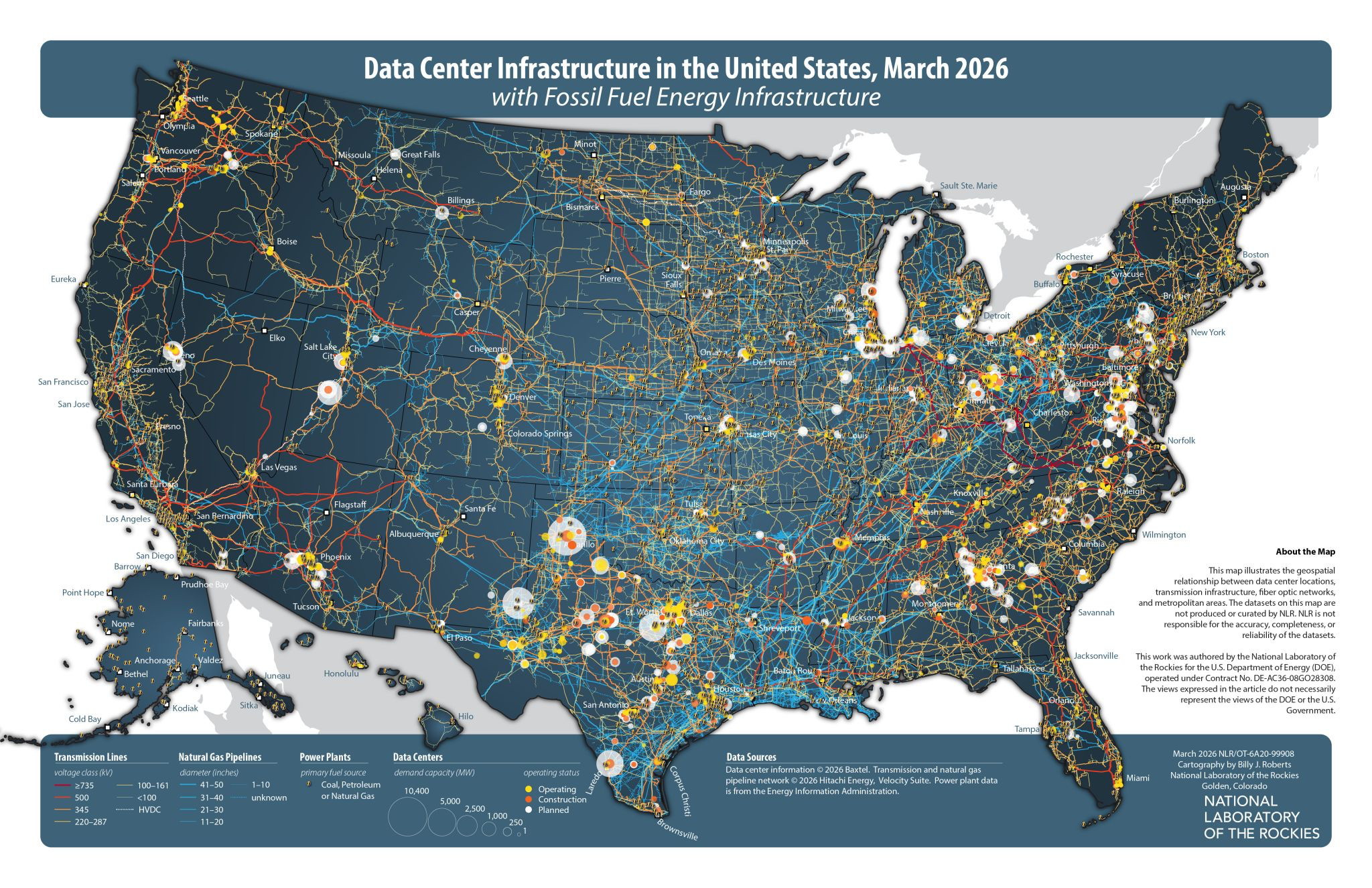
20) Subsidizing Servers: How States Are Competing to Attract Data Centers: NCSL says 38 states now offer dedicated data-center incentives, but the politics are getting harder. Lawmakers are starting to add energy requirements, wage rules, clawbacks, and in some cases repeal proposals because the tax cost and grid pressure are no longer abstract.
21) Industrial Policy for the Intelligence Age: The paper is basically arguing that AI policy cannot just be about invention, it has to be about worker transitions, portable benefits, regional deployment capacity, and spreading the upside beyond a tiny set of firms and superstar places.
22) AI Is Exposing America’s Broken Jobs System: Nicholas Lalla makes the cleaner civic version of the same case, America never really built a modern jobs system that can handle large transitions well. If AI accelerates layoffs and job churn, local economies need intermediaries, labor-market intelligence, employer-linked training, and faster benefits systems.
Charts, Costs, And Rabbit Holes
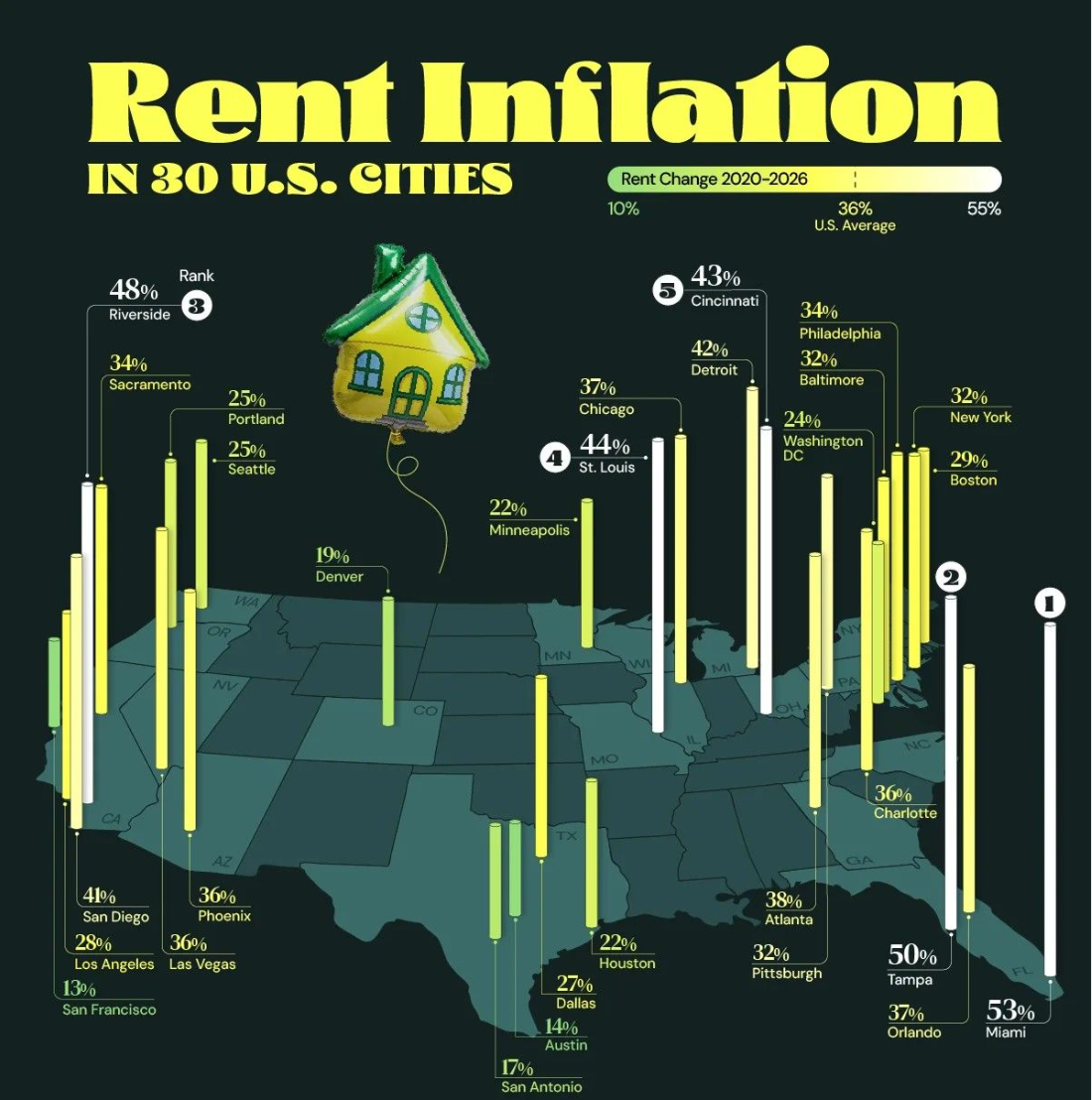
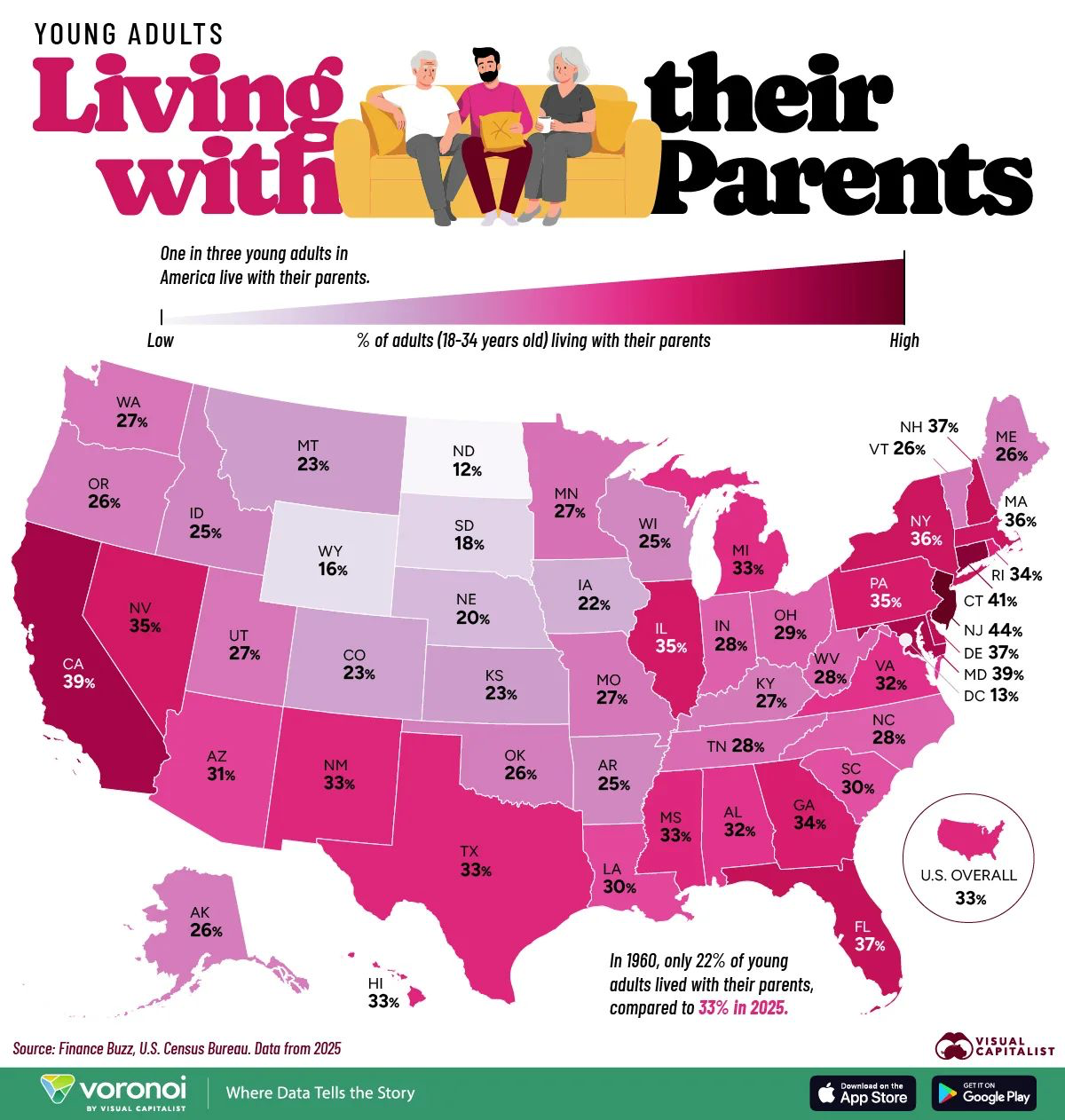
23) Housing pressure is showing up in more than one place at once:
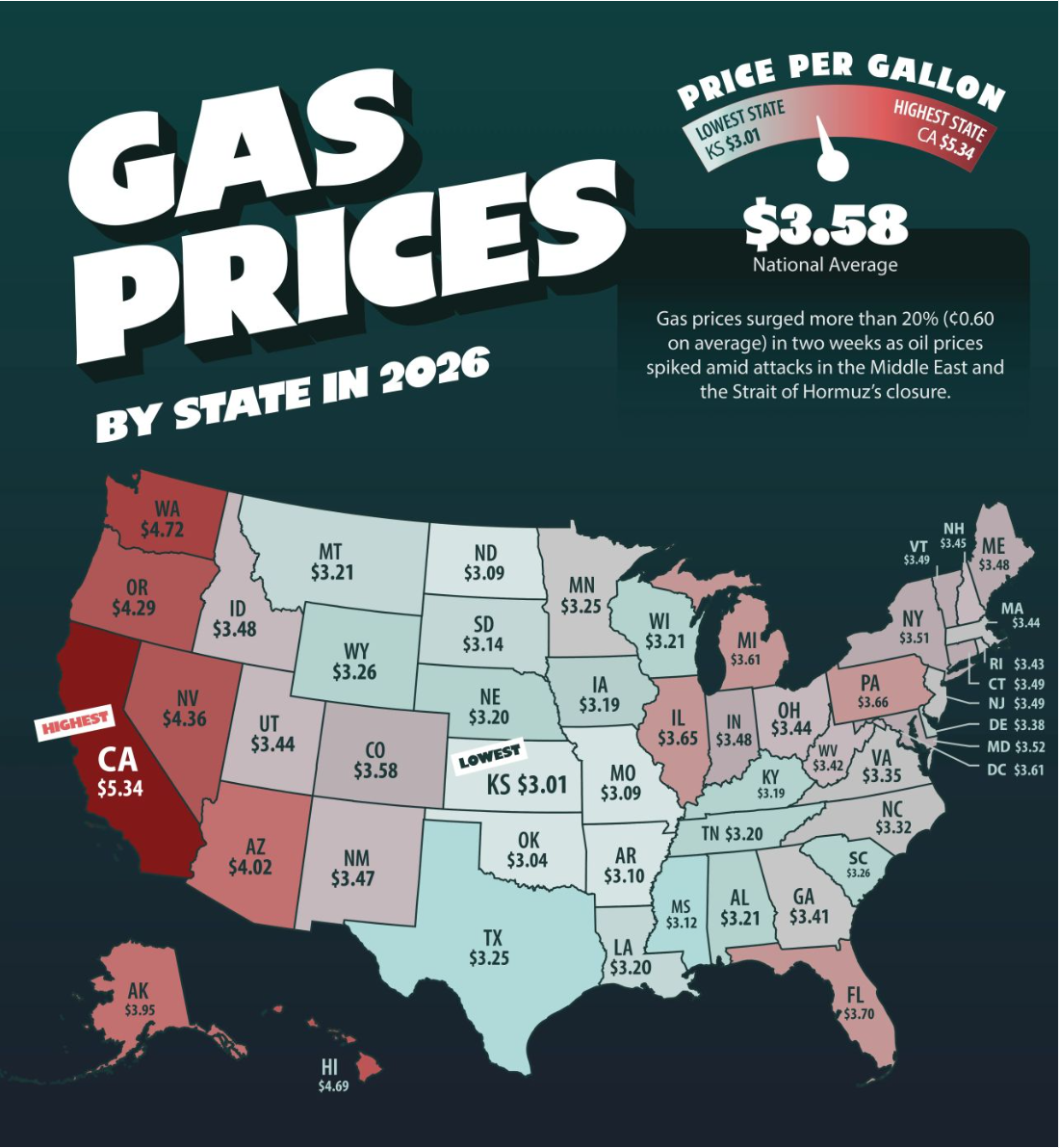
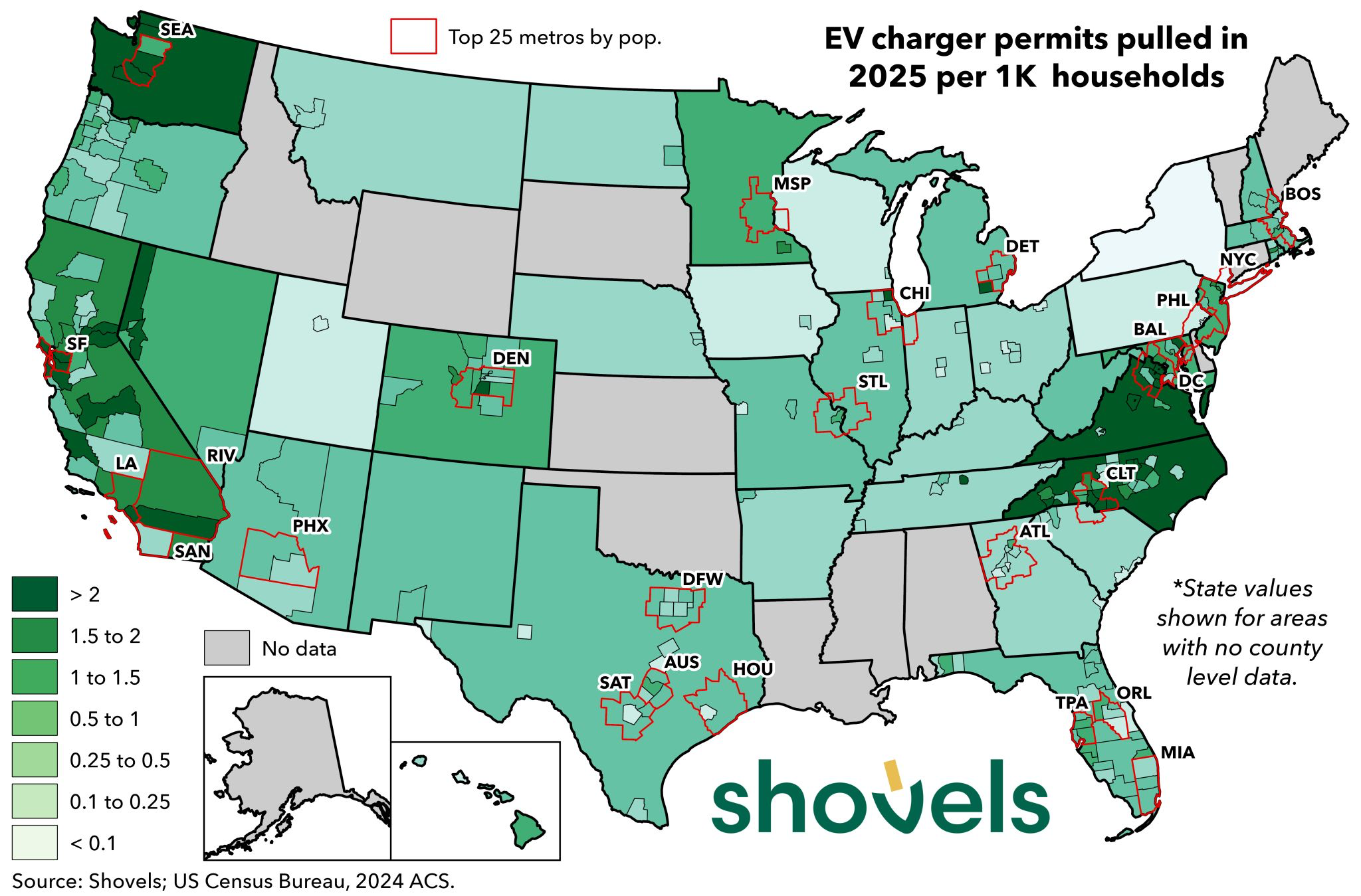
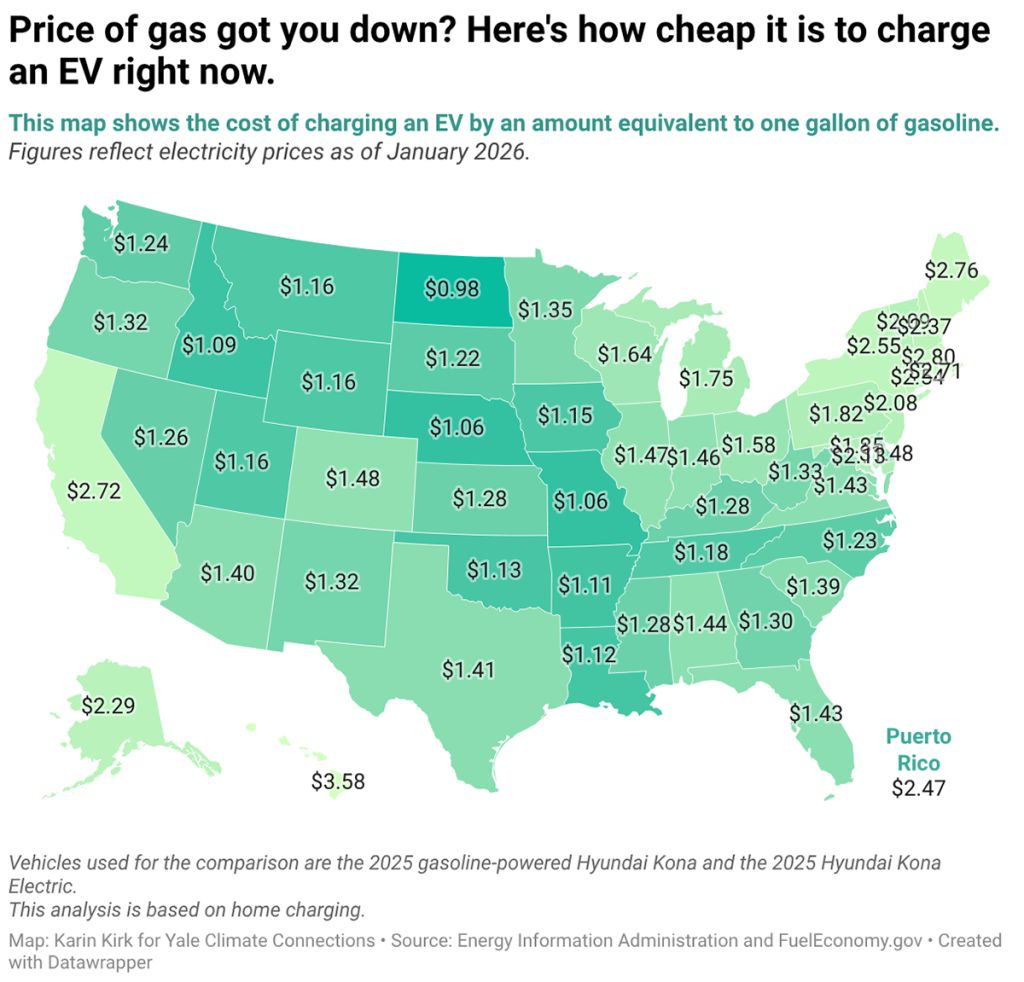
24) Energy and transportation costs are still reshaping geography quietly:
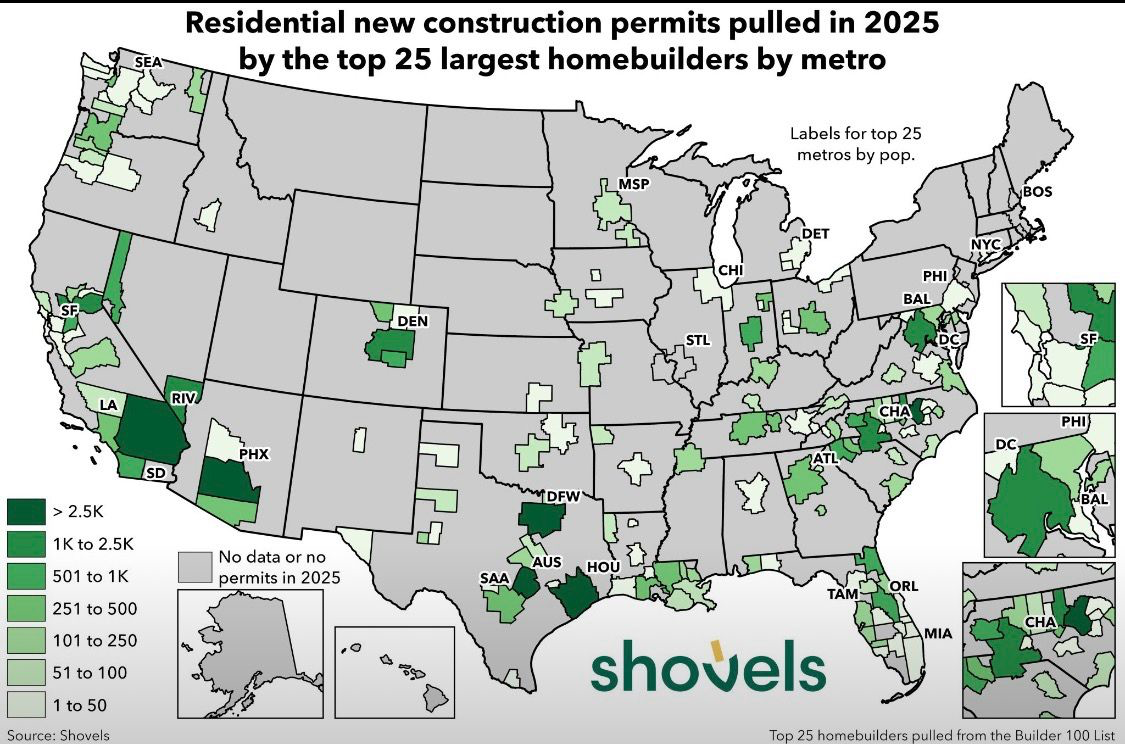
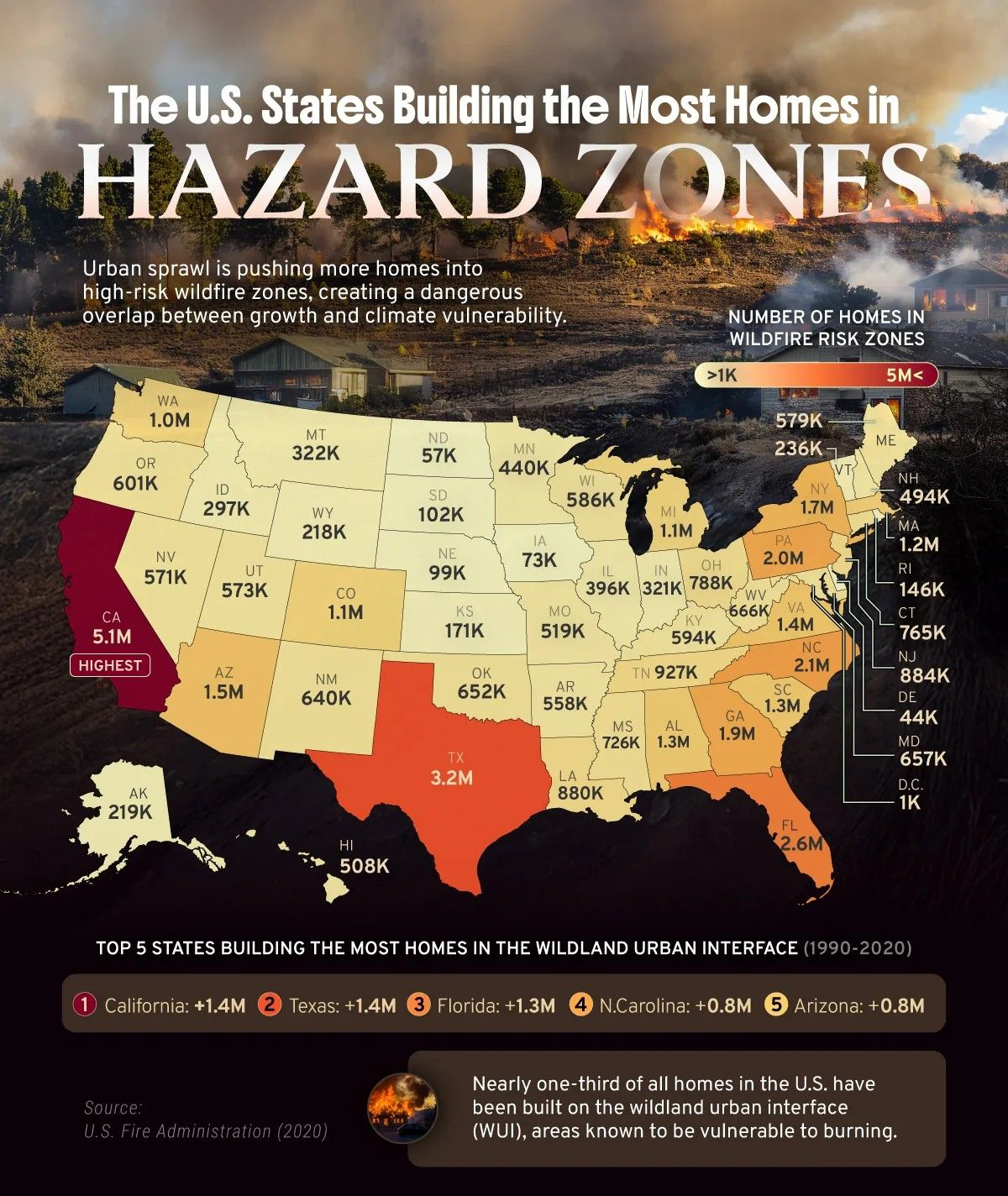
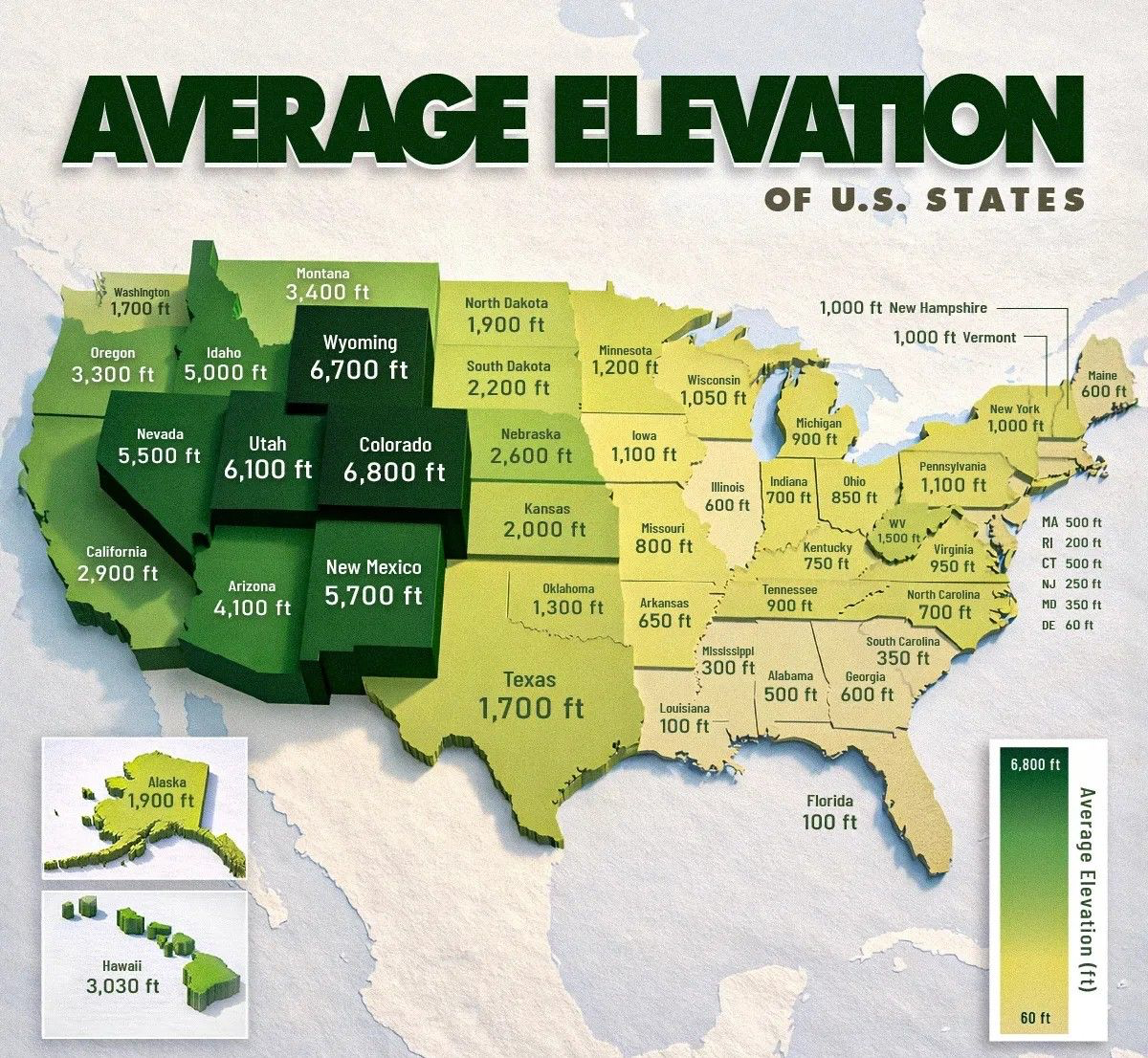
25) The buildout problem is now a mix of permits, risk, and geography: The residential permits chart says some metros are still putting meaningful housing supply into the pipeline, while the wildfire-exposure map is a reminder that not all new growth is equally bankable, insurable, or wise. The elevation map is mostly a curiosity, but it is also a reminder that physical geography still leaks into cost and infrastructure decisions.
26) Public meetings still have an incentives problem too: Loud, low-information opposition can distort project outcomes because the people actually building things are often too busy or too cautious to push back.
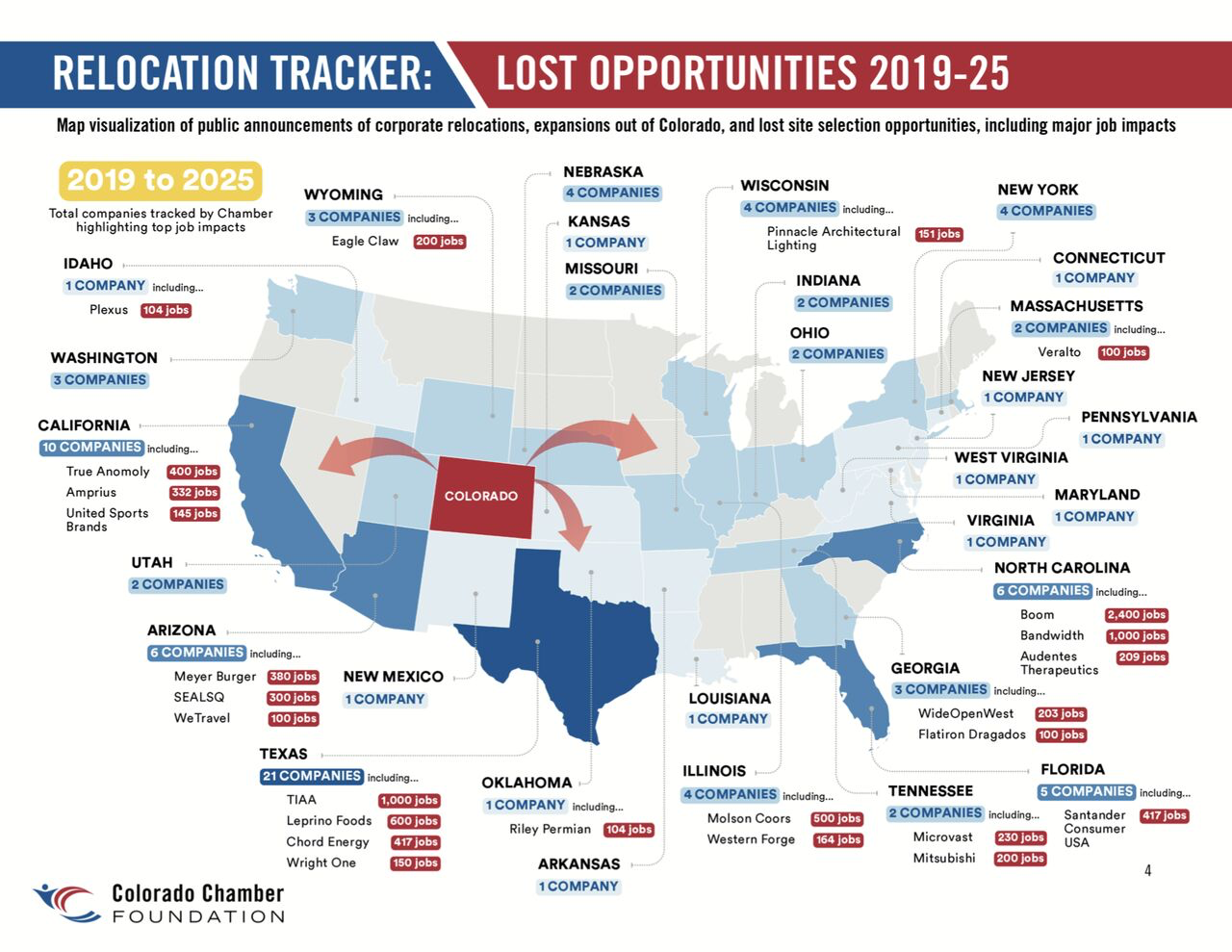
The relocation tracker chart pairs well with that, most organizations hide lost projects, but the serious ones measure them.