18 Things Economic Developers Need to Know This Week
The stories Dane thinks you need to see. October 15, 2026 edition.


Welcome to this week's issue of What Economic Developers Need to Know This Week, where we explore the evolving dynamics of our economy.
This week we have 18 tools, stories, graphics, charts and videos that I think you'll find informative, useful, inspiring, and perhaps even humorous. Some are economic development related directly, and some only indirectly.
If you're wondering what to do with the info in this newsletter, send something to your board members. It will make you look good!
Today's email is brought to you by Resource Development Group
Resource Development Group and Convergent Nonprofit Solutions have recently announced a merger of these two well respected firms. RDG is now operating as Resource Development Group, a Convergent Company and will lead the combined operations in economic development and chamber engagements. Meanwhile, the Convergent banner will take the forefront on efforts on supporting traditional philanthropic and higher education organizations
This merger maintains RDG's innovative and custom approach while also creating the deepest bench of economic development and chamber fundraising expertise in the industry, the most complete data set in the country regarding economic development and chamber funding, and the greatest flexibility to be able to support engagement models tailored specifically to every market, regardless of size. Whether you’re a single county EDO ready to kick off your first fundraising campaign or a large regional organization on your third funding cycle, they have the team and experience to get you the results you’re looking for.
This week on the Econ Dev Show
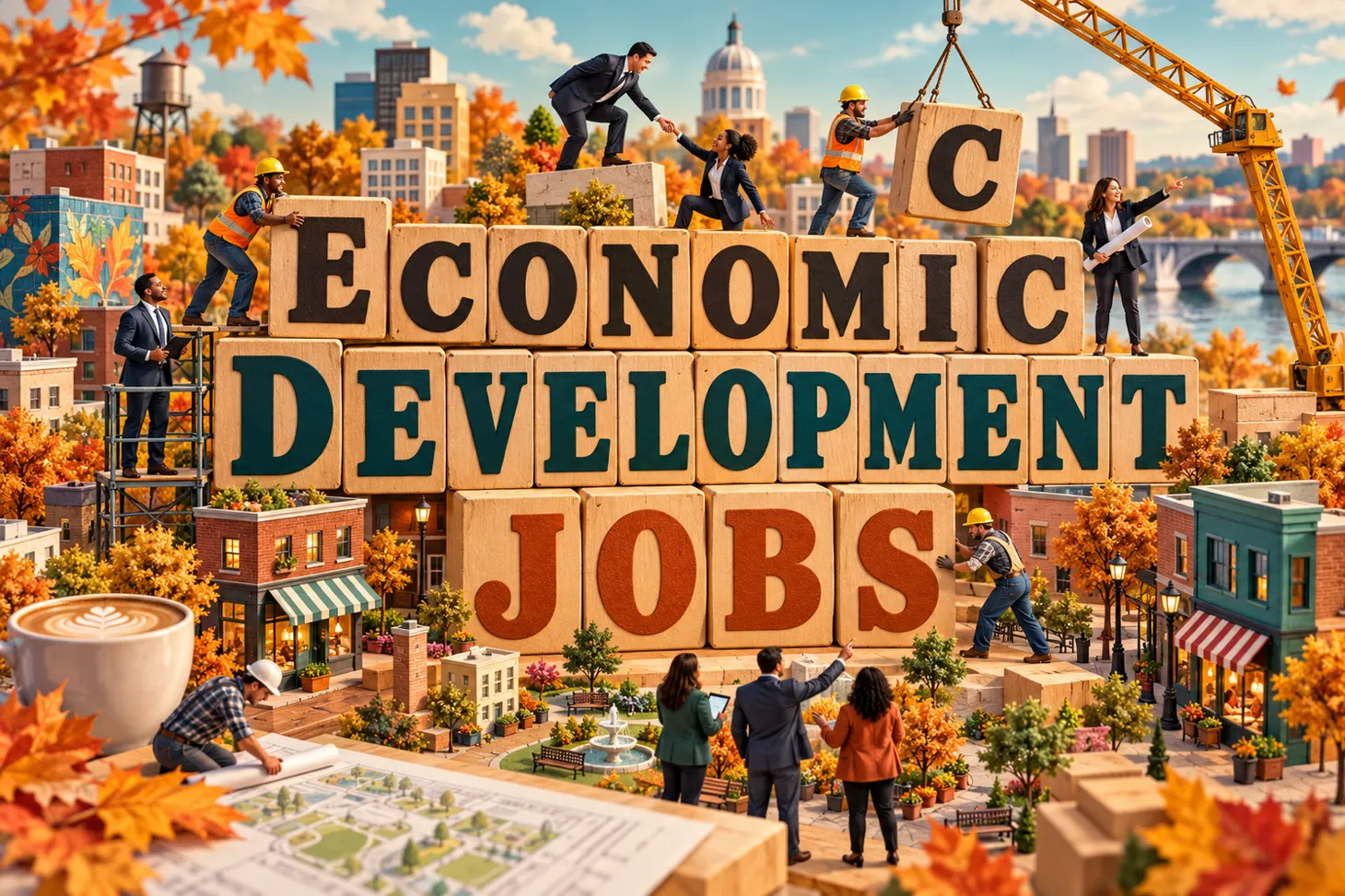
1) Economic development and developers in the news #264: Borrow an idea from someone doing the work. The latest roundup brings together 62 stories from 31 states and across the country, covering projects, partnerships, workforce, and leadership. Pick one worth discussing at your next staff meeting, or find a peer who has already worked through a problem on your desk.

2) Your next colleague might be in this list: A good opportunity is worth passing along. The latest jobs issue features 68 openings across 26 states and Washington, DC, from coordinator roles to executive leadership. Send it to someone who should see it, and check the individual listing for current availability.
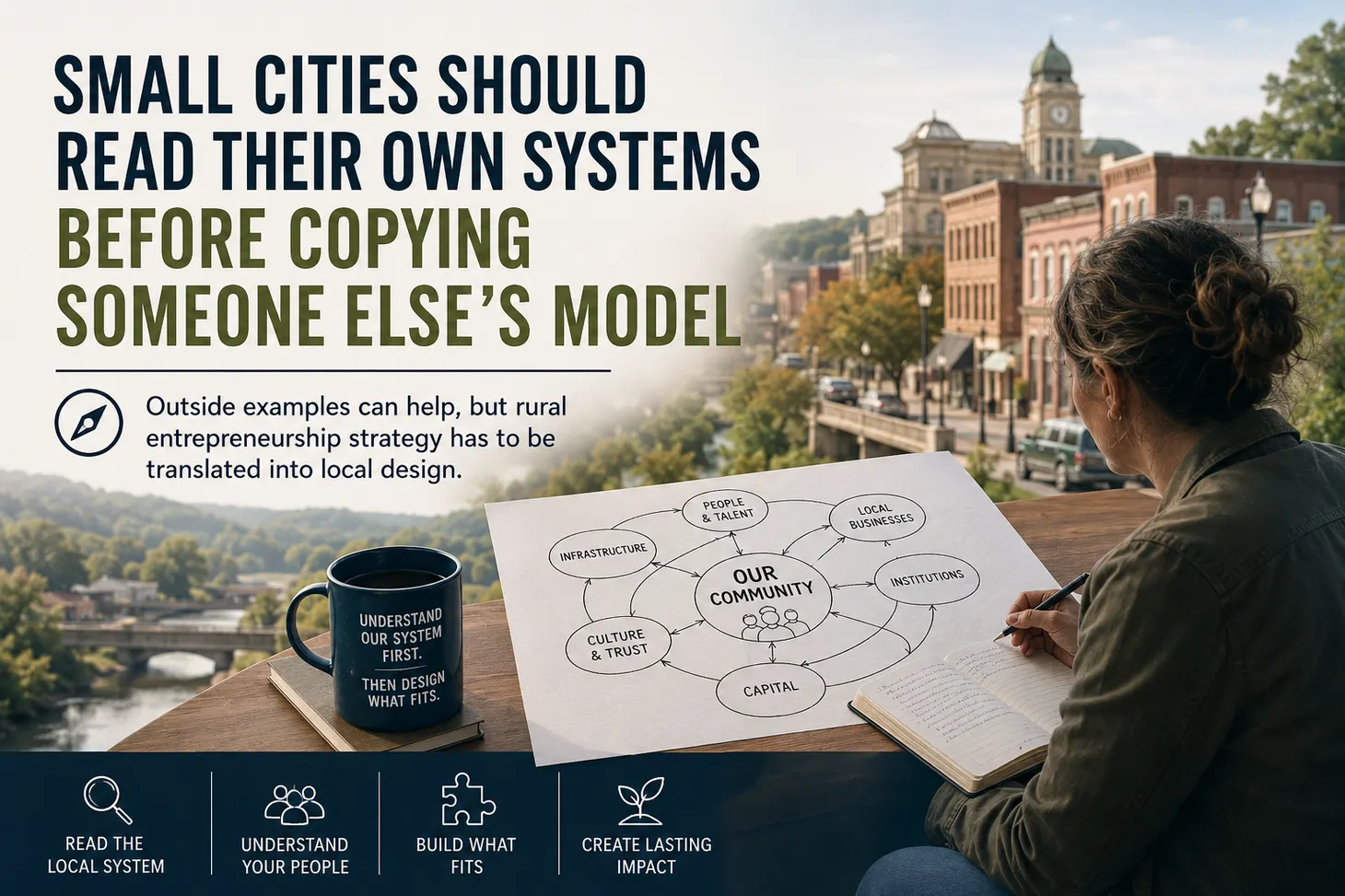
3) Changing a local economy’s path: A new industry needs more than an announcement. Jim Gibson asks how a community can deliberately change its economic direction, and how much investment creates a cluster that sustains itself. His useful challenge: connect recruitment to existing skills, suppliers, institutions, and new capabilities. Landing a project and changing a region’s trajectory are different achievements.
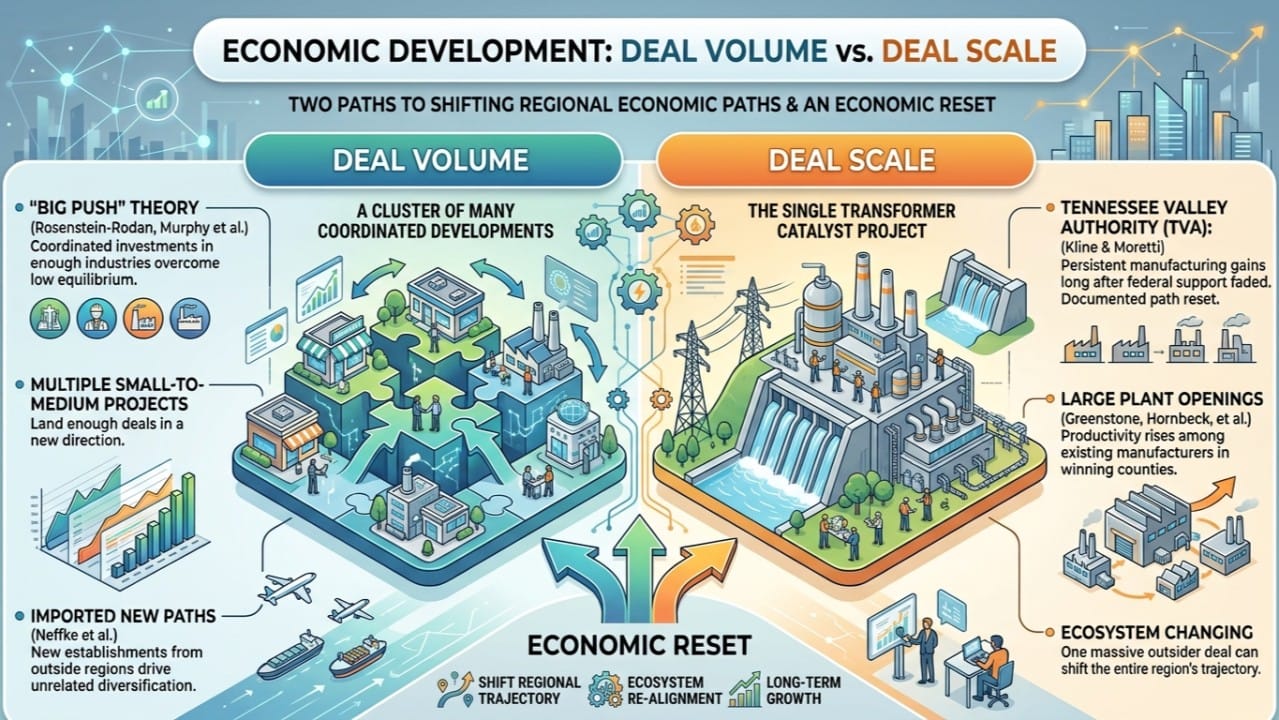
Source: Jim Gibson. A conceptual illustration accompanying his article on changing a local economy’s path.
4) When the economic developer becomes the argument: You may need someone else to explain the work. Beth Land’s post describes the discomfort of becoming the target of criticism over projects, incentives, growth, or confidentiality. Her advice is to build relationships with residents, educators, employers, and elected officials who understand the work well enough to explain it in their own words. That takes more than a better press release.
5) You don’t have to build the rentals yourself: A town can make housing possible without becoming the developer. The Honest Economic Developer walks through documenting demand, checking infrastructure, and making room for ADUs, cottage courts, and small apartments. Start with employers who lose hires because applicants cannot find a home. Then read the zoning rules that determine whether anyone can build one.

6) Your next generation of colleagues needs a reply: Mentorship often begins with answering an email. In a tribute to Carlton Schwab, Brian Kelsey recalls the people who made time for a student, a class, or a new economic-development leader. His practical request is easy to understand: open a door, help someone think through their options, and pass along the help you received. Put it on the calendar before the week fills up.
7) An ecosystem should keep paying founders back: Count useful connections after the event ends. Paul O’Brien’s new essay argues that startup networks should become more valuable as people join. For accelerators and communities, he suggests looking beyond attendance and fundraising totals to lasting mentor relationships, customers, and introductions. A useful program-review question: who can a new founder actually reach a month after arriving?
8) Read the incentive program that exists today: Yesterday’s deal structure may be a poor guide to the next one. Thane Hutcheson examines Texas JETI and the large projects using it. The state’s program page confirms that investment and employment thresholds vary with county population and that approval involves the governor and school district. Check eligibility, timing, and the actual terms before building an offer around a familiar acronym.
9) A submarine supply chain reaches beyond the shipyard: Industrial capacity can grow by moving more work upstream. Anduril’s Arsenal-2 announcement pairs a planned $3.7 billion private investment with a Navy contract worth up to $2.9 billion to manufacture Virginia-class submarine components. For economic developers, the opportunity extends to precision manufacturing, suppliers, and training. Announced capacity still has to become reliable production.


Sitehunt helps economic developers find, understand, enrich and market their sites, match them to projects, and respond with confidence in minutes instead of scrambling for days.
10) The power agreement matters as much as the connection: A proposed service option is not an approved opening date. Matt Forshee’s October 13 briefing examines FERC’s rejection of key parts of PJM’s large-load proposal. The October 9 order accepted some revisions and rejected others. Before promising a prospect early service, confirm the approved tariff, interruption obligations, and what a shutdown would cost its particular production process.
11) A better screen can still lose the factory race: Manufacturing economics can decide which technology survives. Brian Potter’s history of plasma displays follows a university invention into commercial products and eventual defeat by LCDs. Technical advantages kept changing, while yields, costs, and competing investment mattered. A useful read for anyone evaluating a promising technology: what must happen between the prototype and a product customers can afford?

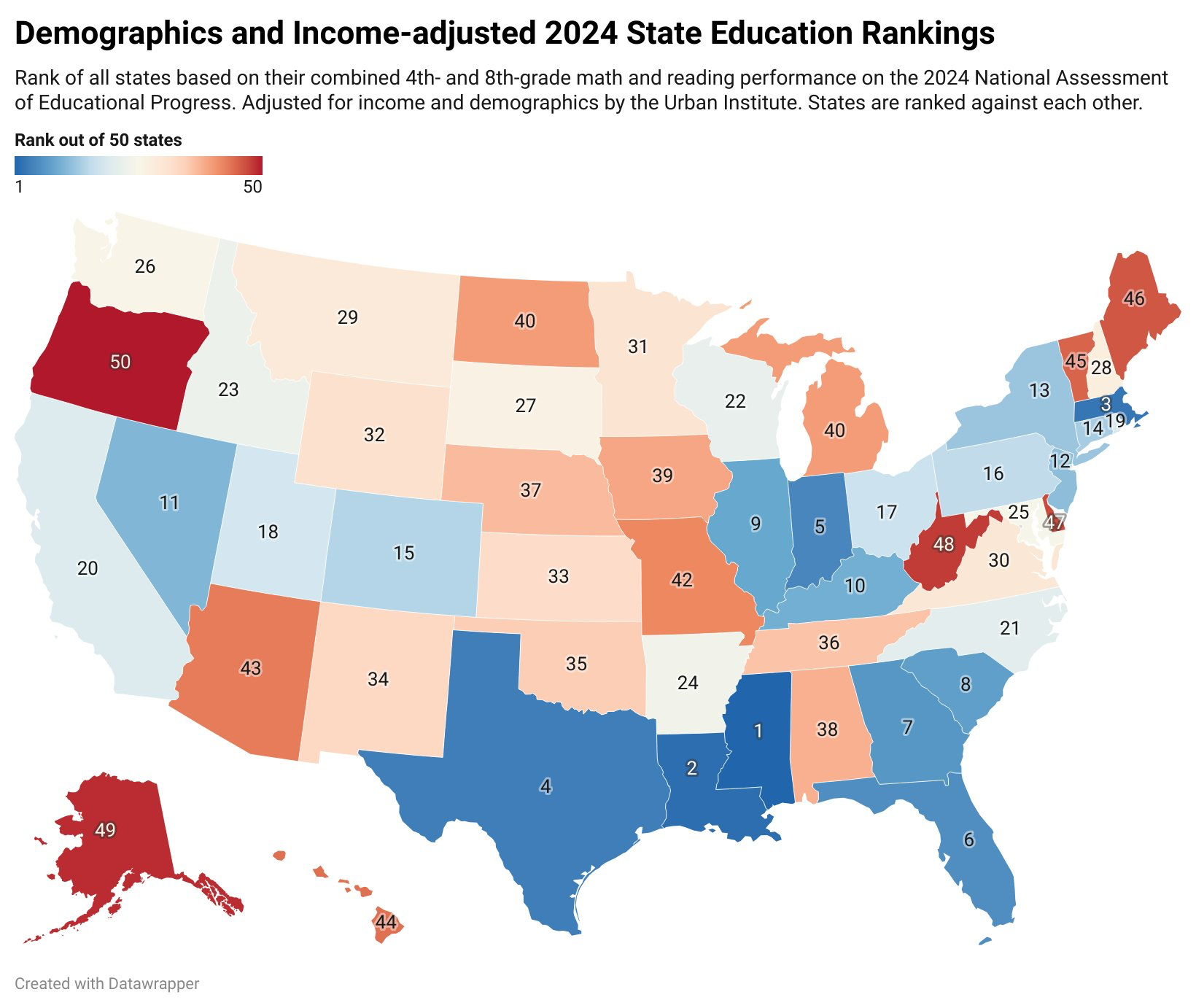
12) A school ranking depends on what you adjust for: Read the method before repeating the rank. This map compares states’ 2024 reading and math results after demographic adjustments. The Urban Institute’s analysis compares performance with demographically similar students nationally. Its estimates also have limits, including imperfect income measures. Use the chart to ask better questions about a talent pipeline, while keeping school-level conditions and unadjusted achievement in view.
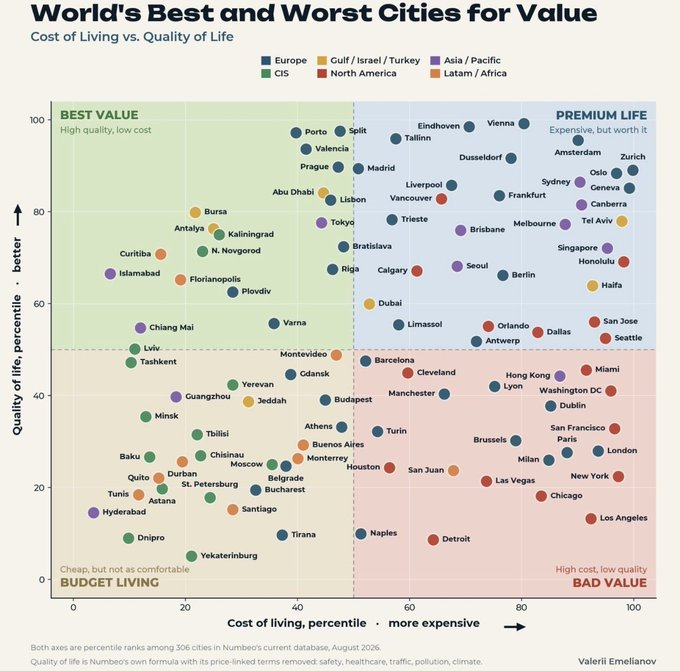
13) Affordable and appealing are two different questions: A place’s value proposition needs both sides of the comparison. This chart puts cost of living beside a modified quality-of-life measure. It is a useful way to start a talent-attraction discussion: what do people get for what it costs to live here? Numbeo explains its underlying indexes, which draw on data and user surveys. Treat the comparison as a conversation starter rather than a definitive relocation ranking.
14) Perfect weather depends on who is answering: Define comfortable before ranking your community. myPerfectWeather lets you explore temperature, humidity, and cloud cover together. This map uses daily highs of 60–87°F, maximum dew point of 60°F, and cloud cover of 50% or less. Try a different definition and the winners change. The tool uses historical climate averages, with county-level results that can hide substantial local variation.

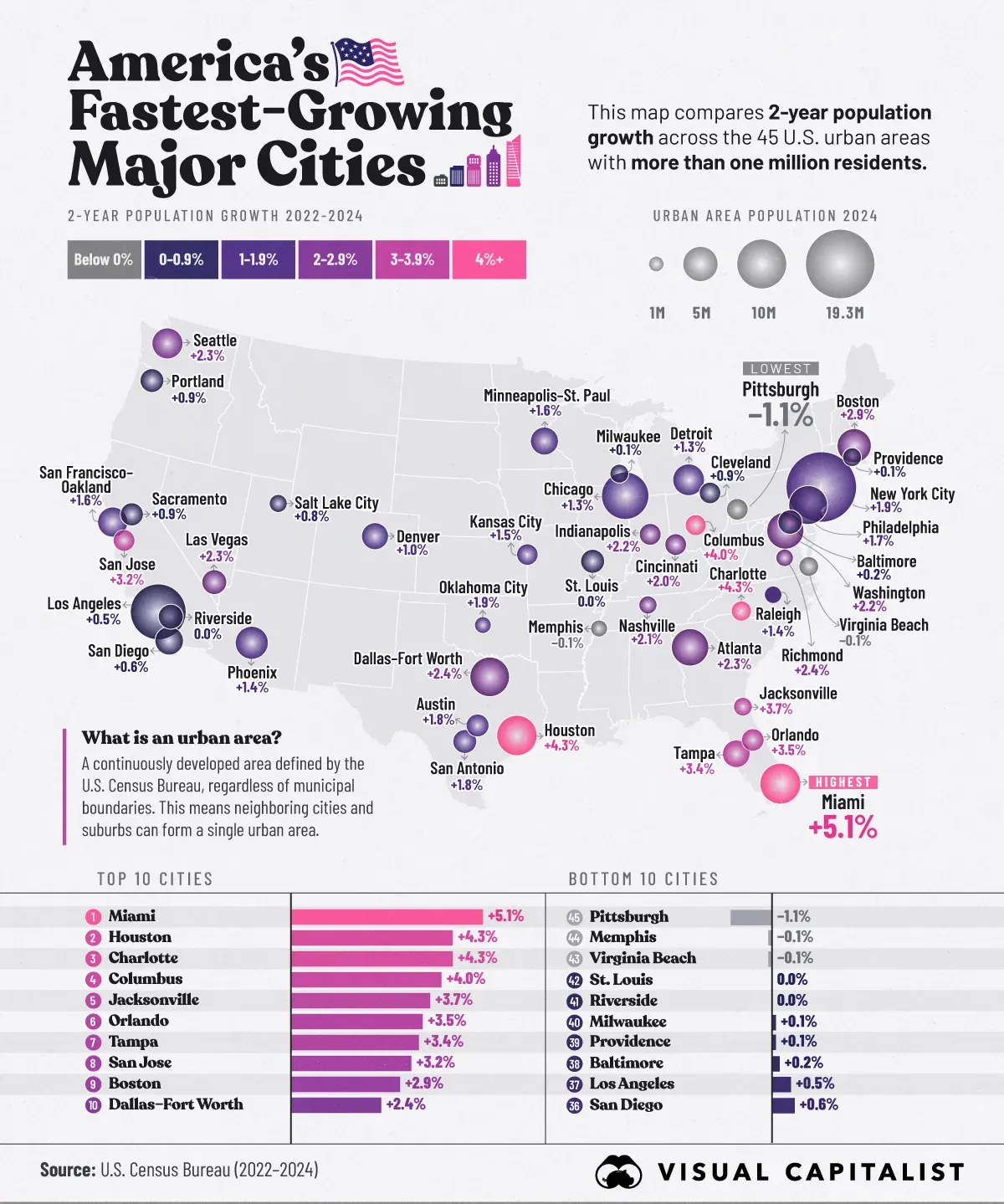
15) Even population growth needs a boundary: City, urban area, and metro are different geographies. Visual Capitalist’s latest comparison looks at 2022–2024 population change in 45 large U.S. urban areas, using American Community Survey data. It puts Miami, Houston, and Charlotte near the top. Before adding a growth number to a presentation, check which boundary it covers and whether it matches the workforce, housing, or customer market you mean.
16) The AI assistant still meets a human world: The difficult part may be the handoff. In this September essay, Sophie Bakalar describes gaps between an impressive digital assistant and one that can coordinate real people, appointments, and everyday errands. Read it as a user’s experience, rather than a current feature checklist. For your office, the useful question is where a task leaves the software and needs someone to make the next step happen.
17) Try getting the housing built: A housing simulation can make the trade-offs easier to discuss. Discretionary Review is Oliver Sin’s San Francisco housing game, shared here on X. Give it a try, then talk about the approvals, neighborhood politics, and competing priorities that shape real projects. It is a game with a point of view, so save the local feasibility conclusions for an actual project review.
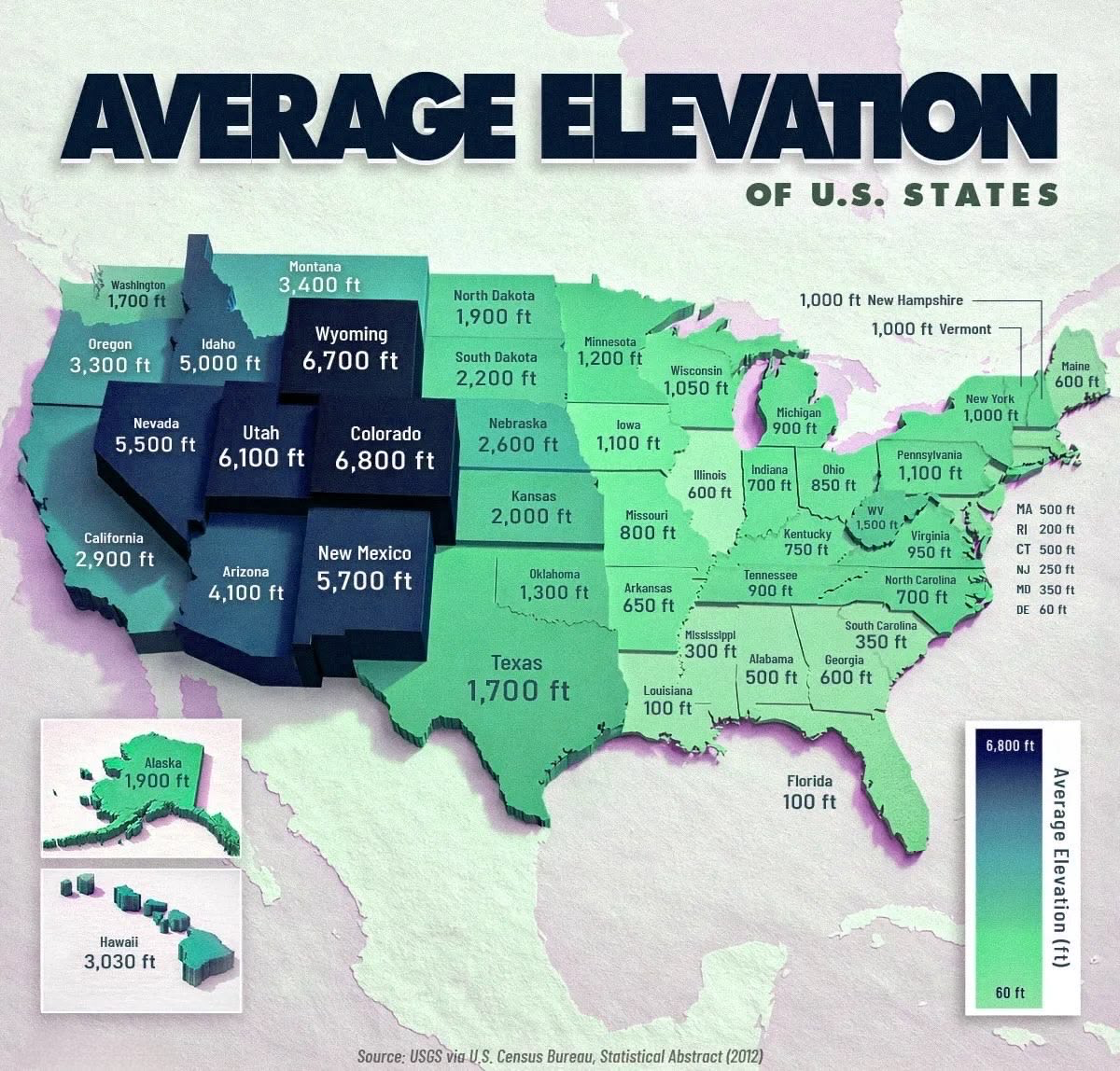
18) A little perspective from above: Colorado wins the average-elevation contest. This map illustrates approximate mean elevations published in the Census Bureau’s 2012 Statistical Abstract, with Colorado at 6,800 feet and Delaware at 60. A fun geography break, and a reminder of how much a statewide average can conceal. Your next site visit still needs its own topography.