19 Things Economic Developers Need to Know This Week
The stories Dane thinks you need to see. September 24, 2026 edition.


Welcome to this week's issue of What Economic Developers Need to Know This Week, where we explore the evolving dynamics of our economy.
This week we have 19 tools, stories, graphics, charts and videos that I think you'll find informative, useful, inspiring, and perhaps even humorous. Some are economic development related directly, and some only indirectly.
If you're wondering what to do with the info in this newsletter, send something to your board members. It will make you look good!
Today's email is brought to you by Resource Development Group
Resource Development Group and Convergent Nonprofit Solutions have recently announced a merger of these two well respected firms. RDG is now operating as Resource Development Group, a Convergent Company and will lead the combined operations in economic development and chamber engagements. Meanwhile, the Convergent banner will take the forefront on efforts on supporting traditional philanthropic and higher education organizations
This merger maintains RDG's innovative and custom approach while also creating the deepest bench of economic development and chamber fundraising expertise in the industry, the most complete data set in the country regarding economic development and chamber funding, and the greatest flexibility to be able to support engagement models tailored specifically to every market, regardless of size. Whether you’re a single county EDO ready to kick off your first fundraising campaign or a large regional organization on your third funding cycle, they have the team and experience to get you the results you’re looking for.
1) Economic development and developers in the news #261: Ideas travel well between communities. The latest roundup gathers projects, workforce efforts, small-business support, and leadership news from 25 states and Washington, D.C. A useful scan of what peers are building, funding, and trying around the country.

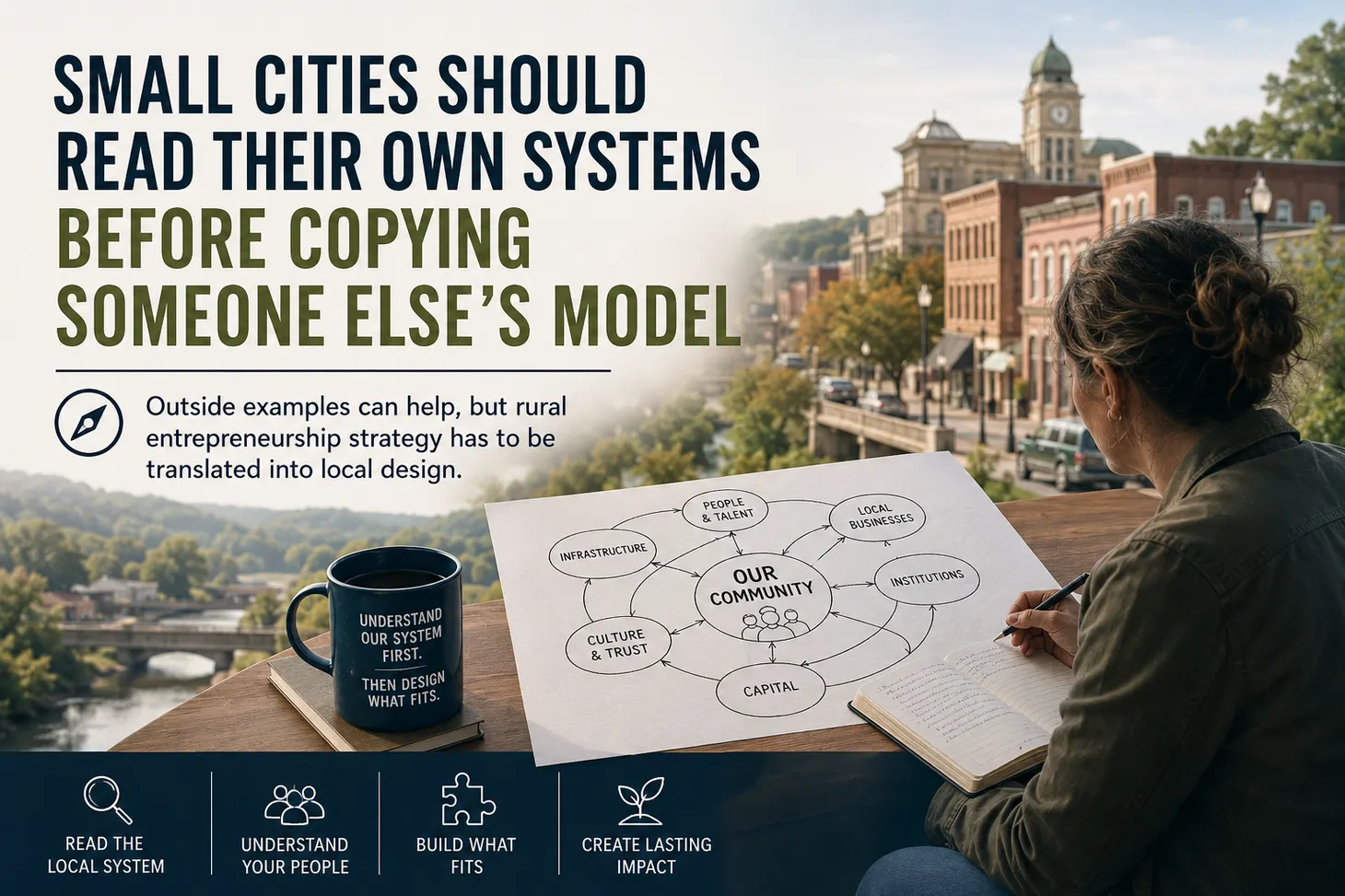
2) Turn entrepreneurship into a program: A referral is only the start. In Podcast 236, Peter McGee makes the case for coaching, practical business skills, and tracking what happens after the introduction. A useful listen for anyone trying to give entrepreneurs more consistent, practical support.

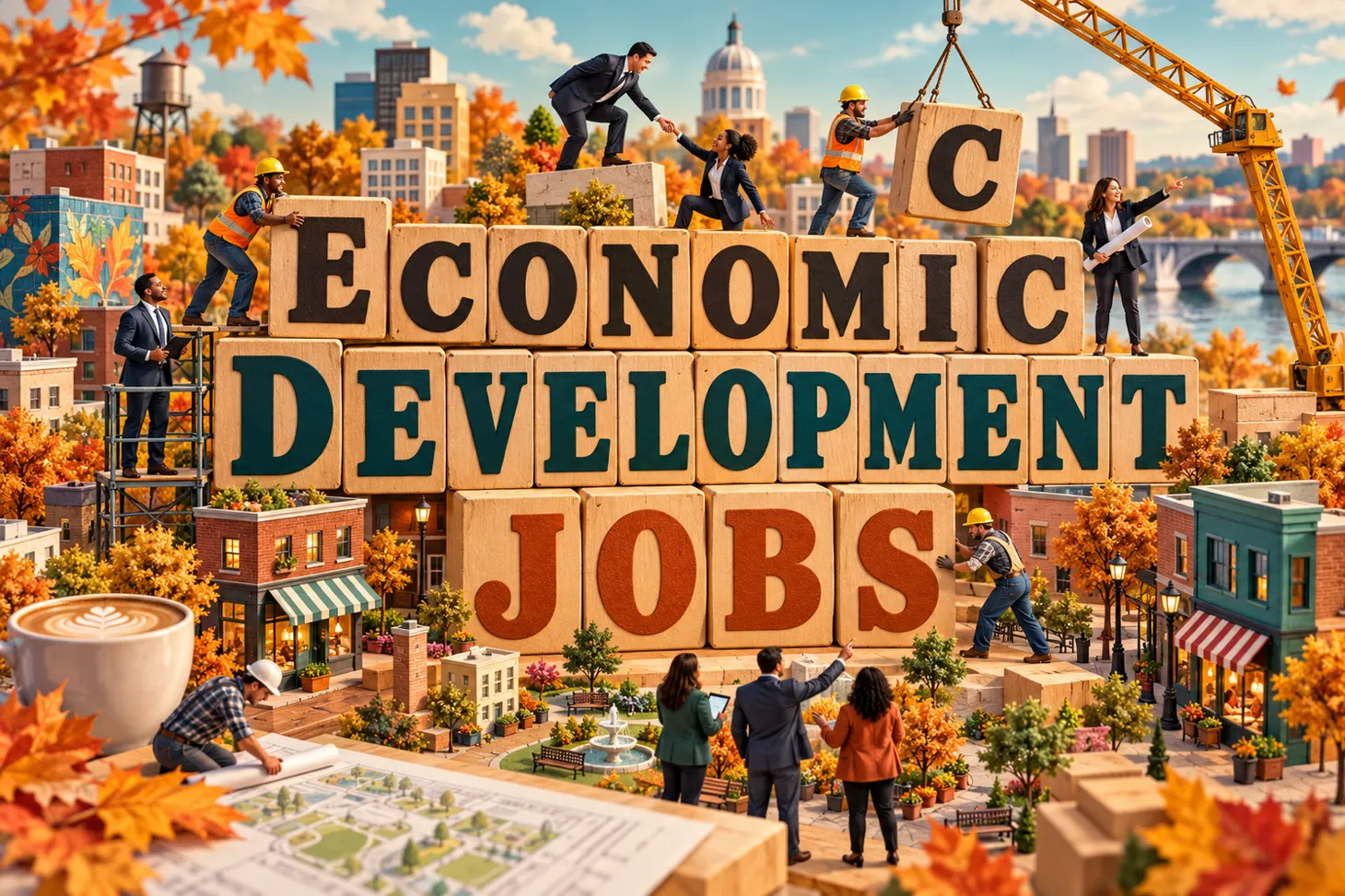
3) Share the latest economic development jobs: The field needs people with a wide range of skills. The September 18 list includes 68 openings across 30 states, Puerto Rico, and remote roles. From community-level work to senior leadership, it is a good list to send to a colleague ready for their next move.


Sitehunt helps economic developers find, understand, enrich and market their sites, match them to projects, and respond with confidence in minutes instead of scrambling for days.
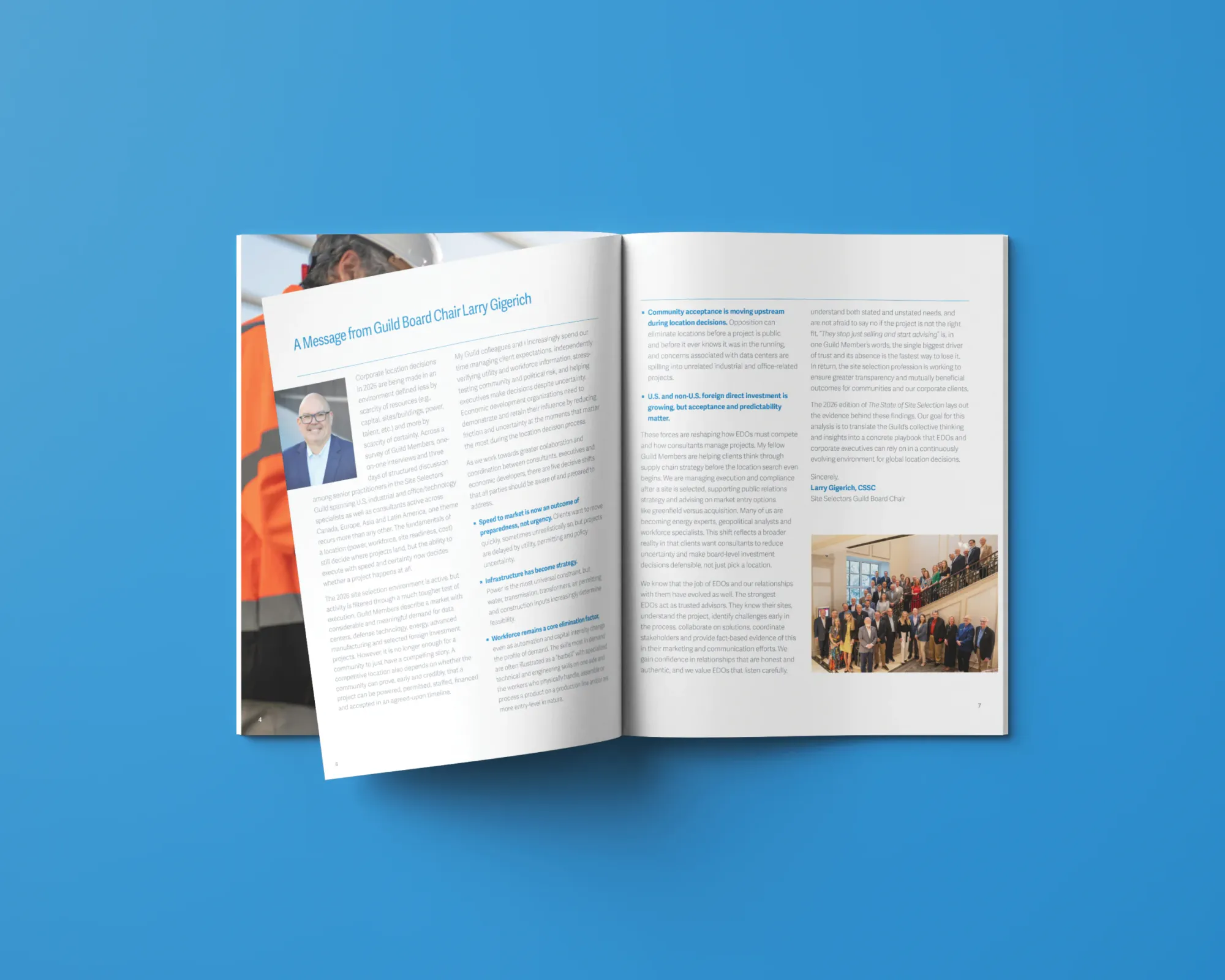
4) The site is only part of the deal: Power, water, specialized talent, and community support increasingly determine whether a project moves. The Site Selectors Guild's 2026 State of Site Selection report puts those constraints at the center of investment decisions. A well-documented parcel is the beginning; the stronger pitch shows how the community will get a facility operating.
5) Data centers are looking beyond steel: A long lead time can change the material, the design, and the local supply chain. Construction Dive reports growing interest in mass timber as steel costs and delivery times climb. Timber can cost more upfront, but lighter foundations, prefabrication, and faster assembly may improve the overall project economics. The decision needs to happen early in design.
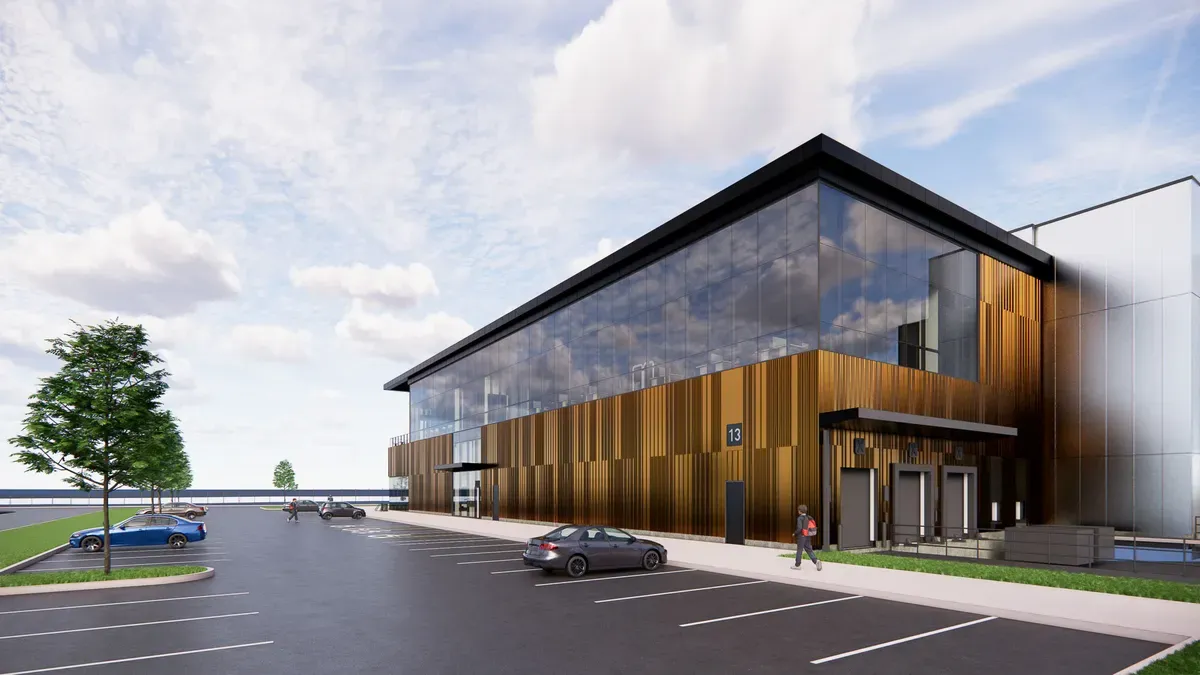
Rendering: Gensler, via Construction Dive.
6) Housing is moving in different directions: The national average conceals very different local markets. This August home-price map shows gains across much of the Midwest and Northeast, alongside declines in several Western, Texas, and Florida markets. For a recruitment conversation, the useful comparison is the actual market where workers will live, including its rents, insurance costs, and available homes.
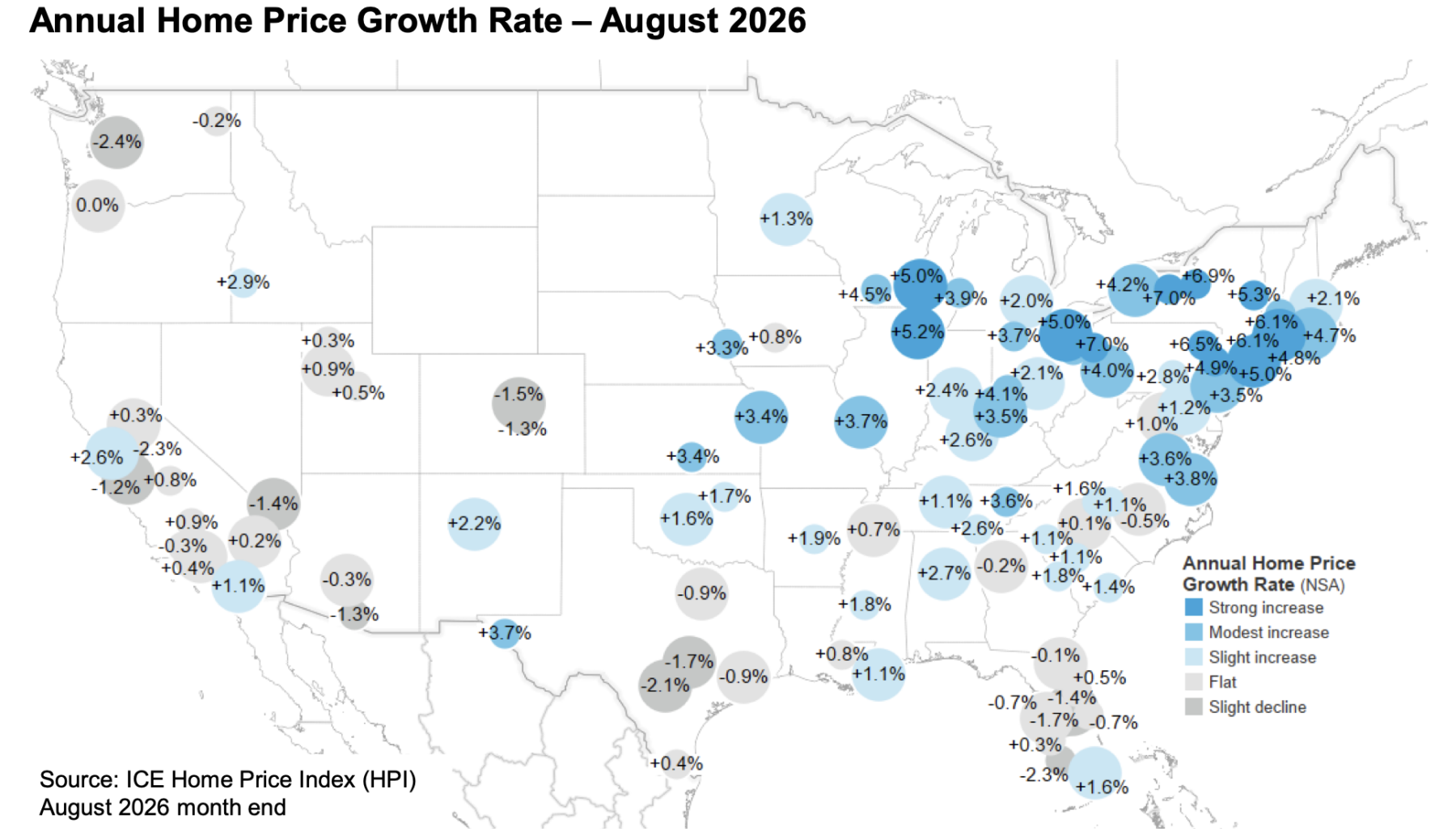
Source: ICE Home Price Index, August 2026 month end. Not seasonally adjusted.
7) The housing pipeline narrows before move-in: Completions were down 27.1% from a year earlier. The August Census construction report puts permits at 1.394 million, starts at 1.275 million, and completions at 1.128 million, all seasonally adjusted annual rates. Communities with impressive approval totals still need to know when the homes will be ready for workers.
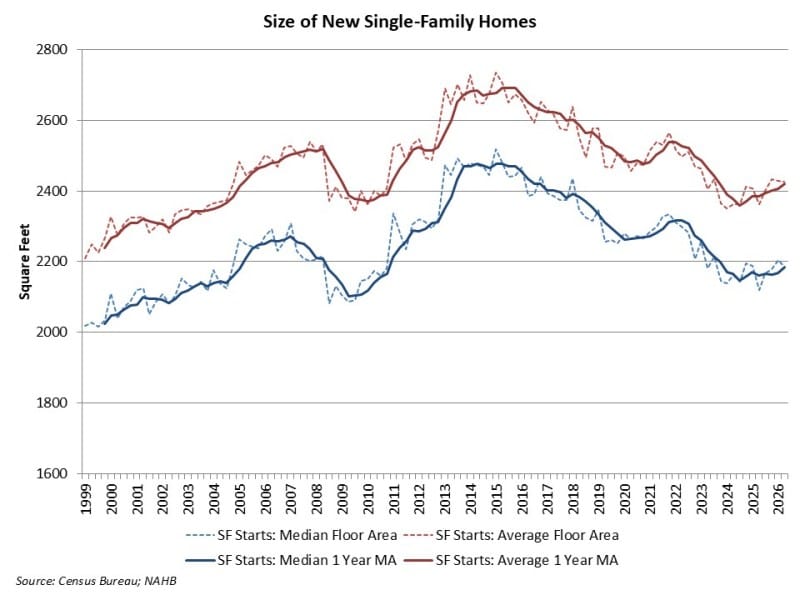
8) The new house is smaller than a decade ago: But the mix of buyers can push sizes back up. NAHB's Q2 analysis puts the median new single-family home at 2,185 square feet. Sizes have edged higher since 2024 as the upper end of the market holds up better than the entry level, a reminder that the homes getting built may differ from the homes your workforce needs.
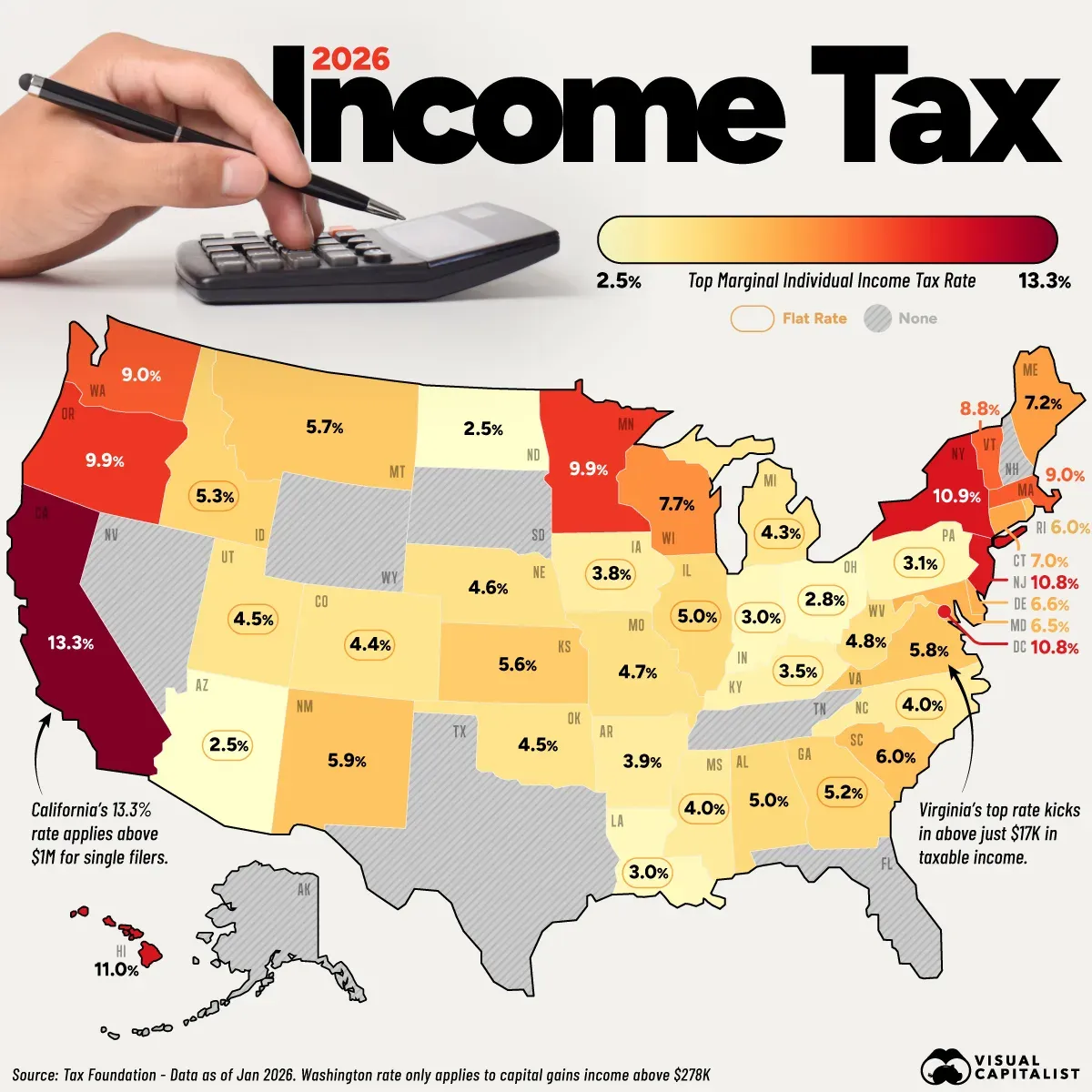
9) The income-tax map needs a footnote: The top marginal rate tells only part of a household's story. This state-by-state graphic makes the differences easy to see. It shows top marginal rates, not effective tax bills; Washington's entry concerns capital gains. Property taxes, sales taxes, and housing costs still belong in any serious cost-of-living comparison.
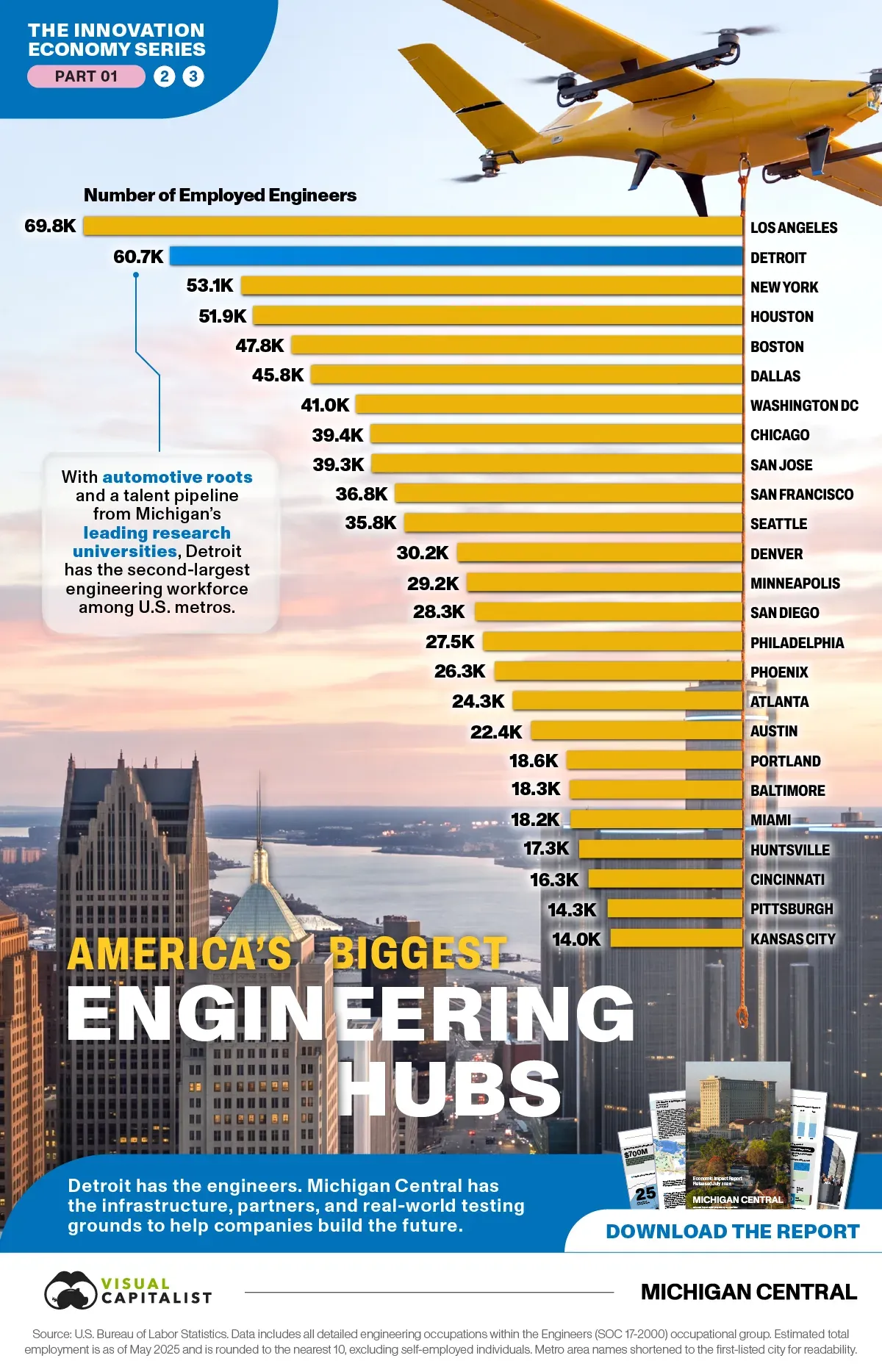
10) Detroit's engineering bench runs deep: Talent concentration can be more revealing than a metro's raw job count. Visual Capitalist's ranking puts Los Angeles first with 69,800 engineering jobs and Detroit second with 60,700. Engineers account for 3.2% of Detroit's employment, compared with 1.1% in Los Angeles. That is a different, and useful, way to tell a region's workforce story.
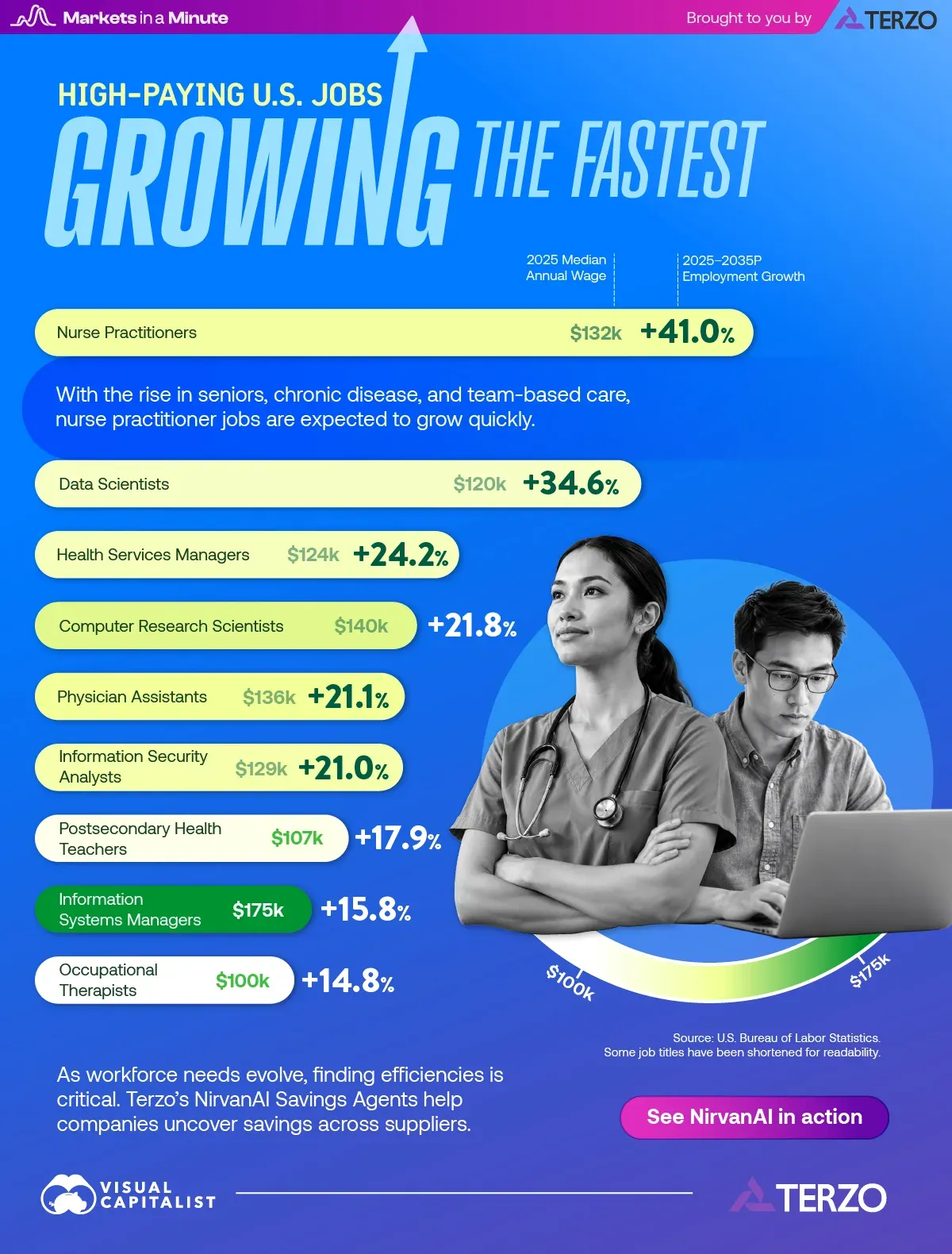
11) Where high pay meets projected growth: Health care and data skills dominate this list. BLS projections visualized here put nurse practitioners at 41% employment growth and data scientists at 34.6% between 2025 and 2035, compared with 3.5% for all occupations. A useful starting point for a college-employer conversation, followed by a closer look at local demand and training capacity.
12) State payroll growth was quiet in August: Only four states recorded statistically significant monthly gains. Employment was essentially unchanged in the other 46 states and D.C., according to the BLS state release. Meanwhile, unemployment rates fell in eight states and D.C. The two measures help answer different questions: where the jobs are, and how residents are doing in the labor market.
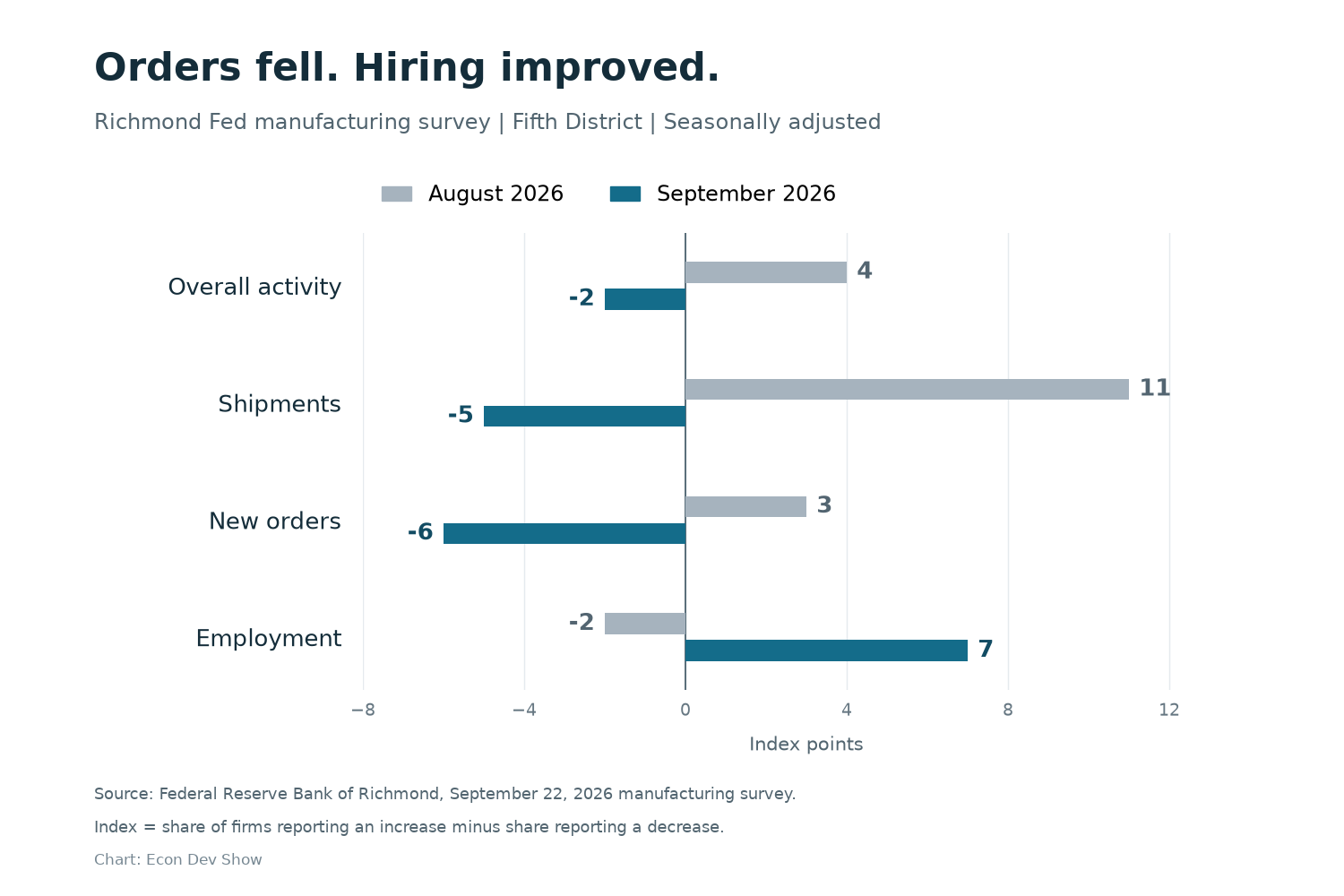
13) Manufacturers are hiring as orders weaken: A business can send more than one economic signal at a time. The Richmond Fed's September survey fell to -2 from 4 as shipments and new orders softened, yet its employment index rose to 7 from -2. For Fifth District manufacturers, the hiring picture looks stronger than the current order book.
14) The supply-chain squeeze reaches the coffee roaster: Volatility ties up cash long before it shows up in a jobs report. CNN's reporting follows businesses coping with higher fuel and shipping costs after years of disruption. Raleigh's Dilworth Coffee has shortened its planning horizon from 12 to 24 months to three to six months. Inventory, working capital, and delivery reliability deserve space in the next business-retention visit.
15) Build the startup economy around what your region already does: Manufacturing, logistics, agriculture, and energy are foundations for entrepreneurship. Paul O'Brien's Middle Corridor essay argues for connecting founders with industrial customers, experienced operators, and investors across neighboring markets. His challenge to support organizations is useful: follow business survival, later financing, and reinvestment long after the cohort ends.
16) The next AI opportunity may be inside an ordinary business: Cheaper technology becomes valuable when someone puts it to work. Market Sentiment's essay argues that AI's eventual gains could spread to companies with customers, proprietary information, and workflows they can improve. Read past the investment thesis and there is an economic-development question: which existing local employers could turn adoption into higher productivity?
17) Let the target companies choose your trade shows: Compare the exhibitor list with your prospect list before buying the booth. Dillion Roberts makes a practical case for selecting events around named companies, briefing the team before travel, and planning the follow-up. His article promotes a prospecting product, but the method starts with a simple comparison any organization can make.
18) What happens after an Opportunity Zone gets designated: The local work is investor outreach, project preparation, and business connections. The Economic Innovation Group's OZ 2.0 guide lays out ways communities can improve the conditions for investment and help projects advance. A useful discussion document for the people who will turn a designation into an actual local program.
19) Making a rocket engine look simple takes a lot of engineering: Manufacturing progress can mean fewer parts, connections, and assembly steps. In How SpaceX streamlined the Raptor, Brian Potter examines the engine's increasingly clean exterior and the known changes and plausible engineering explanations behind it. The comparison is striking, and the broader lesson applies well beyond rockets: making something easier to build can be a formidable innovation.