21 Things Economic Developers Need to Know This Week
The stories Dane thinks you need to see. April 2, 2026 edition.

Welcome to this week's issue of What Economic Developers Need to Know This Week, where we collect links, charts, and ideas about the economy and place.
This week: 21 stories, graphics, and rabbit holes that are mostly relevant to economic development.
If you are wondering what to do with the info in this newsletter: send one item to a board member who still thinks housing, industrial strategy, and quality of place can all be handled in separate meetings.
Today's email is brought to you by Resource Development Group
Resource Development Group and Convergent Nonprofit Solutions have recently announced a merger of these two well respected firms. RDG is now operating as Resource Development Group, a Convergent Company and will lead the combined operations in economic development and chamber engagements. Meanwhile, the Convergent banner will take the forefront on efforts on supporting traditional philanthropic and higher education organizations
This merger maintains RDG's innovative and custom approach while also creating the deepest bench of economic development and chamber fundraising expertise in the industry, the most complete data set in the country regarding economic development and chamber funding, and the greatest flexibility to be able to support engagement models tailored specifically to every market, regardless of size.
Whether you’re a single county EDO ready to kick off your first fundraising campaign or a large regional organization on your third funding cycle, they have the team and experience to get you the results you’re looking for.
This Week On Econ Dev Show
1) Economic Development and Developers in the News # 237: Econ dev news from 112 economic development executives and organizations in 39 states.

2) Your Brochure Isn’t the Problem: Find the gaps in your property materials before a site selector does.

3) 20 New Economic Development Jobs This Week: In 9 states, from $41k - $269k.
4) 18 Things Economic Developers Need to Know This Week: The stories Dane thinks you need to see. March 25, 2026 edition.
5) Economic Development and Developers in the News # 236: Econ dev news from 108 economic development executives and organizations in 31 states.

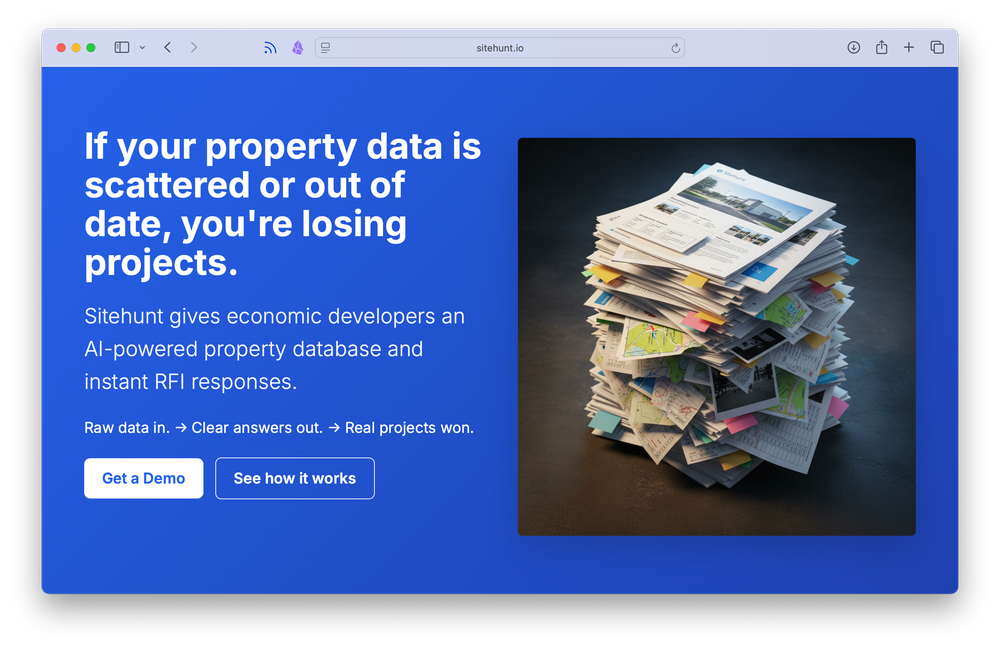
Stop managing sites in a spreadsheet disguised as a map.
Most tools help you store property listings and make them look good online. Sitehunt actually understands your sites. It pulls together infrastructure, utilities, zoning, and regional context from millions of real data sources to build a complete picture automatically. No manual data entry. No guessing. No chasing down answers when a project comes in.
When the RFI hits, speed wins. Sitehunt doesn’t just display your sites, it evaluates them. You can match properties to project requirements, answer detailed questions instantly, and move from “we think this might work” to “here’s exactly why it works” in minutes. While others are still assembling information, you’re already submitting a complete, confident response.
Strategy, Sites, And Manufacturing
6) Manufacturing location strategy is still about labor, cost, and geography, but capital structure matters too: Site Selection Group's 2025 top five states for manufacturing are Tennessee, South Carolina, North Carolina, Indiana, and Kentucky, and the SBA's new Made in America loan guarantee is a reminder that acquisition and plant retooling finance are part of the reshoring toolkit too. Read: Best States for Manufacturing in 2025 and Alan Peterson on X.
7) Economic developers are more useful earlier than manufacturers think: The Industry Today piece gets this right, economic developers are not just marketers or incentive administrators, they can help line up workforce partners, utilities, permitting, and funding before delays turn into project risk. Read: The Overlooked Resource: Economic Developers Open Doors.
8) Here's more info on the SBA's New “Made in America Loan Guarantee” to Restore Manufacturing Dominance: The loans, which come with a 90% federal guarantee, will help manufacturers expand facilities, hire workers, and increase production – as part of the Trump Administration’s broader effort to rebuild America’s industrial dominance and strength. Read: SBA Announces New “Made in America Loan Guarantee” to Restore Manufacturing Dominance.
9) Jim Gibson on clusters: Clusters are usually an output of firm decisions, supplier follow-on, and path dependence, not something a board packet can wish into existence. Read: The Emergence Problem: Why Economic Clusters Follow Firms, Not the Other Way Around.
10) Chris Johnson's fishing analogy for business recruitment is good: When the fish are not biting, you change gear, move, and show up where the action is. Travel budgets and trade-show presence are not extras if relationship-based attraction is part of the job. Read: Chris Johnson on LinkedIn.
11) Designing for Inefficiency: A useful place-making argument. Many of the social interactions people say they want from a town depend on deliberate slowness, lingering, and third places, not pure frictionless efficiency.

Most weak property marketing starts with weak site data.
How Strong Is Your Site Data?
Sitehunt has a free tool to help you find the gaps in your site data before a site selector does.
Upload your spec sheet, brochure, or property handout and get a review of what’s strong, what’s missing, and what a site selector would still need.
Costs, Consumption, And Infrastructure
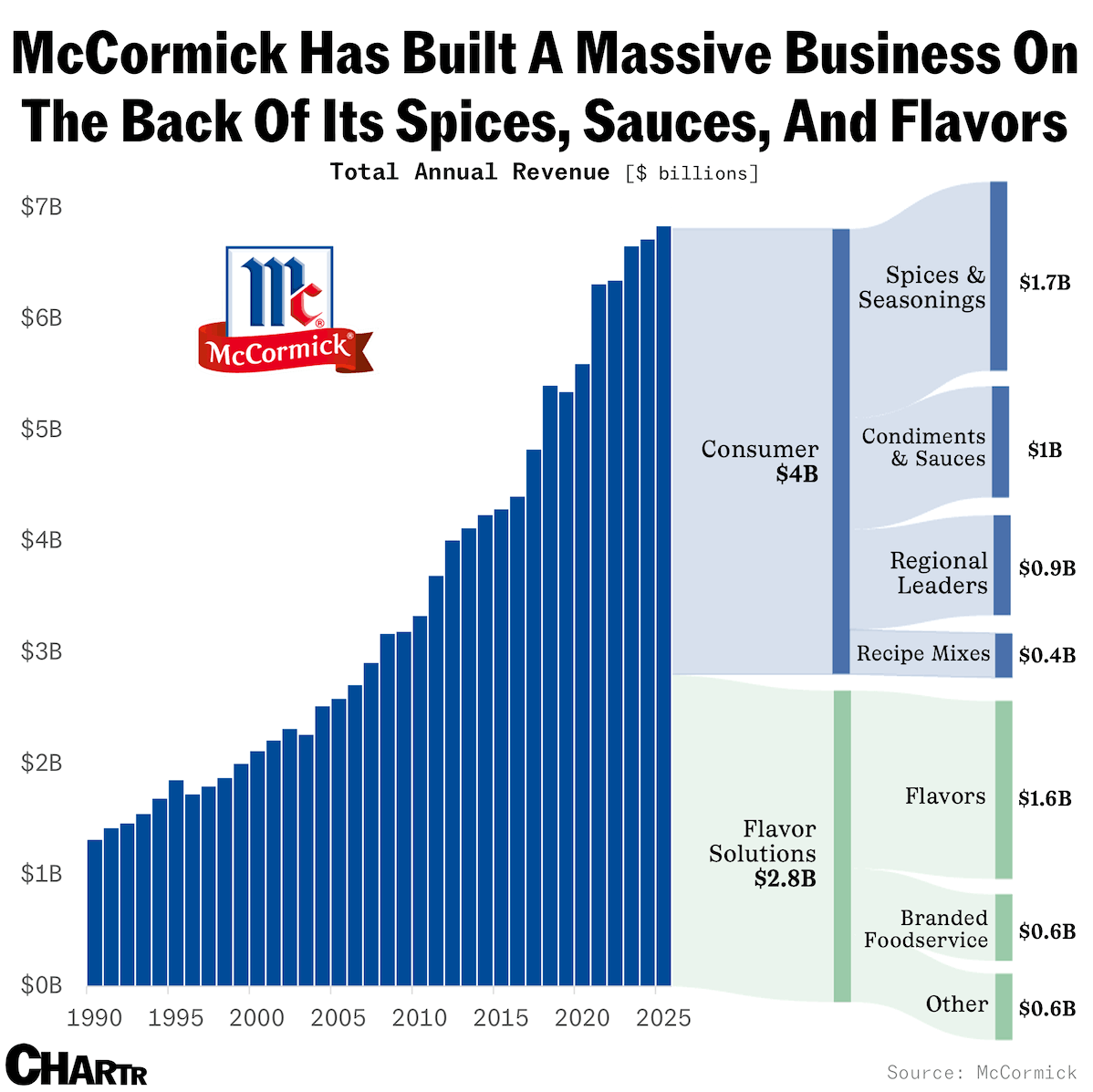
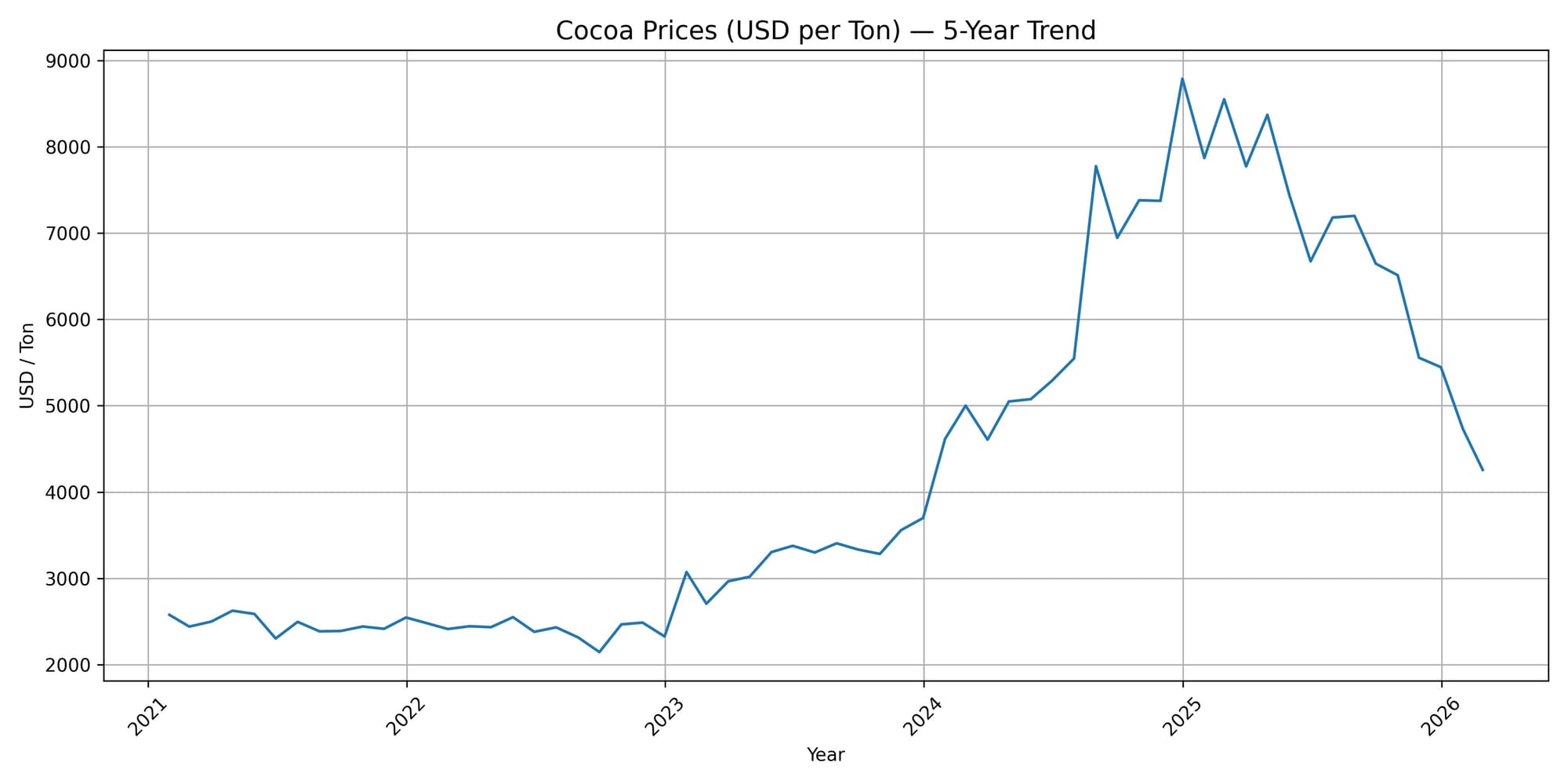
12) America's taste buds are still reshaping consumer categories: Sherwood notes chili sauce was the only major sauce category to grow retail volume from 2019 to 2024, McCormick is now a roughly $7 billion flavor machine, and even a small X note about cheaper chocolate is a reminder that food cost signals hit consumers unevenly and on a lag. Read: Sherwood on spicy food and The Food Professor on X.
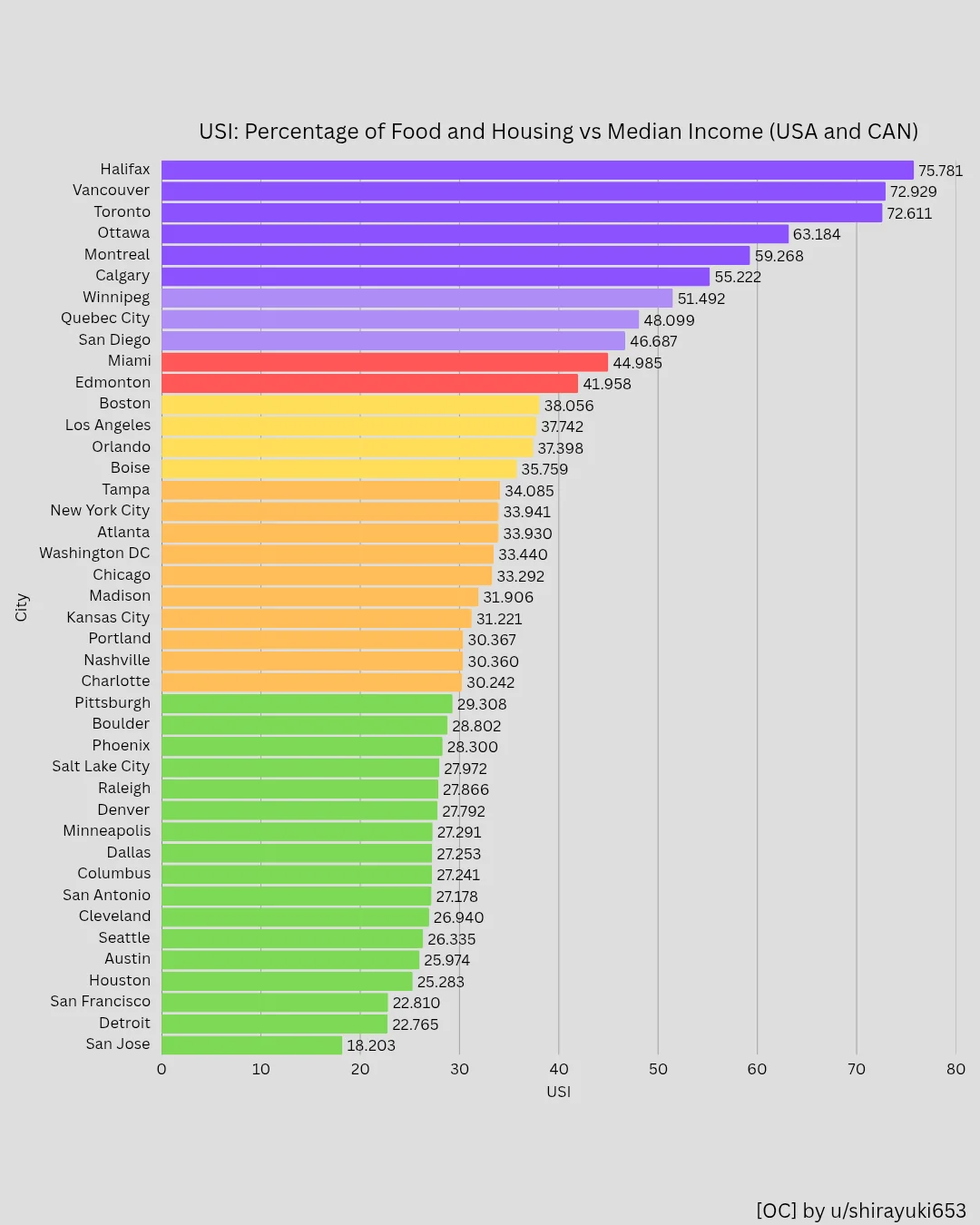
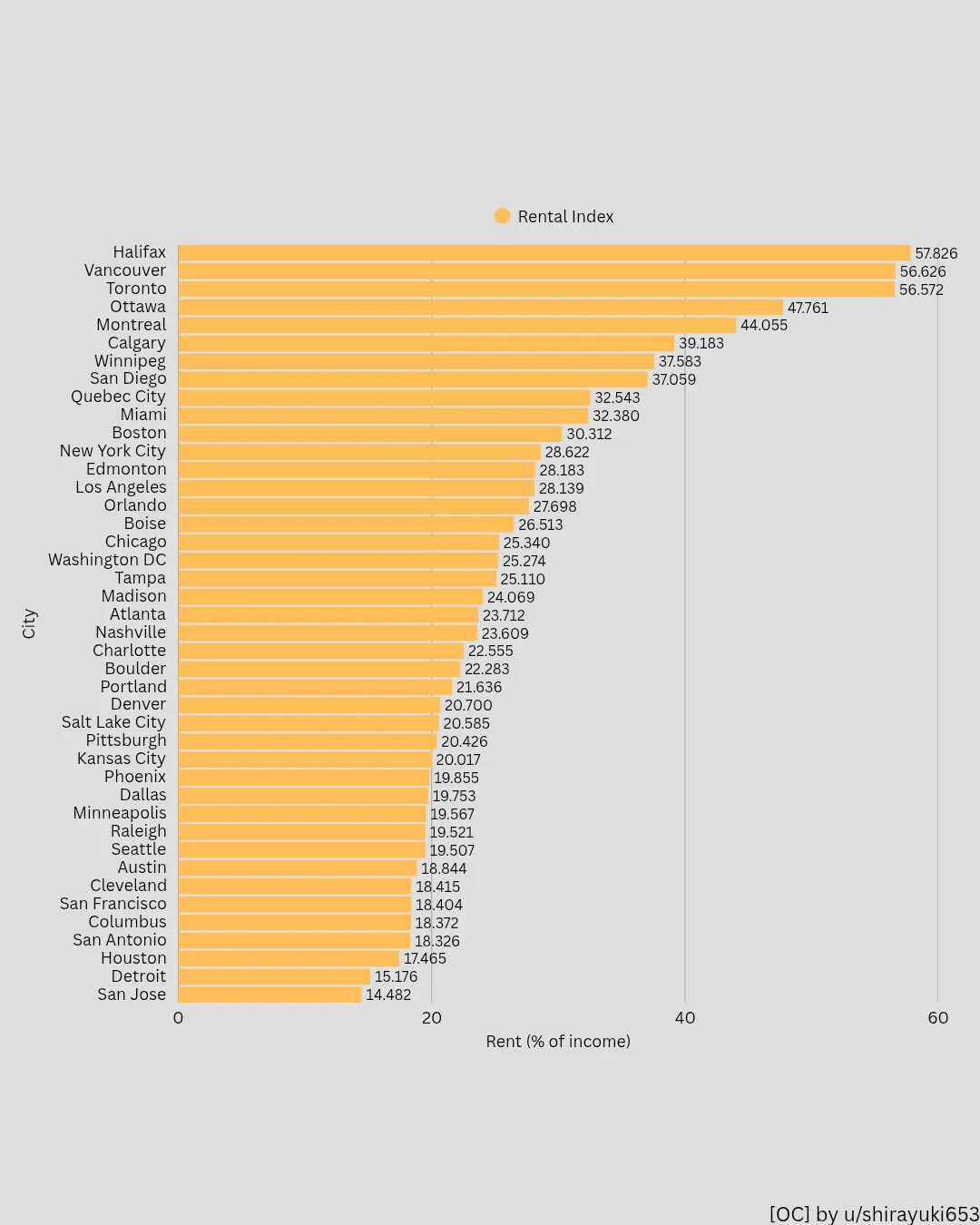
13) Cost pressure is not just a U.S. story: These USI and Halifax charts suggest food-plus-housing burdens are especially punishing in Canadian metros, with Halifax, Vancouver, and Toronto at the top. Cross-border comparison is a useful reminder that affordability crises can pile up fast when rent outruns income.
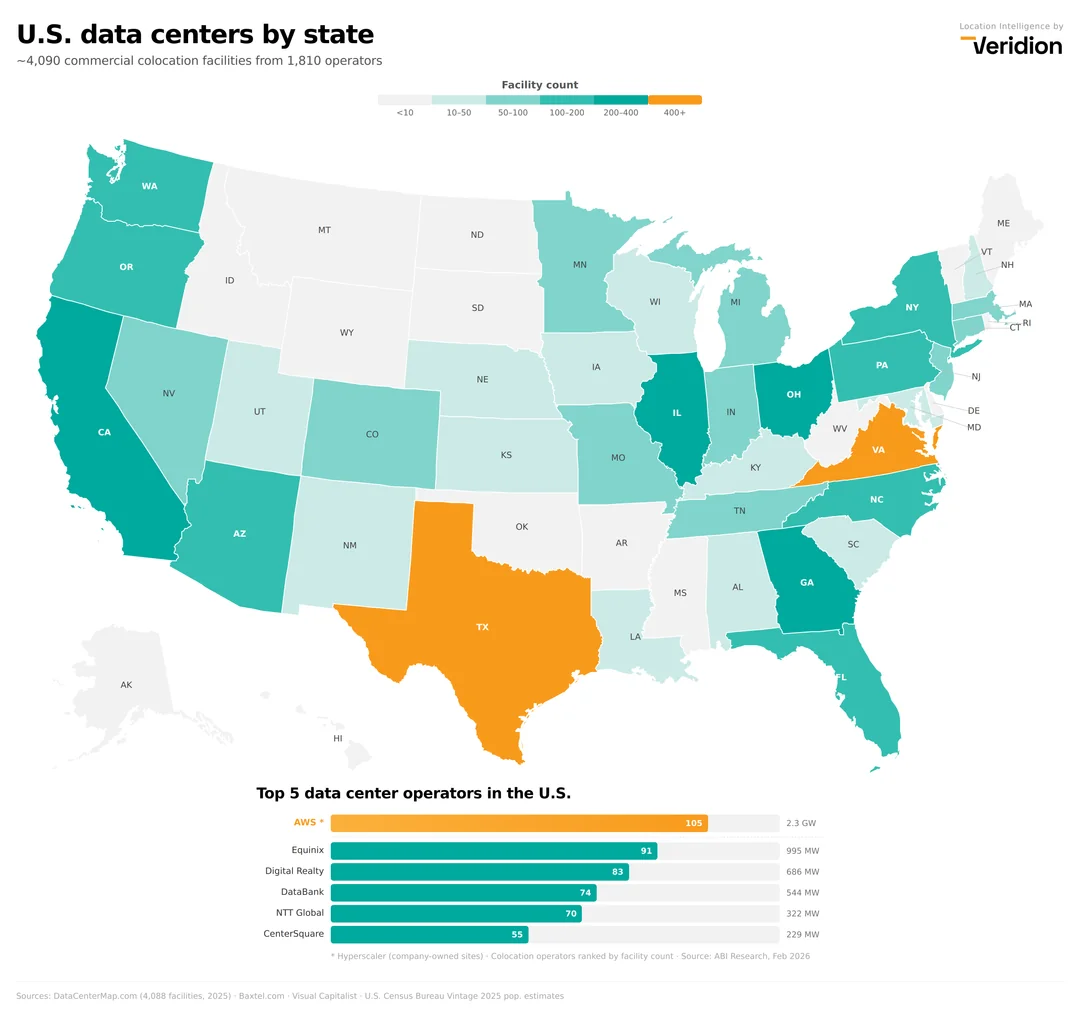
14) Electricity affordability is becoming a local competitiveness dataset, not just a utility bill: Heatmap and MIT's new Electricity Price Hub lets you see place-level bill trends down to ZIP code, and the separate data-center map shows why it matters, load is clustering hard in Texas, Virginia, California, and other already-hot markets. Explore: Electricity Price Hub.
Demographics, Governance, And Rabbit Holes
15) Population growth is not the same as economic development: Paul Cranch's "population sponge" idea is good language for places that keep adding rooftops without adding enough local jobs, industrial land, or self-containment. Growth can disguise leakage. Read: Population Sponges: The Hidden Risk Inside Australia’s Growth Story.
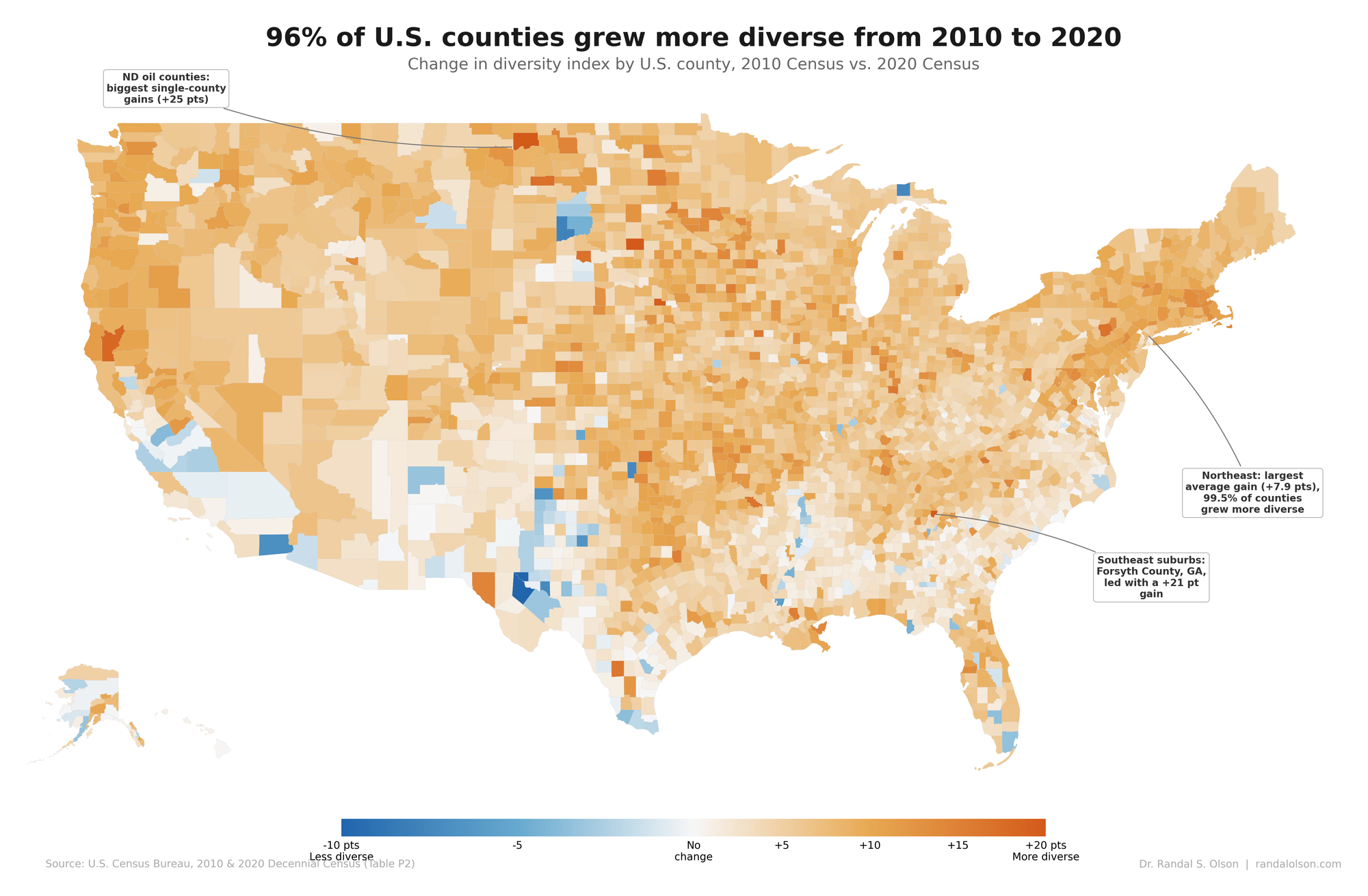
16) America is getting more diverse in more places: Randal Olson finds 96.2% of U.S. counties became more diverse from 2010 to 2020, with the Northeast posting the strongest average gains and North Dakota oil counties among the biggest single-county jumps. Jobs and housing are still re-sorting who lives where. Read: 96% of U.S. counties grew more diverse from 2010 to 2020.
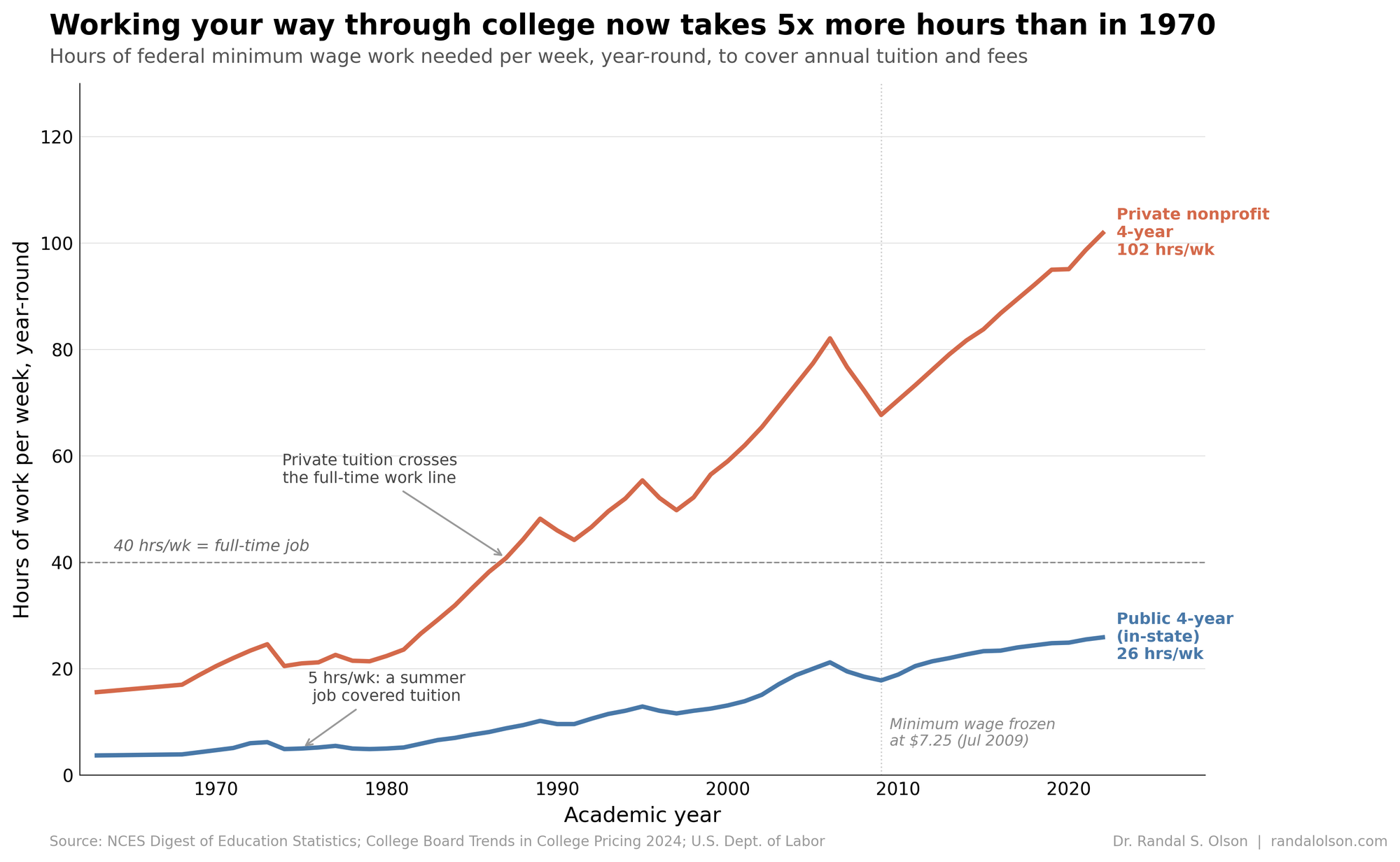
17) Working your way through college is broken math now: In-state public tuition now takes about 26 hours of minimum-wage work per week year-round, while private nonprofit tuition takes 102. Talent pipelines do not start at graduation, they start with affordability. Read: Working your way through college now takes 5x more hours than in 1970.
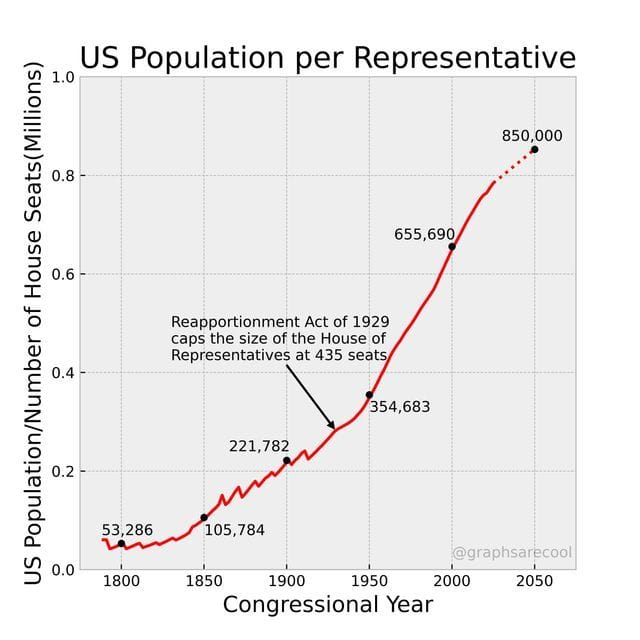
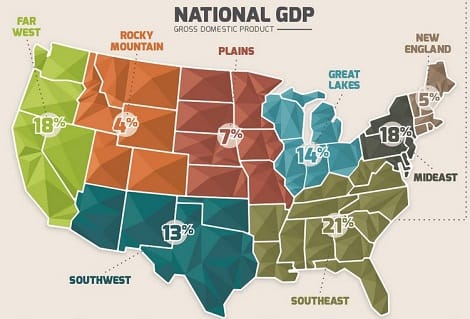
18) Bigger countries need different institutions than they started with: One X chart notes each U.S. House member now represents about 15 times as many people as in 1800, while another makes the broader point that a lot of the country's economic weight sits outside the coastal corridor that dominates the national narrative. Even when the framing is provocative, the institutional-scaling question is real. See: Simon Kuestenmacher on X and Labrador Skeptic on X.
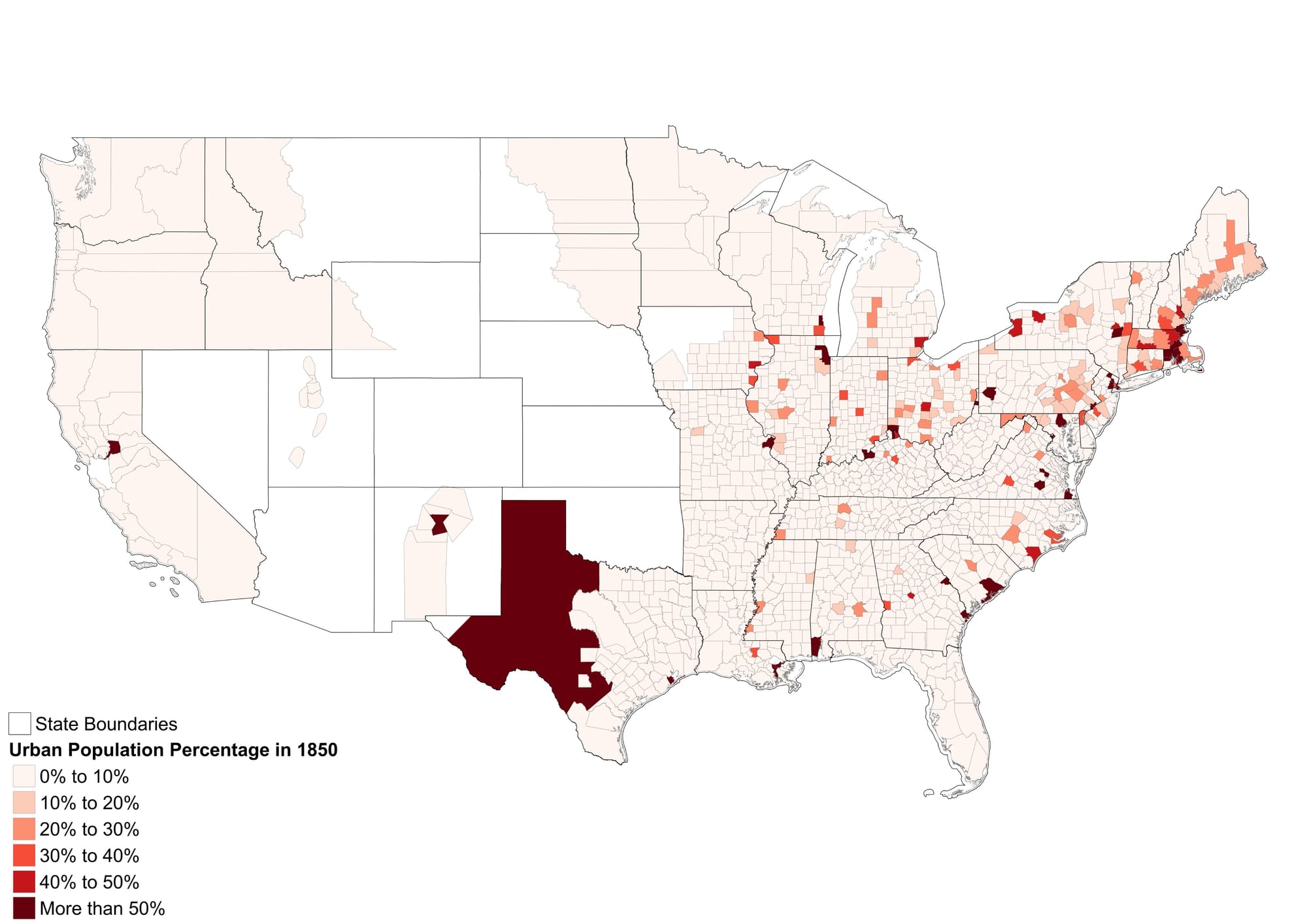
19) Historical settlement patterns still echo in weird ways: A short X note tying west Texas settlement patterns to late-19th-century Comanche conflict is a reminder that some present-day maps, street grids, and town patterns started as security responses long before they became real estate products. See: Catagélastos on X.
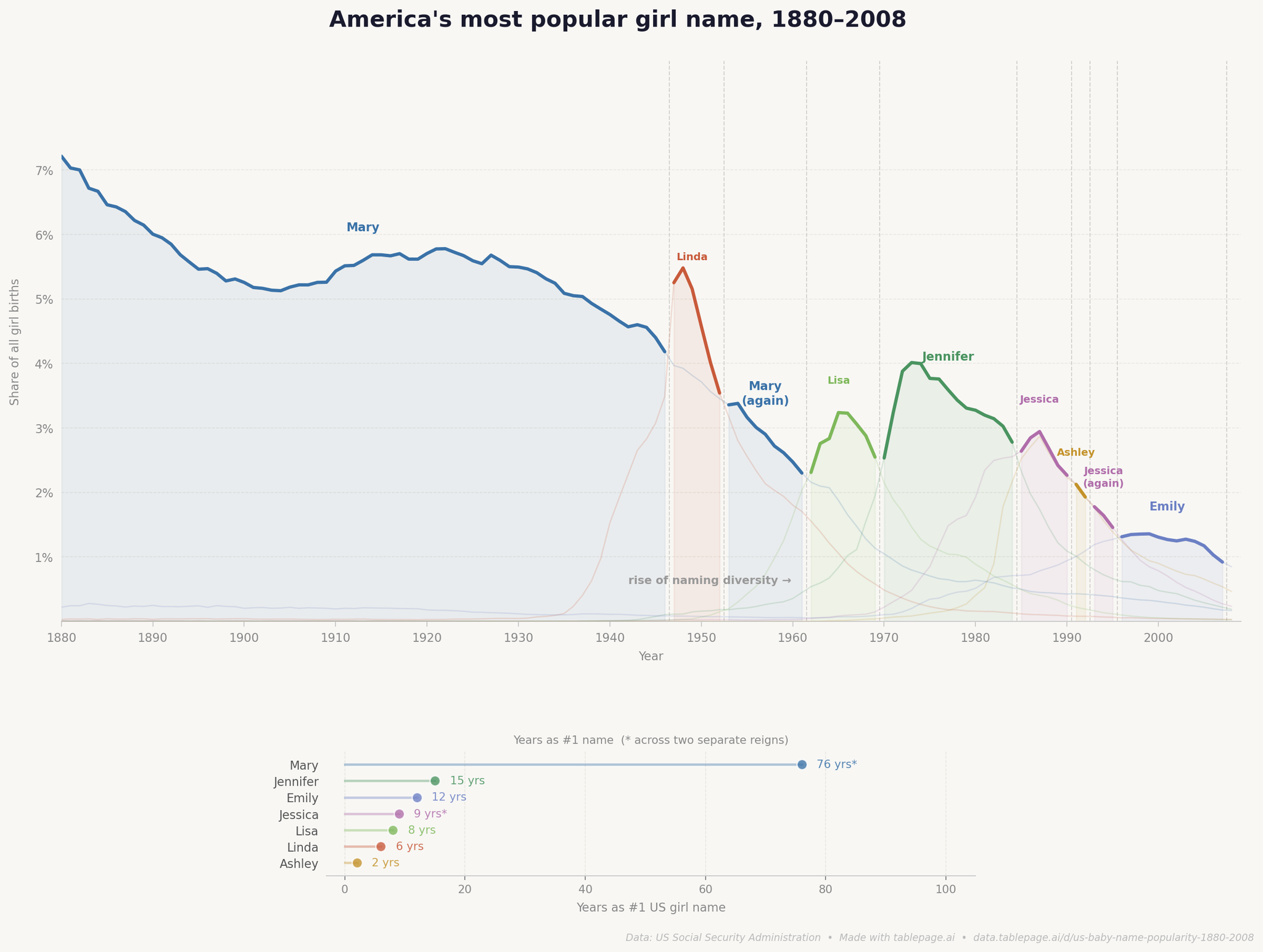
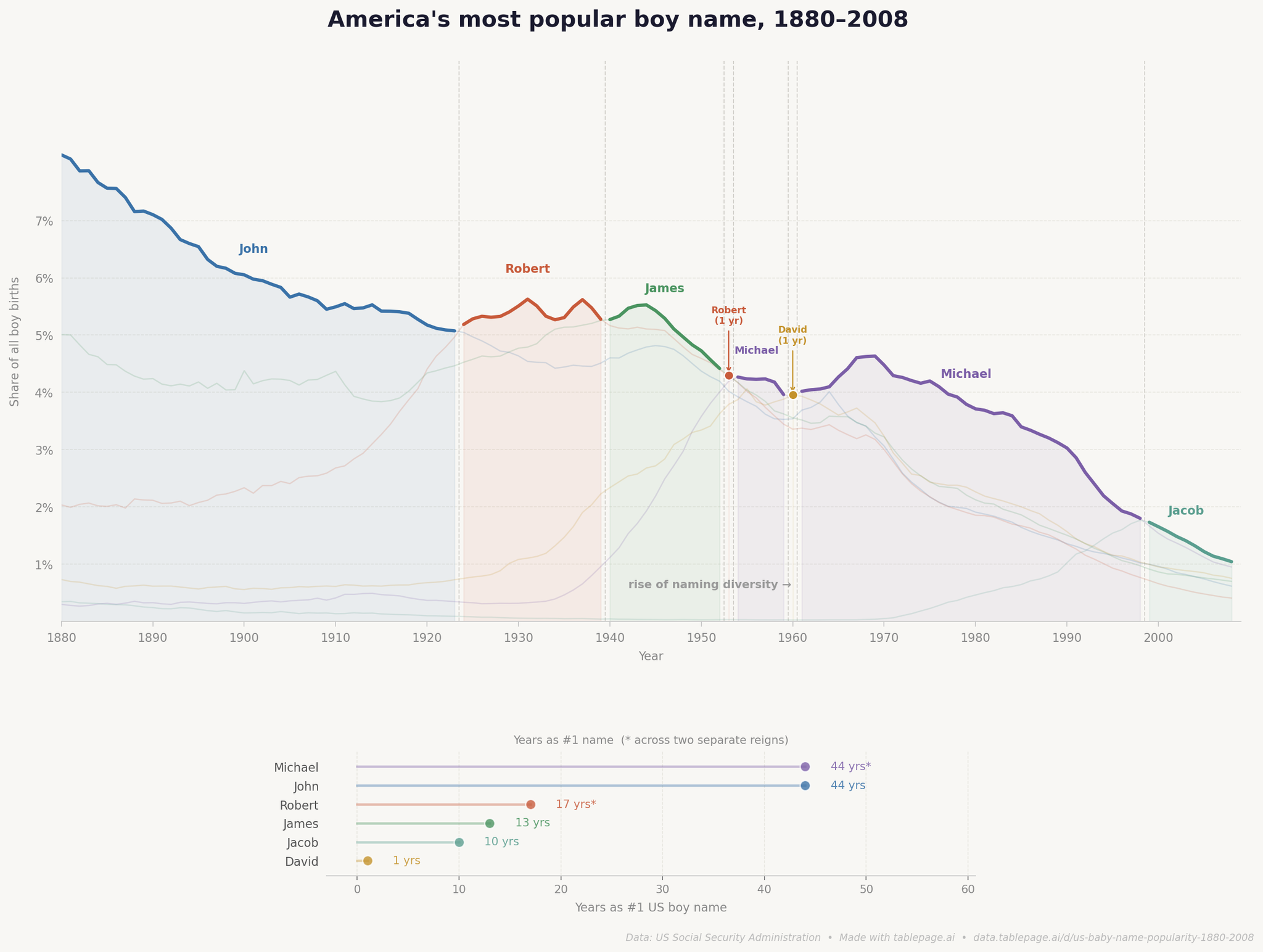
20) Naming diversity is another way culture diffuses: These long-run charts of top boys' and girls' names show how much harder it has become for a single name to dominate. Not core econ dev data, but a nice side-door into the broader story of cultural fragmentation and diversification.
21) We don't talk about Chicago: Why Chicago Became America’s Most Important City, and why everything passes through it. This video explains how geography, trade routes, and transportation networks made Chicago the central hub of the U.S. economy.
Chicago isn’t just another major city—it sits at the only low-friction connection between two massive river systems: the Great Lakes and the Mississippi River basin. That geographic bottleneck turned Chicago into the key transfer point for goods moving across North America. Watch.