30 Things Economic Developers Need to Know This Week
The stories Dane thinks you need to see. November 5, 2026 edition.


Welcome to this week's issue of What Economic Developers Need to Know This Week, where we explore the evolving dynamics of our economy.
This week we have 30 tools, stories, graphics, charts and videos that I think you'll find informative, useful, inspiring, and perhaps even humorous. Some are economic development related directly, and some only indirectly.
If you're wondering what to do with the info in this newsletter, send something to your board members. It will make you look good!
Today's email is brought to you by Resource Development Group
Resource Development Group and Convergent Nonprofit Solutions have recently announced a merger of these two well respected firms. RDG is now operating as Resource Development Group, a Convergent Company and will lead the combined operations in economic development and chamber engagements. Meanwhile, the Convergent banner will take the forefront on efforts on supporting traditional philanthropic and higher education organizations
This merger maintains RDG's innovative and custom approach while also creating the deepest bench of economic development and chamber fundraising expertise in the industry, the most complete data set in the country regarding economic development and chamber funding, and the greatest flexibility to be able to support engagement models tailored specifically to every market, regardless of size. Whether you’re a single county EDO ready to kick off your first fundraising campaign or a large regional organization on your third funding cycle, they have the team and experience to get you the results you’re looking for.
This week on the Econ Dev Show
1) Economic development and developers in the news #267: Borrow an idea from a colleague. The latest news roundup follows economic development executives and organizations across 24 states. Browse the projects, partnerships, and leadership moves, then pick a story to share with someone working on a similar challenge in your community.

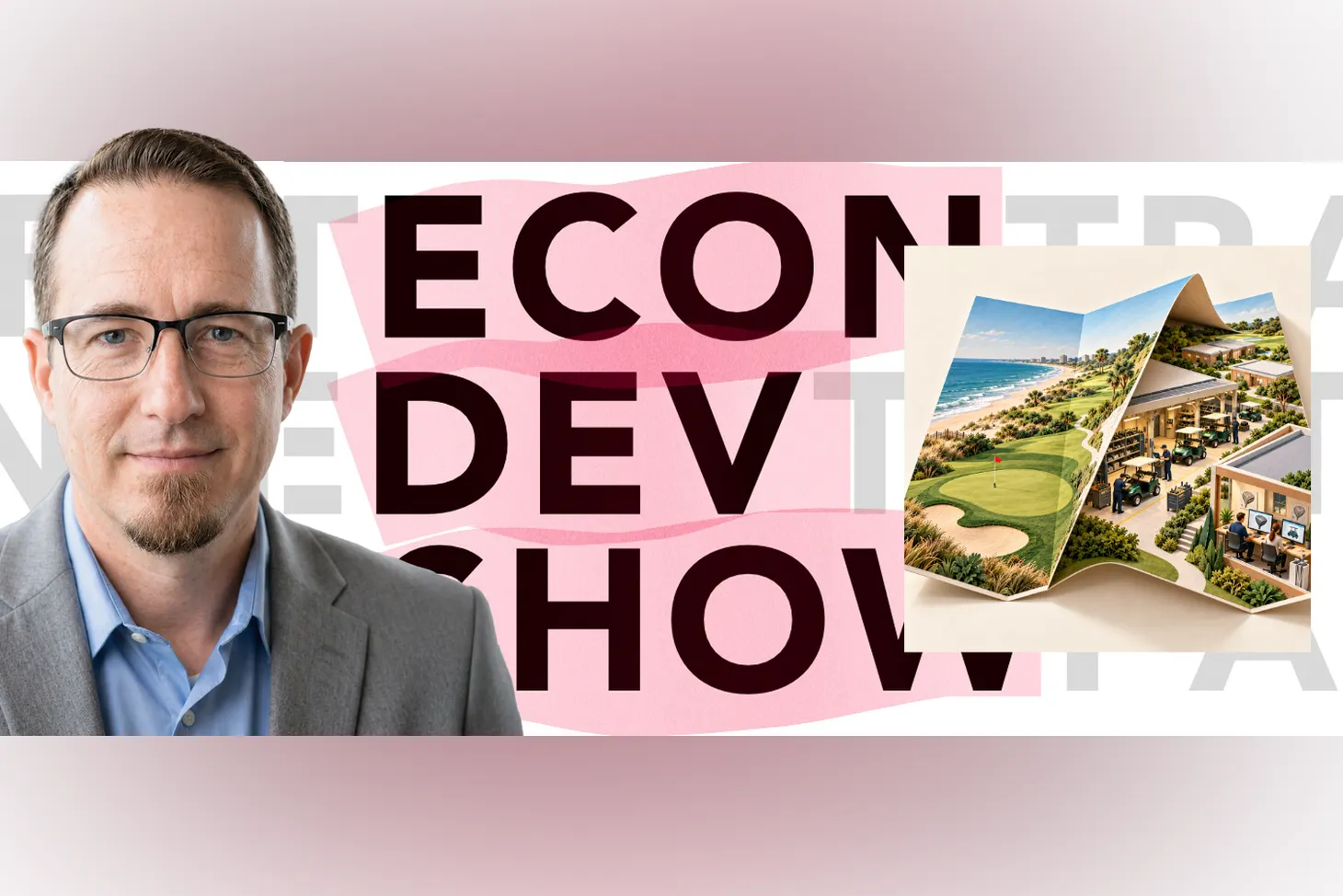
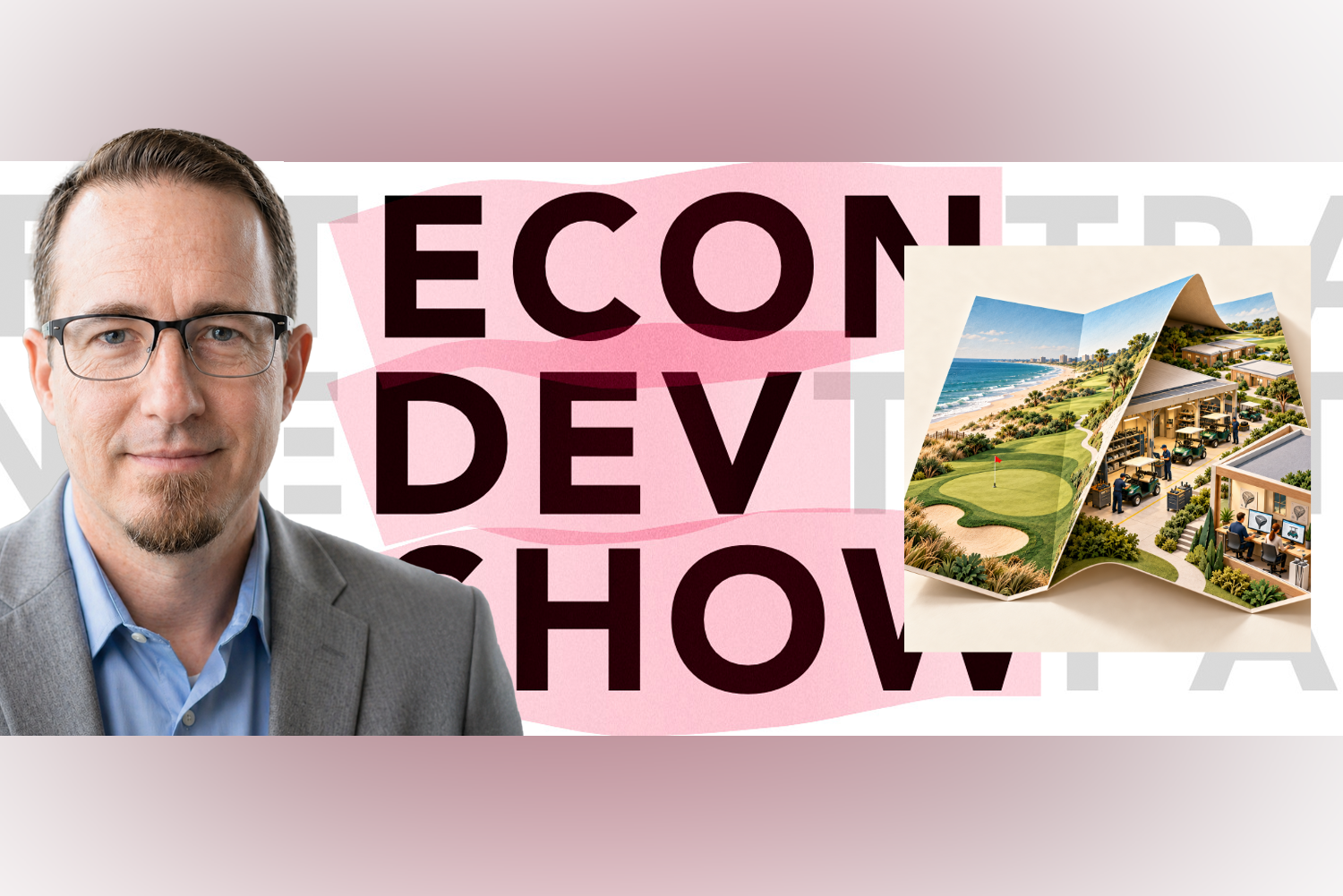
2) The industry hiding in your tourism brochure: Your biggest attraction may also be a business recruitment asset. Sandy Davis and Ryan Cannon join Podcast 241 to explain Myrtle Beach’s push beyond golf vacations into golf manufacturers, technology, and suppliers. Who makes, maintains, and improves the things visitors already come to your community to enjoy?
3) A new opportunity for someone you know: Pass along a good economic development job. The October 30 roundup includes 50 openings across 32 states, Washington, D.C., and remote roles. There are opportunities from early-career positions to executive leadership. Check individual listings for current availability and deadlines.
Learn together, then put it to work
4) We're bringing an economic development unconference to Oklahoma in 2027. Jaime Nichols and I are planning something a little different for Oklahoma economic developers next year.
No keynotes. No sales pitches. No sitting through presentations hoping someone eventually gets to the part you care about.
Instead, you help build the agenda when you arrive. Bring the challenges you're wrestling with, the ideas you're testing, and the things you've figured out that others might learn from.
We'll have problem-solving sessions, show-and-tell, and honest conversations with people doing the same work you do. The goal is simple: get the right people in a room and let them learn from each other. Jaime explains the unconference concept here.
Oklahoma is our starting point, but if there's enough interest from economic developers in other states, we'd love to bring this format to more places.
We're still working out the details, and we'd love your input. What would make an event like this worth attending? Sign up for updates, share your ideas, or help us put it together.
5) Beyond prompts: Watch AI do more than write another paragraph. In this Golden Shovel webinar, I walk through ways economic developers can use AI to analyze data, enrich property information, prepare RFI responses, and complete workflows. Bring one repetitive task from your own work and think about where a better process could start.
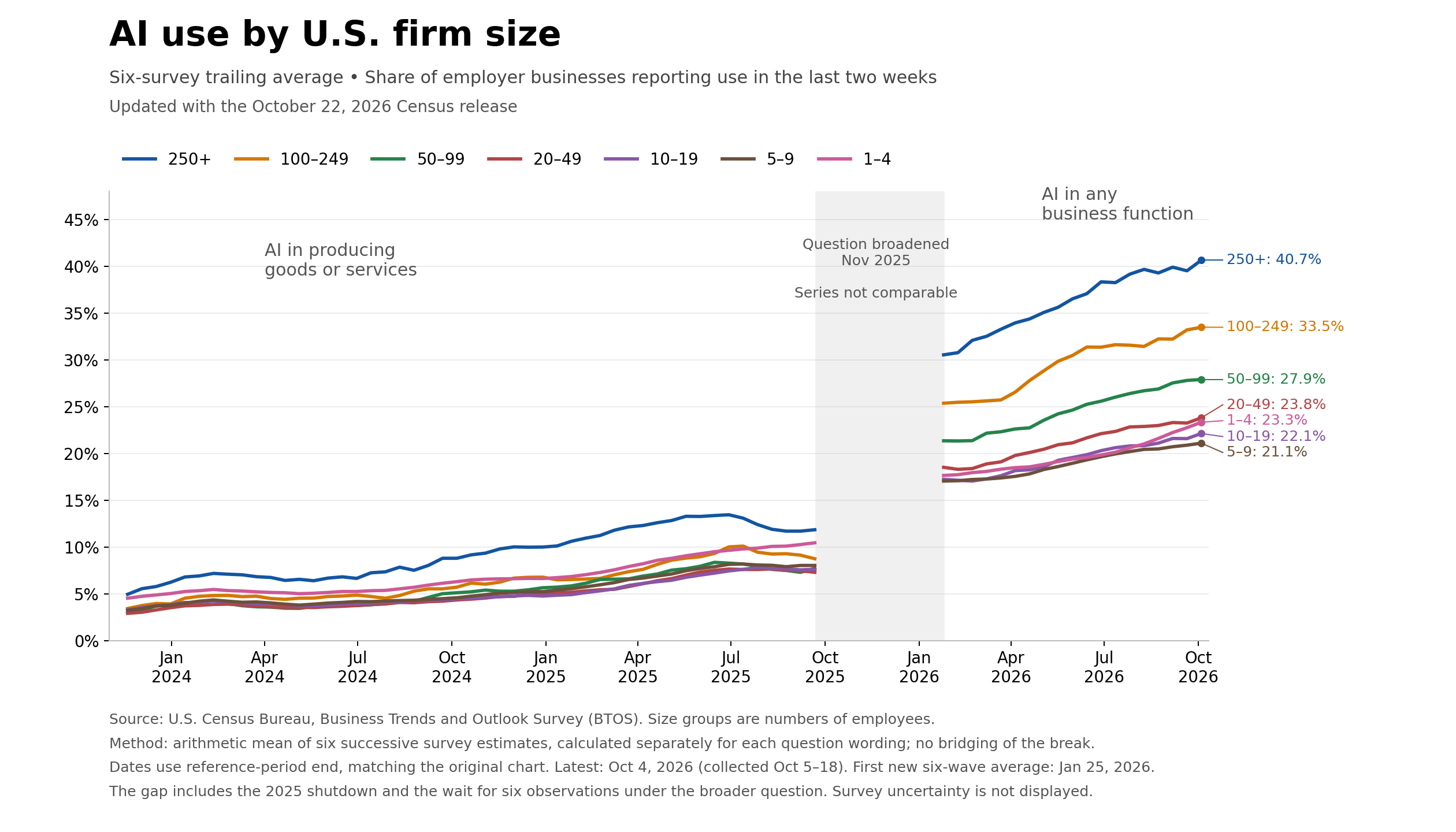
6) The question changed, so the chart changed: Read the question before reading the trend. Simon Willison revisits business AI adoption and finds a big measurement break. In November 2025, Census broadened its question from AI used in producing goods or services to AI used in any business function. Census documents the change. The two series are not directly comparable, a useful reminder before you put the next chart in a board deck.
7) A useful post can work without a click: Give people something useful where they already are. SparkToro’s zero-click marketing FAQ argues for sharing the answer in the post, video, or search result. For an EDO, that could mean publishing the workforce chart or site explanation directly. Track qualified inquiries and recognition alongside website visits; a falling click count does not tell you whether the right people learned something.
People, housing, and the workforce
8) Child care for the night shift: Child care belongs in the infrastructure conversation. In this Site Selectors Are People, Too episode, Nicole Riehl of EPIC discusses capacity audits, employer partnerships, financing, and the zoning rules that can limit supply. A plant may have enough power and water while still struggling to hire parents whose work hours do not match available care.
Nicole is next week's guest on the Econ Dev Show Podcast, too!
9) The heartland’s September jobs picture: Look beyond the national headline. Brian Kelsey’s metro comparison highlights year-over-year payroll gains in Minneapolis-St. Paul, Baton Rouge, Huntsville, and other heartland markets. The Twin Cities gained about 1.1%; Baton Rouge about 2.7%. He also flags that some changes do not clear BLS statistical-significance thresholds. A useful shortlist for closer local analysis.
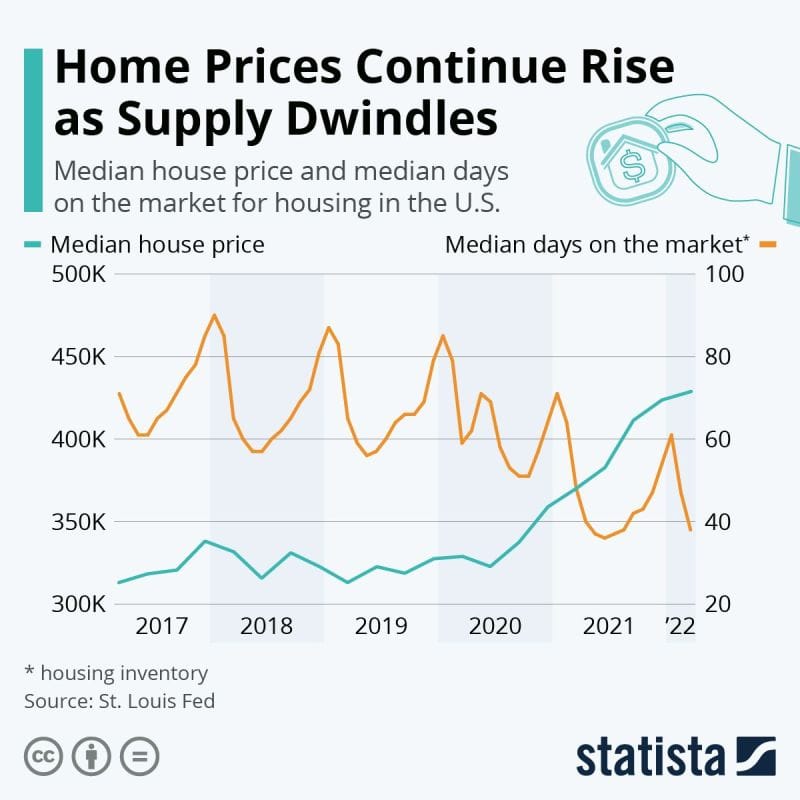
10) A look back at the pandemic housing squeeze: Fast sales and rising prices made life harder for buyers. Aaron Lubeck revisits a pandemic-era housing chart that shows prices climbing as homes spent less time on the market. The chart ends in 2022 and measures selling time, rather than the number of homes available. Use it as historical context for today’s housing discussion.
11) Help good housing ideas travel: A proven idea still needs people and money to implement it. The New Localism looks at a housing initiative designed to spread faster permitting, accessory dwelling unit reforms, and housing strike teams. Bloomberg Philanthropies plans support for up to 30 city halls, including funding and practical help. Which local bottleneck would you tackle first?
Projects, power, and public trust
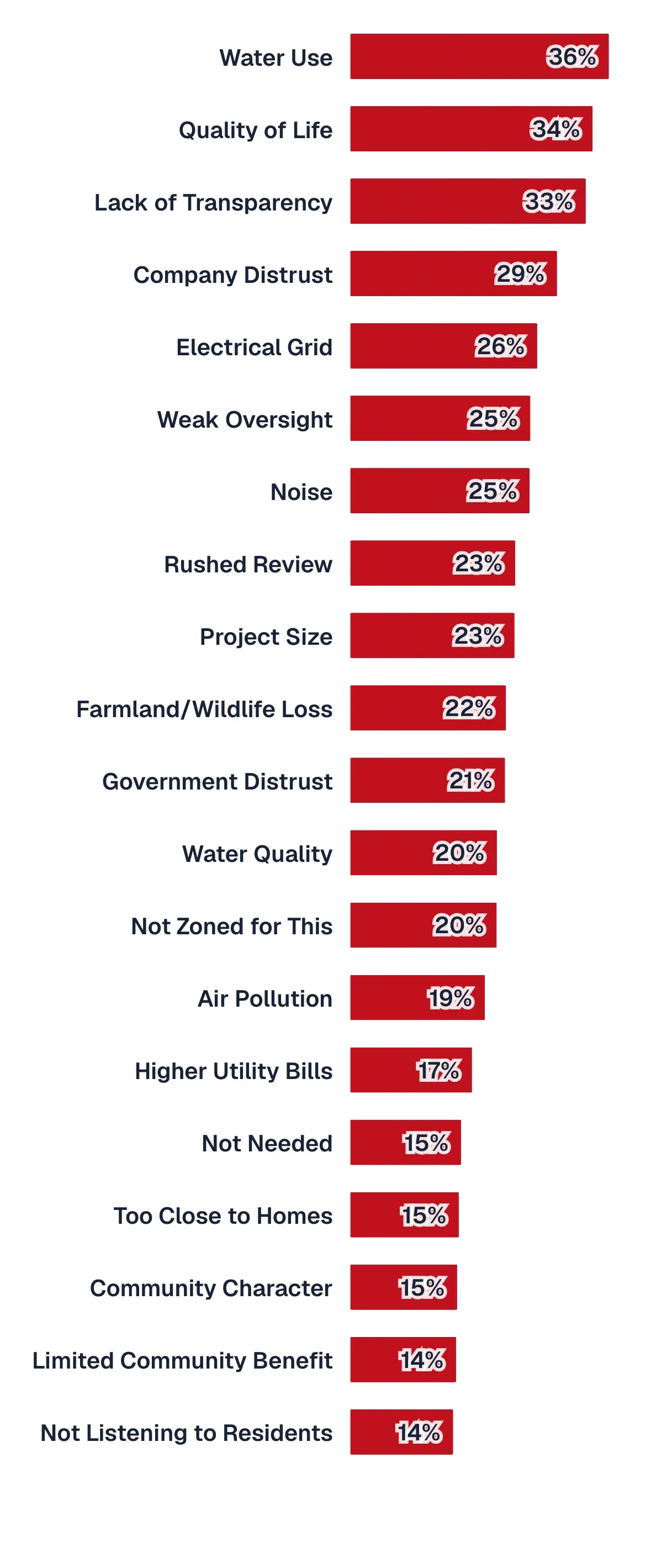
12) Listen to the people at the microphone: The questions residents ask are part of site diligence. America on Data Centers lets you explore more than 10,000 public comments and watch source videos from local meetings. Water, quality of life, and transparency feature prominently. This is a record of people who spoke at meetings, not a representative poll of American opinion. Use it to prepare better answers.
13) The equipment on your project’s critical path: Available electricity still needs equipment to reach the site. Jasmine Garland explains the shortage of large power transformers, the custom equipment that helps move power through the grid. Aging equipment, new demand, and manufacturing constraints all compete for supply. In your next utility conversation, ask about transformer procurement and installation alongside generation, transmission capacity, and the promised service date.
14) Election Day belongs on the project calendar: An approval does not settle every obstacle to construction. Roy Wells argues that political feasibility belongs on the critical path, alongside land, power, financing, and permits. His Election Day essay is a useful prompt to map local ballot procedures, stakeholder concerns, and decision points early. Read it for the project-planning lesson, rather than as a report of election results.
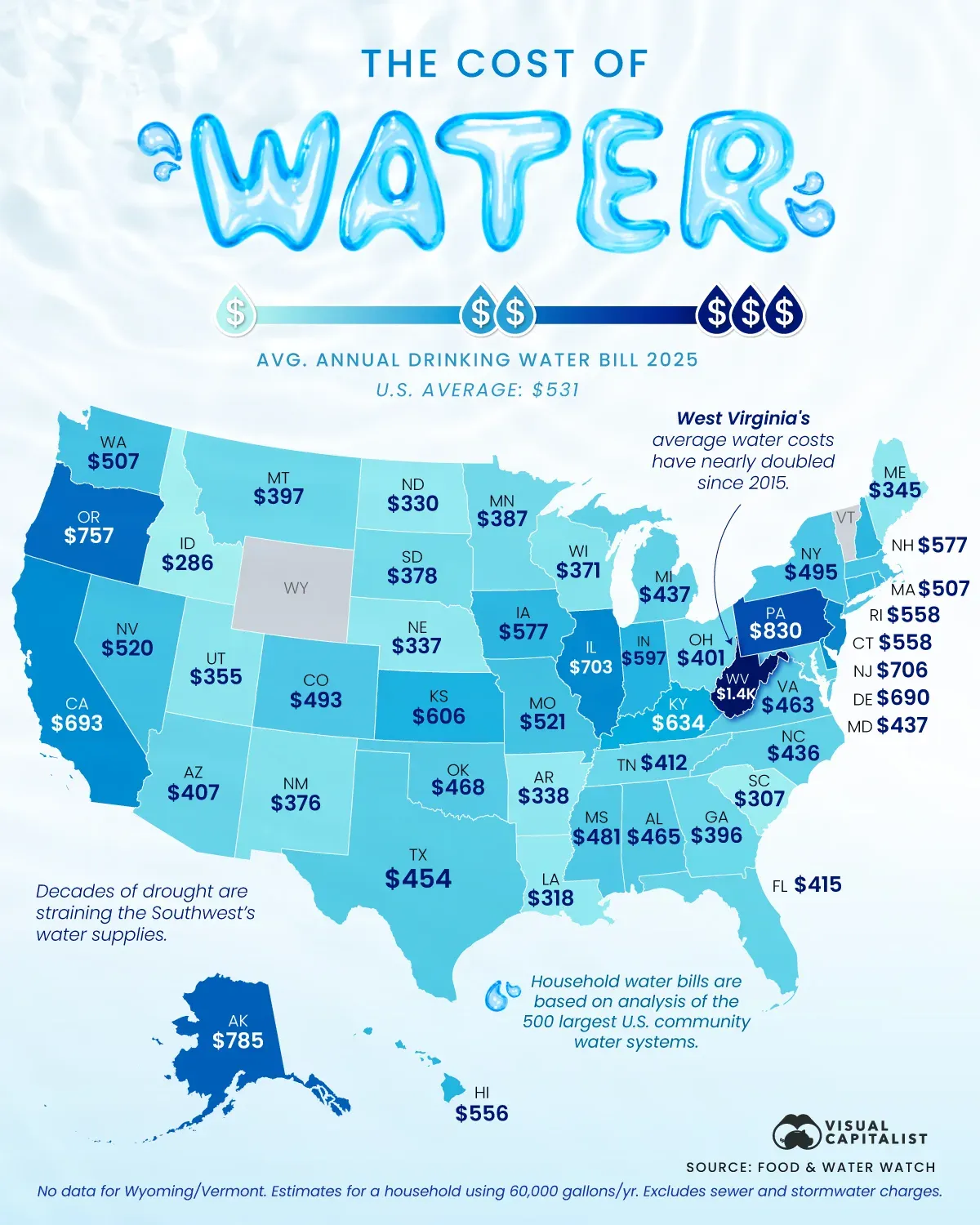
15) The water bill is part of affordability: Reliable infrastructure has to be affordable to operate. This map of drinking-water bills shows a wide gap between states in the systems studied. It compares 2025 bills for 60,000 gallons of annual household use, excluding sewer and stormwater, and draws on Food & Water Watch’s analysis of 500 large community water systems. A useful reminder for growth discussions: ask about both capacity and the cost households will carry.

Sitehunt helps economic developers find, understand, enrich and market their sites, match them to projects, and respond with confidence in minutes instead of scrambling for days.
16) Measure what energy projects leave in the community: Look past the construction announcement. A University of Missouri study covered by Harvest Public Media compares rural counties with and without wind and solar projects, finding gains that differ by industry and type of project. The story also explores local resistance and land-use rules. For your next energy proposal, ask how jobs, wages, local businesses, and agriculture could be affected over time.

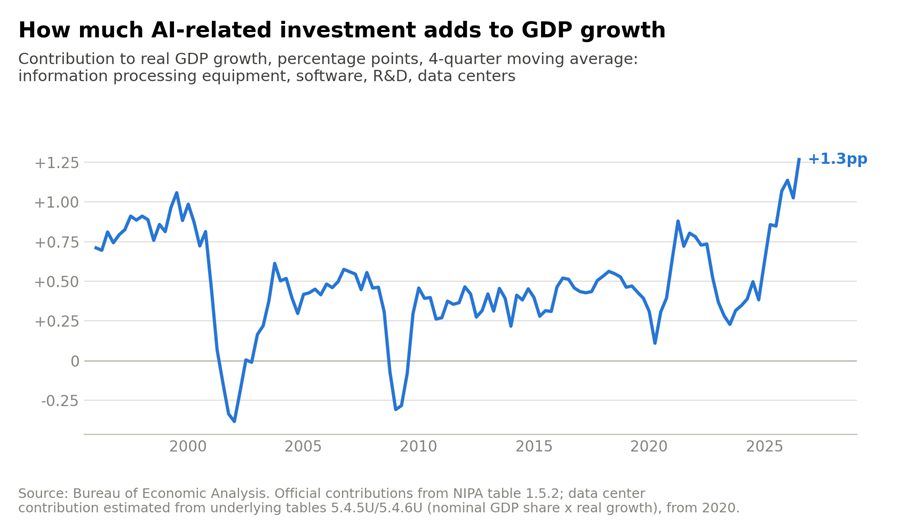
17) The next AI investment boom: Labs, factories, and suppliers could be the next part of the story. Gad Levanon makes the case for a second AI investment boom, as new products and scientific discoveries move toward commercialization. That is his forecast, with plenty still to prove. The accompanying chart includes non-AI spending within broader investment categories. For economic developers, the useful question is which existing industries could help turn new discoveries into production.
18) Build an ecosystem around the lithium opportunity: A big plant can also become a customer for local entrepreneurs. Paul O’Brien examines Texarkana’s lithium opportunity and argues for connecting founders to the operating problems of industrial employers. Paid pilots and supplier contracts could spread the benefit beyond extraction. The projects he describes are at different stages; proposed capacity and jobs remain contingent.
19) Fix the problems that stop a property tour: A prettier building is not always a more useful building. This commercial-property renovation guide starts with the intended next use and the problems that deter buyers or tenants. Roofs, HVAC, drainage, and functional space can matter more than finishes. A useful checklist for business visits and vacant-building conversations: understand the likely user before encouraging an expensive, highly specific buildout.
20) Pair capital with business support: A fund works better when entrepreneurs can use it well. Aminah Saleem describes the origins of the Virgin Islands’ VI LEAP Fund. The Community Impact Fund’s broader model combines access to capital with individual advice and cohort learning. For communities building their own programs, the useful question is who helps a business prepare, apply, and grow after the financing arrives.
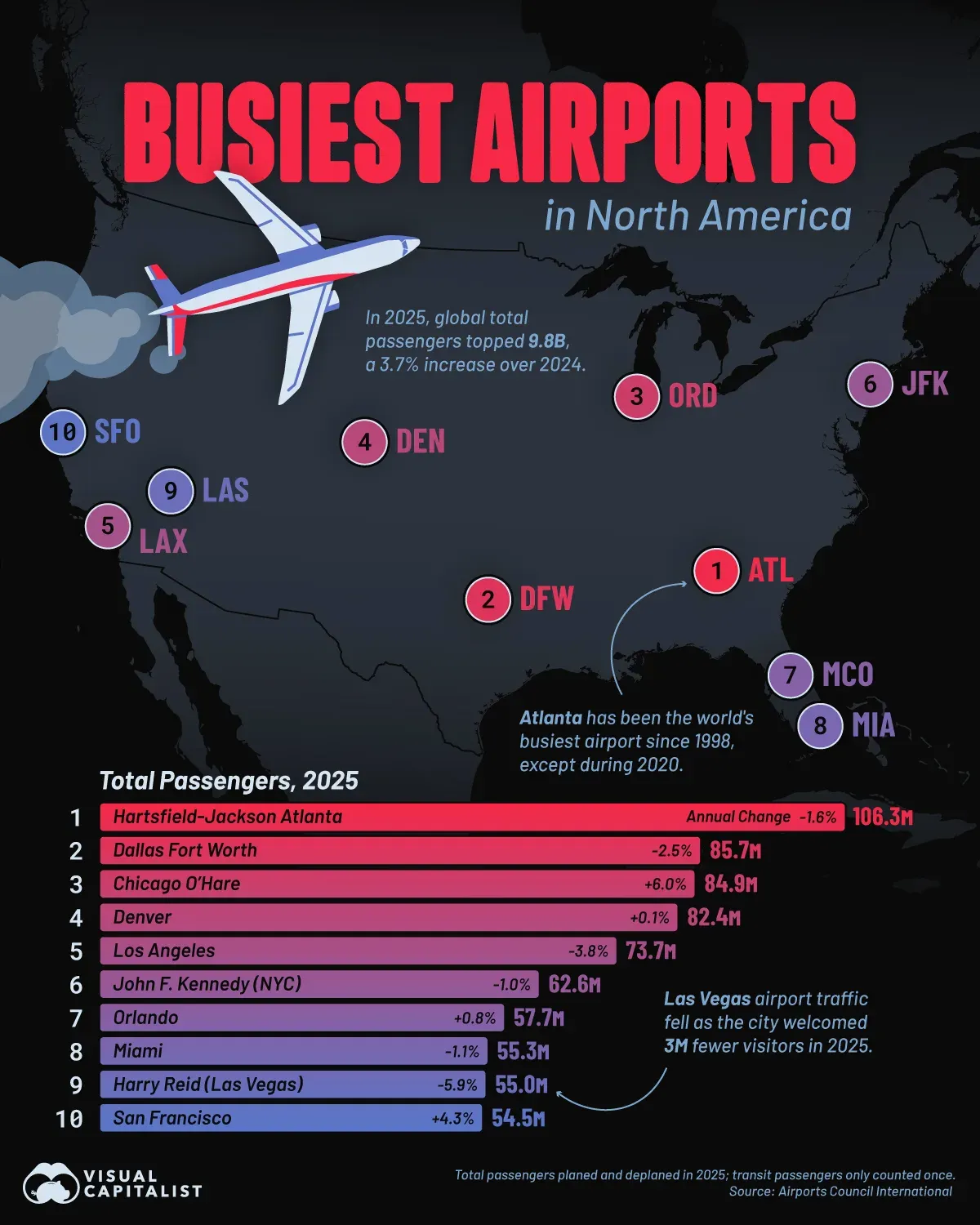
21) Air access is more than the passenger count: A hub can connect a region far beyond its local market. This airport chart puts Atlanta first in North America, with 106.3 million passenger movements in 2025. For a business prospect, the next questions are more specific: which destinations are nonstop, how often do flights run, and can employees make the trip they need?
22) Cheaper crude does not guarantee cheaper freight: Watch the fuel your employers actually buy. EIA’s latest report shows U.S. distillate inventories, including diesel and heating oil, fell 3.6 million barrels in the week ending October 30 and stood 13% below the five-year average. Matt Forshee’s morning briefing connects the squeeze to transportation costs. For manufacturers and distributors, ask which diesel index sets the freight surcharge and how often it adjusts.
23) A storm that changed the economic map: Market access can change a place for generations. Christian Vedel shares his economic-history research on X: an 1825 storm opened a Danish waterway to North Sea shipping. His paper examines the trade and population changes that followed. It is a striking historical example for anyone explaining why ports, transport connections, and physical geography belong in an economic development strategy.
A wider view, and a little fun
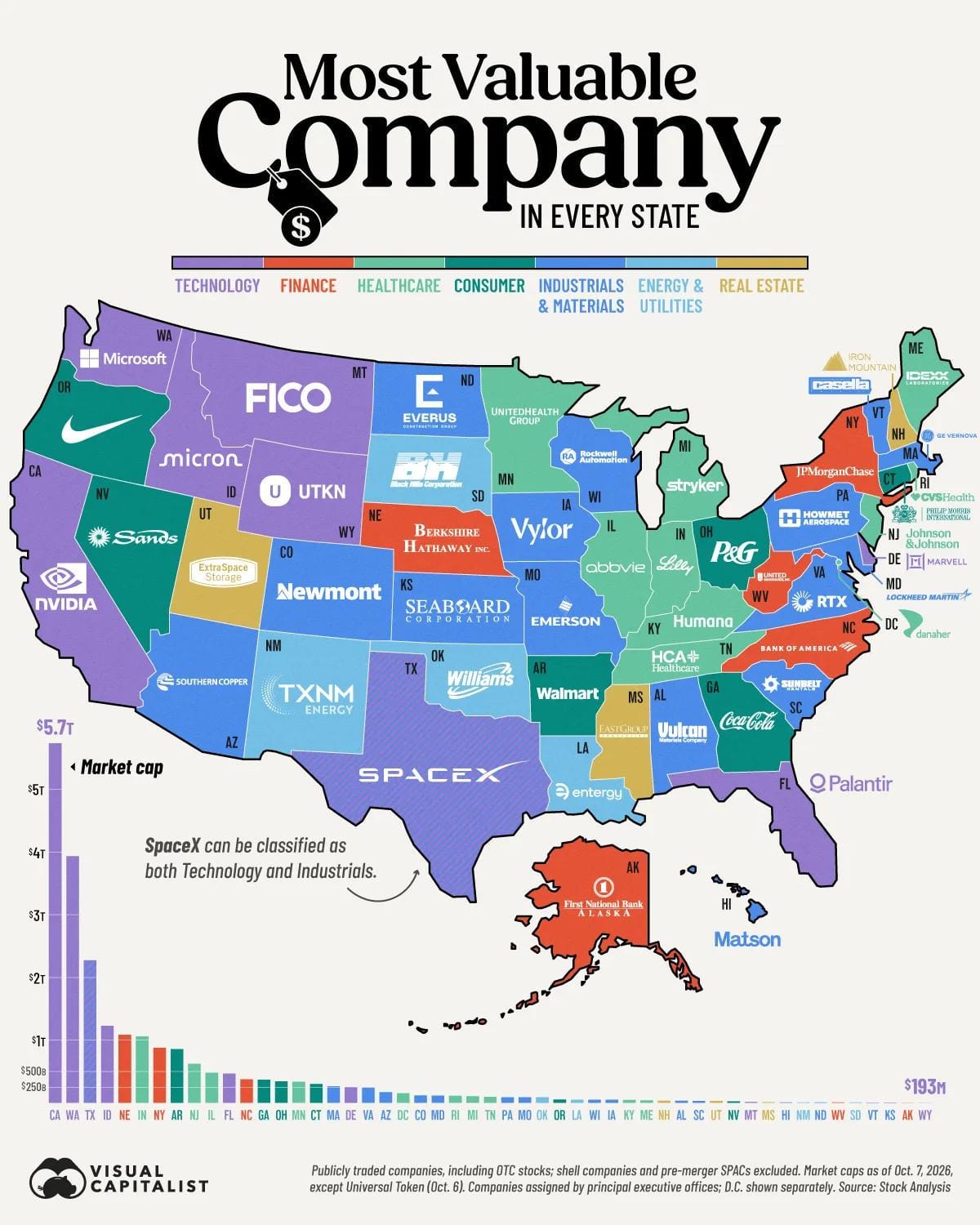
24) The corporate map has some surprises: Your state’s most valuable company may not be its biggest employer. This map shared by Jake Poulsen ranks publicly traded companies by market value and assigns them by principal executive office. The original graphic explains the method. It is an October snapshot, and a different way to look at the industries that call each state home.
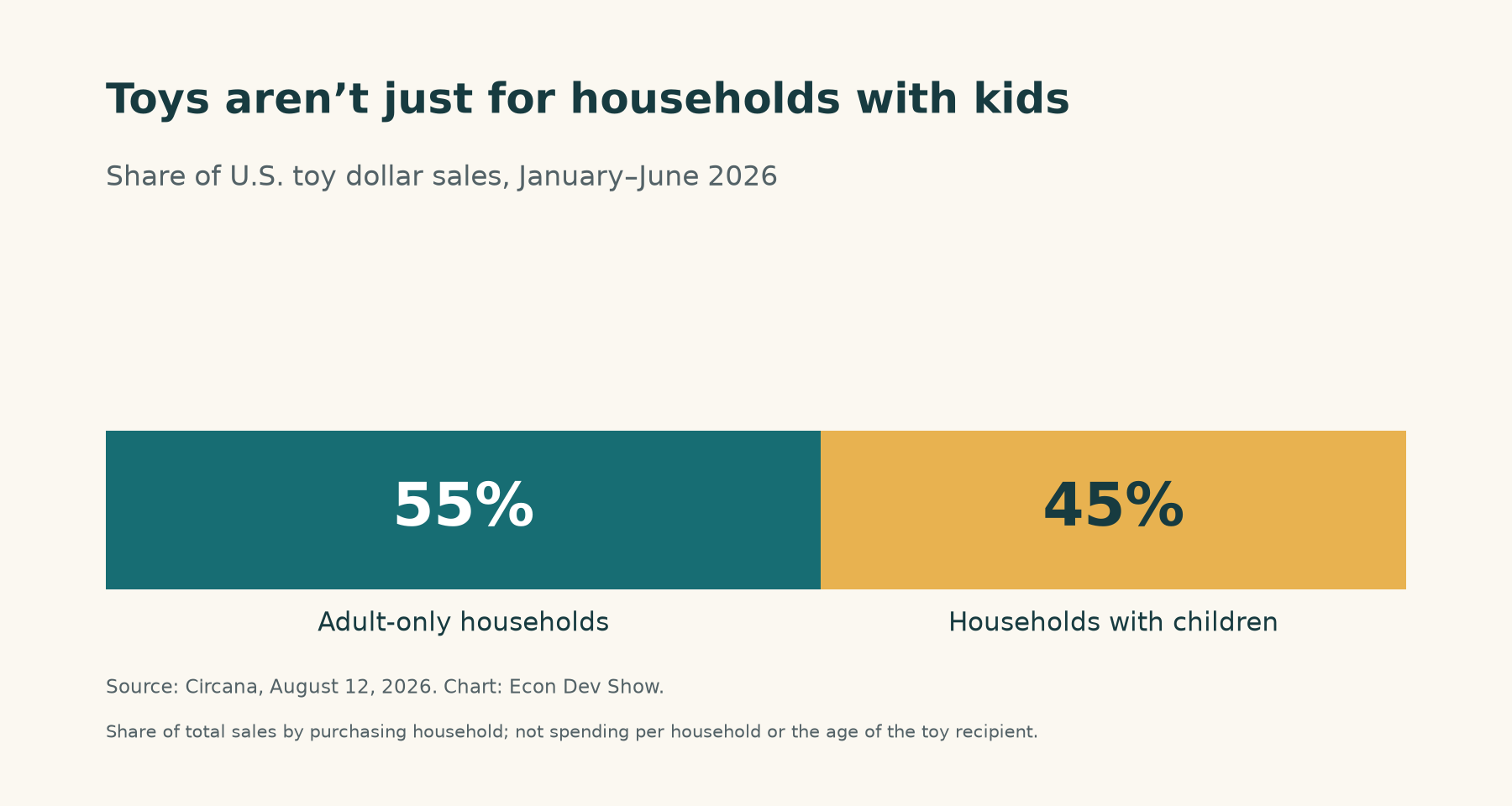
25) The toy customer may be a grown-up: Adult-only households accounted for a majority of toy spending. Circana reports that they accounted for 55% of U.S. toy dollar sales in the first half of 2026. Collectibles, games, and hobbies are widening the market. For downtown retailers, the opportunity may include adult enthusiasts as well as parents shopping for children.
26) Your community’s longstanding businesses: Your longstanding firms have stories worth telling. Seth Hawkins’s post about old businesses is a prompt for a BRE visit or local-history feature. The circulating map has labeling errors, so verify local candidates before calling one “the oldest.” Better yet, ask owners how they have adapted, what they need now, and what could help the next generation continue.
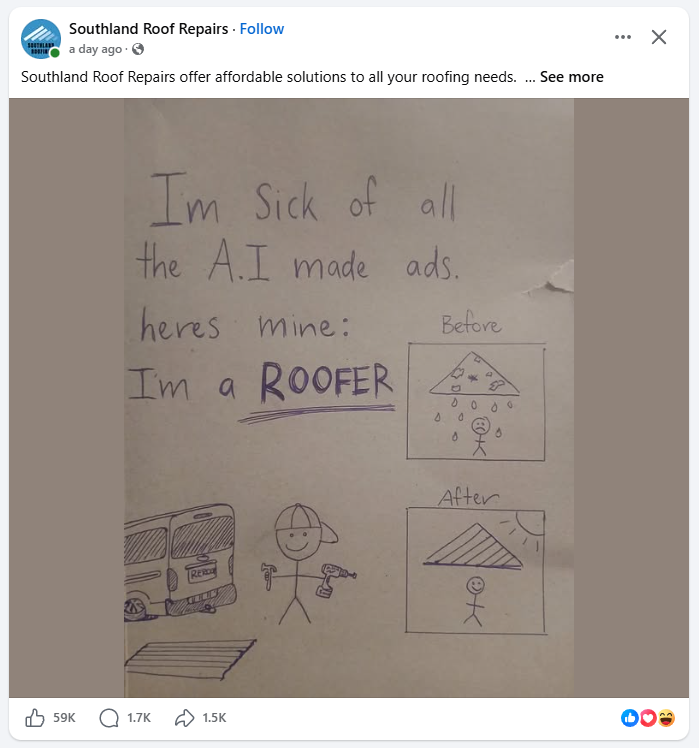
27) When a real drawing looks suspiciously artificial: Authenticity has become a surprisingly tricky marketing problem. A New Zealand roofer posted a rough hand-drawn ad, only to have people accuse it of being AI-generated. Webworm tells the story. It is funny, but also a reminder for small-business marketing: showing the person and process behind the work can matter as much as the finished promotion.
28) A very long view of community development: People were building communities long before they left written records. Kurzgesagt’s new video explores how archaeology, ancient DNA, and other research help reconstruct that world. Take 17 minutes for a much longer view of settlement, cooperation, and civilization. The creators also provide an extensive source and reading list.
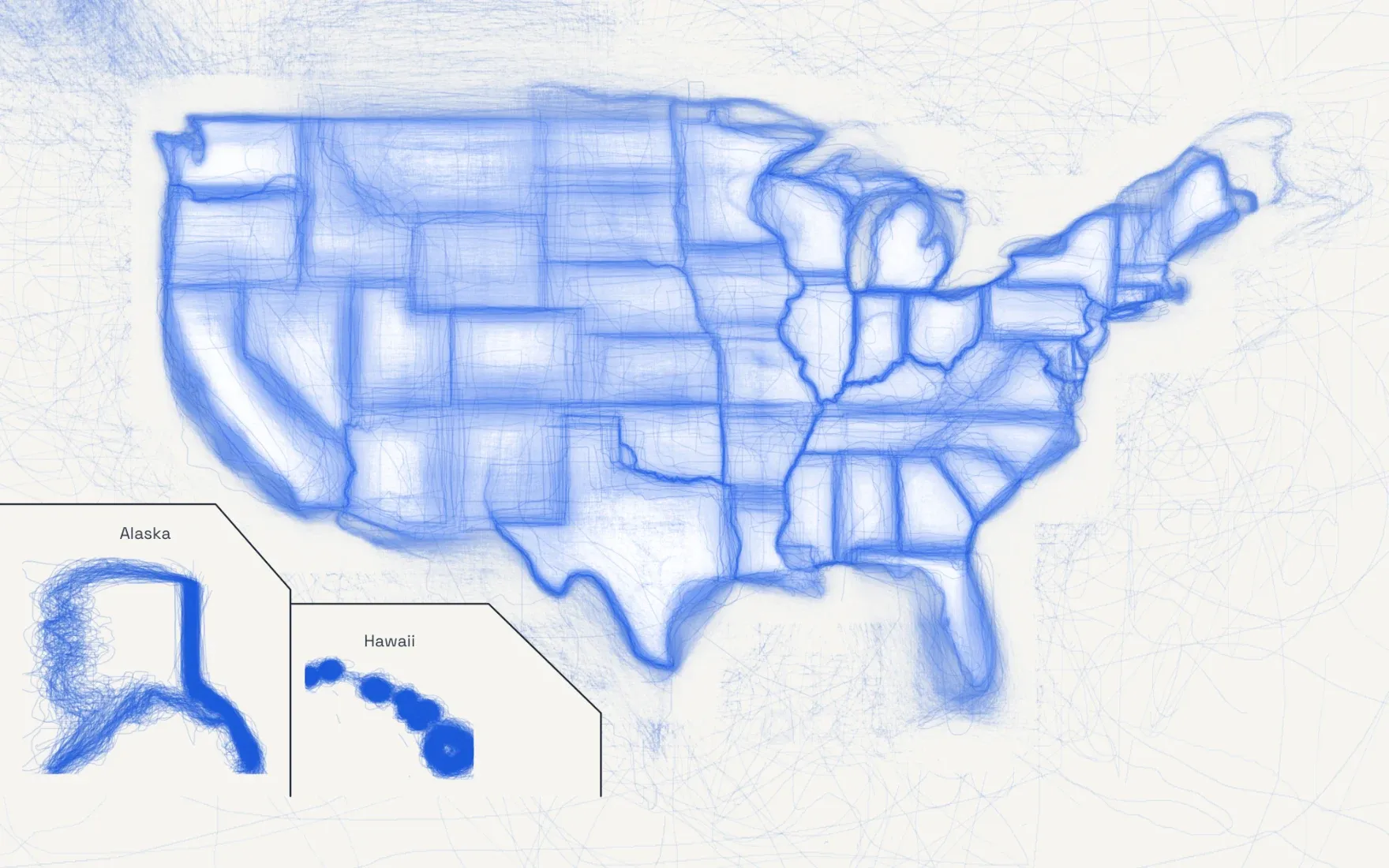
29) Draw your state from memory: You know the map until someone takes it away. The Drawn Maps layers borders people drew from memory while playing Borderline. The collective U.S. map is both recognizable and wonderfully messy. Try the U.S. game, then consider it a low-stakes warm-up for your next staff meeting about geography.
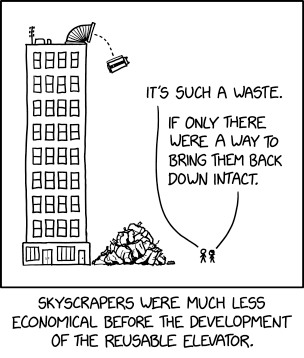
30) A small breakthrough in building economics: Sometimes the innovation is being able to use the thing again. Randall Munroe’s xkcd imagines skyscrapers before the reusable elevator. A little absurdity for anyone who has spent the week discussing infrastructure costs, depreciation, or the next big technological breakthrough.