Rural Economic Development Is Now a Full Local Systems Job
Why recruitment alone no longer drives growth in rural communities


 Dane Carlson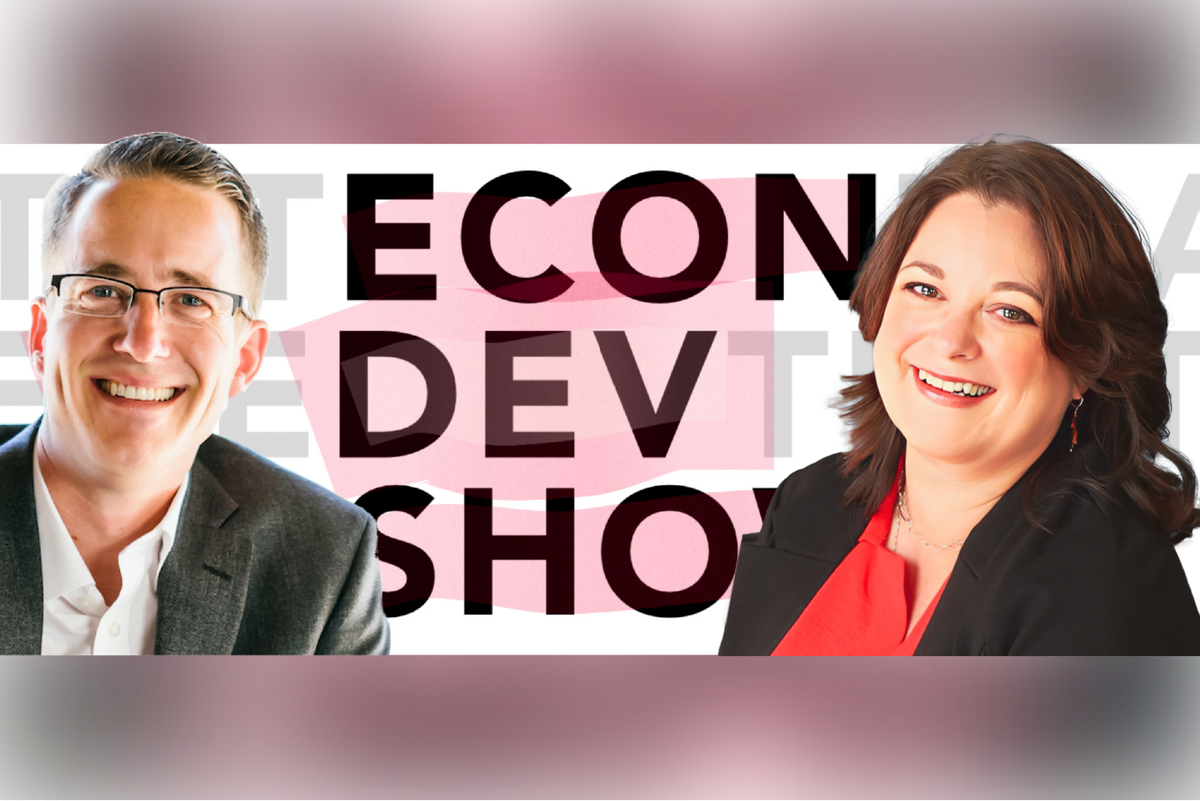
Rural economic development used to look simple.
Recruit a business. Support an employer. Promote the community. Keep the industrial parks full.
That job doesn’t exist anymore.
Dane Carlson’s conversation with Lisa Hurley shows why. In York County, Nebraska, the work now stretches far beyond business recruitment. It includes workforce recruitment, housing development, childcare constraints, community branding, talent attraction, local trust, and the emotional reality of change in a smaller place.
That is the real shift.
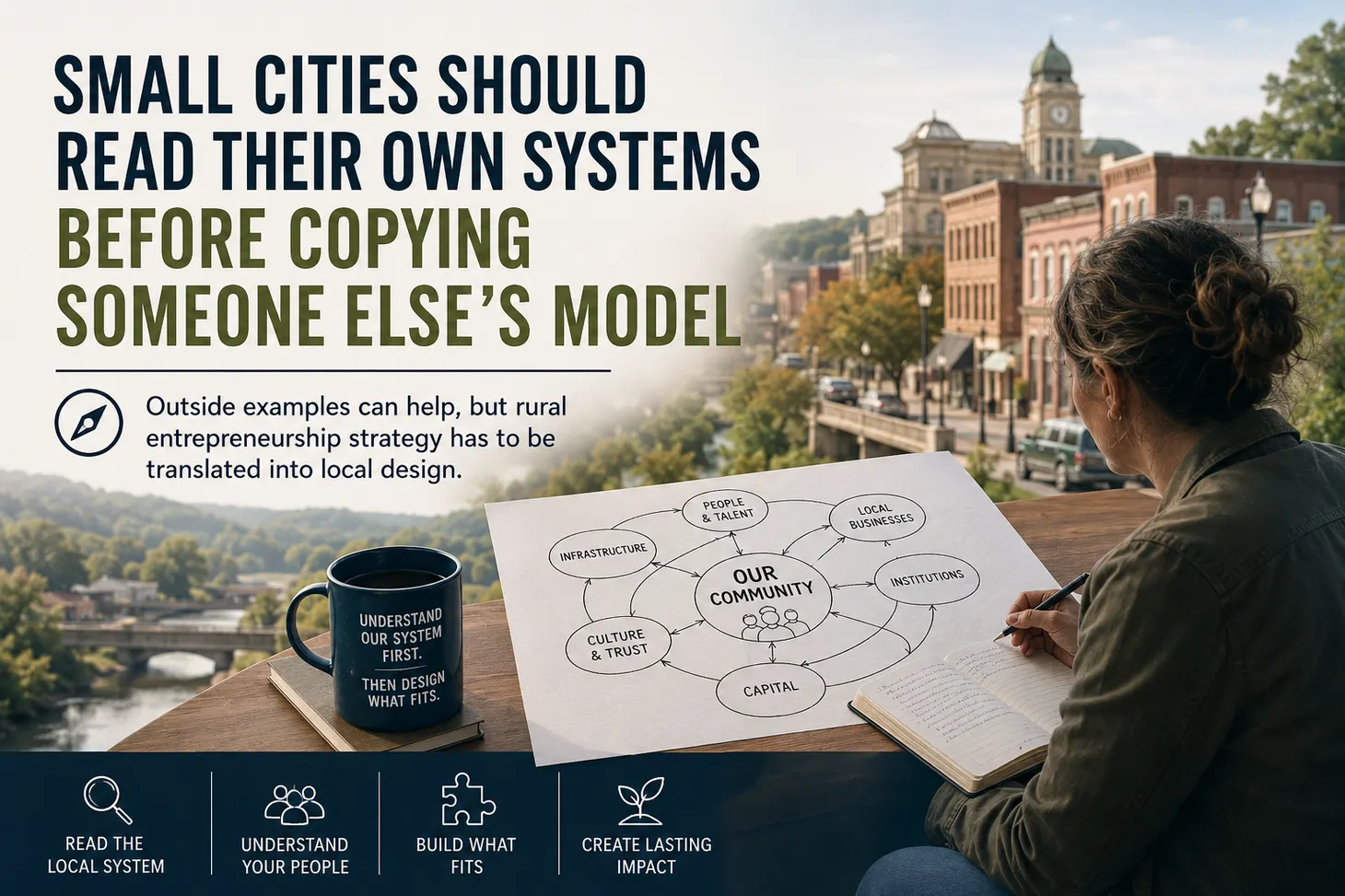
Rural economic development is now a full local systems job.
The Work Is Bigger Than Recruitment
The most important change is not a single program. It is the scope of the work.
Hurley describes a model where York County leans on its logistics position, diversified employers, and growing civic pride while also dealing with workforce shortages, childcare capacity, and housing pressure.
That reveals a bigger truth. The job is no longer just identifying prospects and answering RFIs. It is understanding how the underlying pieces either support growth or quietly block it.
If you can recruit jobs but not house workers, growth stalls. If you have employers but no childcare, labor participation drops. If your message outruns reality, trust erodes.
This is why rural economic development no longer works as a narrow recruitment function.
It is a coordination function.
Rural Places Need a More Honest Growth Strategy
This episode works because it does not romanticize rural places.
York County is clear about its advantages: logistics corridors, diversified employers, and a sense of civic pride that supports momentum. These are real assets tied to operating conditions.
But the episode also shows the constraints. Housing development, labor shortages, and community resistance are not side issues. They shape what is actually possible.
This is where many places lose credibility. They market the upside but underinvest in the systems that make the upside real.
A stronger approach treats those systems as part of the product.
Workforce recruitment, childcare capacity, and housing are not secondary quality-of-life concerns. They are core economic infrastructure.
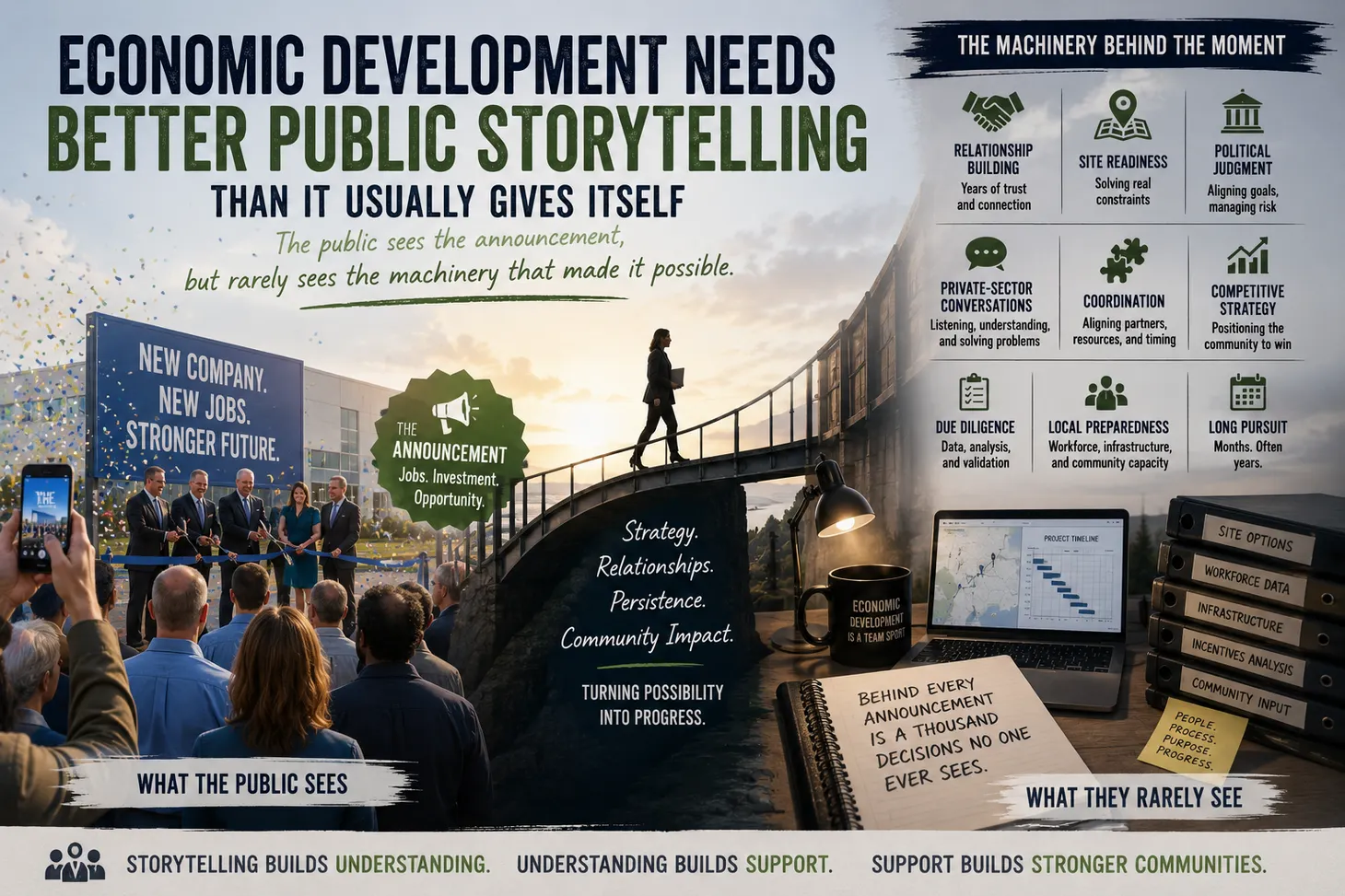
Storytelling Is Not Soft Work
Community branding is often treated like a nice-to-have.
It is not.
If talent attraction is part of the strategy, then messaging becomes operational. The question is not whether to tell the story. The question is whether the story is credible.
Effective storytelling does three things:
- shows real people
- explains real progress
- proves the story is true
Hurley’s use of podcasts reflects this shift. Done well, content humanizes the community, builds trust, and reinforces what is actually happening on the ground.
Storytelling only fails when it is disconnected from reality.
When it reflects real progress, it becomes a tool for workforce recruitment and talent attraction in a way brochures never will.
Some Resistance Has to Be Managed, Not Solved
This is one of the harder parts of the job.
Leaders are often told that better communication will reduce resistance. Sometimes it does. Sometimes it does not.
Some opposition is structural. Some is emotional. Some reflects real tradeoffs that cannot be resolved cleanly.
This is not just a messaging problem. It is a tradeoff problem.
The goal is not always to eliminate conflict. It is to manage it. Reduce unnecessary misunderstanding. Make sure the public conversation reflects the real stakes.
Growth happens inside a community, not around it.
Leverage Matters More Than Volume
The job has expanded. The hours have not.
That is why Hurley’s use of AI and operational tools matters. Not as a novelty, but as a way to stay effective.
If everything is done manually, burnout becomes part of the system.
The better model is to use leverage where possible. Partnerships, employer collaboration, communications tools, and automation for lower-value work.
Then protect time for what actually requires judgment: trust, decisions, and coordination.
Communities do not build durable systems by exhausting the people responsible for holding them together.
How to Apply This in Your Own Community
The goal is not to copy York County.
The goal is to test whether your definition of the job is outdated.
Ask a few direct questions:
- Can you house the workers you are trying to recruit?
- Does your talent message match lived experience?
- Is childcare treated as workforce infrastructure?
- Are you managing resistance, or assuming it is a messaging issue?
- Is each success creating a new bottleneck?
These questions reveal whether the strategy matches the work.
Rural economic development is not smaller or simpler than urban work.
In many ways, it is more integrated. The same team is responsible for talent attraction, housing, childcare, employer support, branding, and public trust at the same time.
That is not mission drift.
That is the mission now.
For teams trying to keep site data organized and respond to RFIs quickly, Sitehunt can help reduce the friction before the next deal exposes where the gaps are.

Econ Dev Show Newsletter
Join the newsletter to receive the latest updates in your inbox.