Economic Development Has an Urban Bias
Why rural success is often smaller in the headline and larger in the community
 Dane Carlson
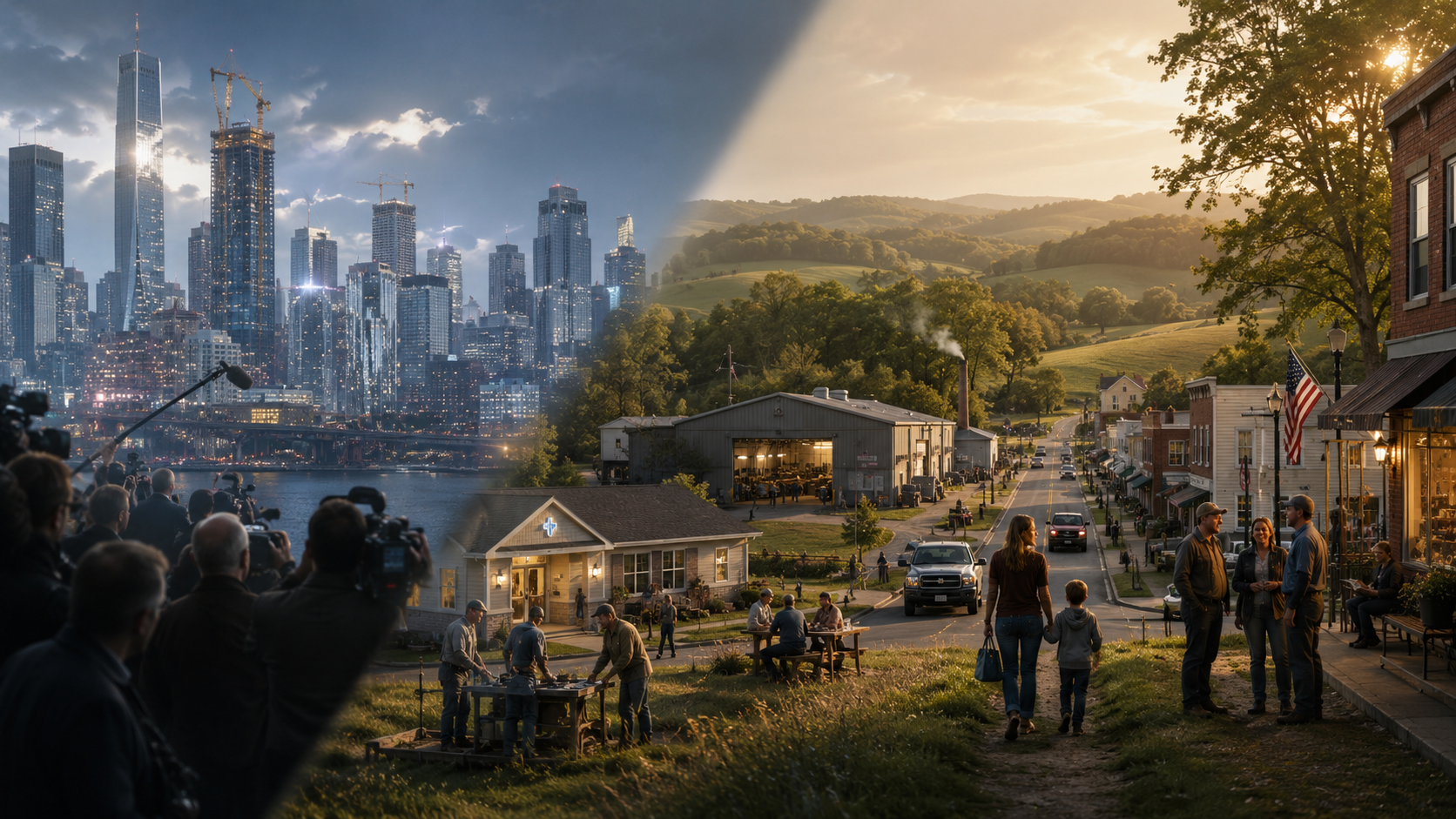
Economic development has an urban bias.
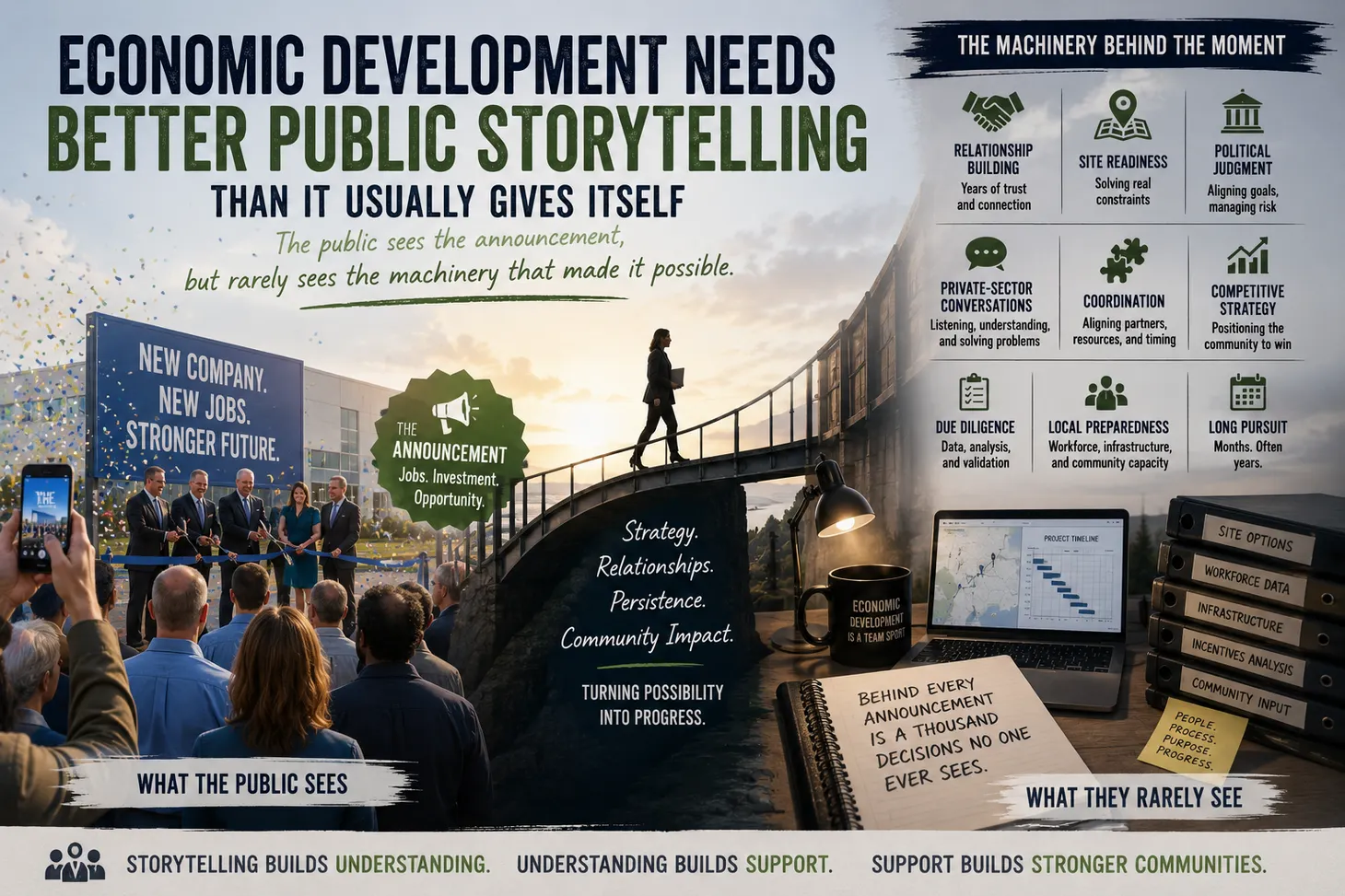
You can see it in what the profession celebrates, what conferences highlight, what case studies get passed around, and what quietly gets treated as “real” success. Big announcements count. Major employers count. Headquarters count. Large capital investment counts. A thousand jobs, a new campus, a billion-dollar facility, a national headline. Those are easy wins to recognize because they look like wins from far away.
But rural economic development does not always work that way.
In a conversation with Dane Carlson on the Econ Dev Show, Robert Harrington of Bourbon County REDI described a different kind of economic development work. It is slower, broader, more personal, and often more important than the size of the announcement suggests. His story is a reminder that rural communities are not simply smaller versions of urban markets. They operate under different conditions, face different constraints, and need a different definition of success.
Because sometimes the most important economic development win in a rural community is not 1,000 jobs.
Sometimes it is 15.
The Big Project Mindset Does Not Always Fit Rural Places
A lot of economic development culture is built around the big project mindset, and that is understandable. Large projects are visible. They create headlines. They justify incentives. They give elected officials, board members, and community leaders something easy to point to. A big project feels like proof that the work is working.
But in rural communities, that same mindset can distort reality.
Harrington makes the point with a simple example: 15 jobs. In a large metro, 15 jobs may barely register. They might not justify a press release, move a regional dashboard, or get noticed outside the company itself. In a rural community, though, 15 jobs can matter a great deal. Losing them can hurt families, weaken the local tax base, damage confidence, and make people wonder whether the community still has a future. Saving them can preserve income, stabilize a business, and give people another reason to believe the place is still moving forward.
That is the problem with applying urban expectations to rural places. The number may be smaller, but the local consequence may be much larger than the profession’s usual scoreboard knows how to measure.
Rural Economic Development Is Measured in Local Consequences
In a rural community, economic development is rarely abstract. People know the business owner, the workers, the building, and the family affected by a layoff. They remember when the hospital closed, when the plant cut back, when the school lost families, and when a project everyone thought was impossible finally happened.
That closeness changes the work because the stakes are not theoretical. They are visible, personal, and immediate.
In a large market, economic development can sometimes feel like portfolio management. Projects move through pipelines. Sites compete. Workforce is analyzed at scale. One loss may be disappointing, but the region keeps moving. In a rural community, the margin is thinner. A single employer matters more. A single building matters more. A single infrastructure gap matters more. A single project can change the emotional weather of the entire place.
That is why rural economic development should not be judged only by the size of the announcement. It should be judged by what the project does for local viability. Does it keep people working? Does it solve a bottleneck the community cannot ignore? Does it strengthen the community’s ability to compete next time? Does it create confidence? Does it give people a reason to believe the future is still open?
Those questions may sound less glamorous than counting jobs and capital investment, but they are not softer. They are often closer to the actual work.
Hope Creation Is Economic Development
One of the strongest ideas from Harrington’s conversation is his description of the economic developer’s role as creating hope. Heard through the usual language of business attraction, capital investment, and job creation, that can sound sentimental. But in rural economic development, hope is not a slogan. It is practical.
Hope can look like a reopened hospital. It can look like broadband that finally reaches the people who need it. It can look like a technical center in a town of 2,100. It can look like a small employer that stays open, a young family deciding they can build a life there, or a community seeing evidence that decline is not inevitable.
Economic developers are often uncomfortable talking this way because the profession likes hard numbers. And the numbers matter. Jobs, wages, investment, tax base, utility capacity, housing, and workforce all matter. But the numbers do not tell the whole story. A community also has to believe action is possible.
That belief is not fluff. It is capacity. Communities that believe they can act are more likely to organize, invest, partner, and persist. Communities that lose hope often stop trying before the next opportunity even arrives. In that sense, hope creation is not separate from economic development. It is one of the conditions that makes economic development possible.
The Impossible Project May Be the Real Project
Harrington’s story also highlights something rural practitioners know well: the most important project is often the one that looks impossible at the beginning.
A hospital reopening. A broadband build. A technical education center. A workforce partnership. A downtown building brought back into productive use. A local employer saved before anyone outside the community noticed it was at risk.
These projects do not always fit neatly into a standard attraction pipeline. They may not come from a site selector. They may not arrive as a clean RFI. They may not produce a glamorous announcement. But they can change the trajectory of a place.
That is one of the quiet realities of rural economic development. The practitioner is often not just recruiting companies. They are helping the community solve whatever problem stands between the place and its next stage of viability. Sometimes that means business retention. Sometimes it means infrastructure. Sometimes it means workforce. Sometimes it means housing. Sometimes it means convening people who have not worked together before. Sometimes it means carrying a project long enough for everyone else to believe it is possible.
That kind of work is harder to summarize in a press release, but it may be the work that matters most.
The Rural Economic Developer Has to Be a Generalist
The economic developer role changes with scale.
In a large region, the work is often specialized. One person handles business attraction. Another focuses on workforce. Another handles research. Another manages marketing. Another deals with sites and buildings.
In rural communities, those roles often collapse into one person or one small team. The rural economic developer may be the researcher, marketer, project manager, local diplomat, grant chaser, business retention lead, workforce convener, infrastructure translator, and public storyteller all at once.
That does not make the work less sophisticated. It makes it more demanding.
Rural economic developers operate with fewer institutions, smaller staffs, thinner budgets, and more personal expectations. The work is close to the ground. Everyone knows when something fails, and everyone knows when something works. That proximity creates pressure, but it also creates clarity. You cannot hide behind abstract strategy for long in a small community. The work has to touch real problems.
That is one reason Harrington’s story matters. It reminds the profession that complexity is not limited to big markets. Rural communities have complicated problems, too. They just often have fewer people available to solve them.
Rural Success Needs a Better Scoreboard
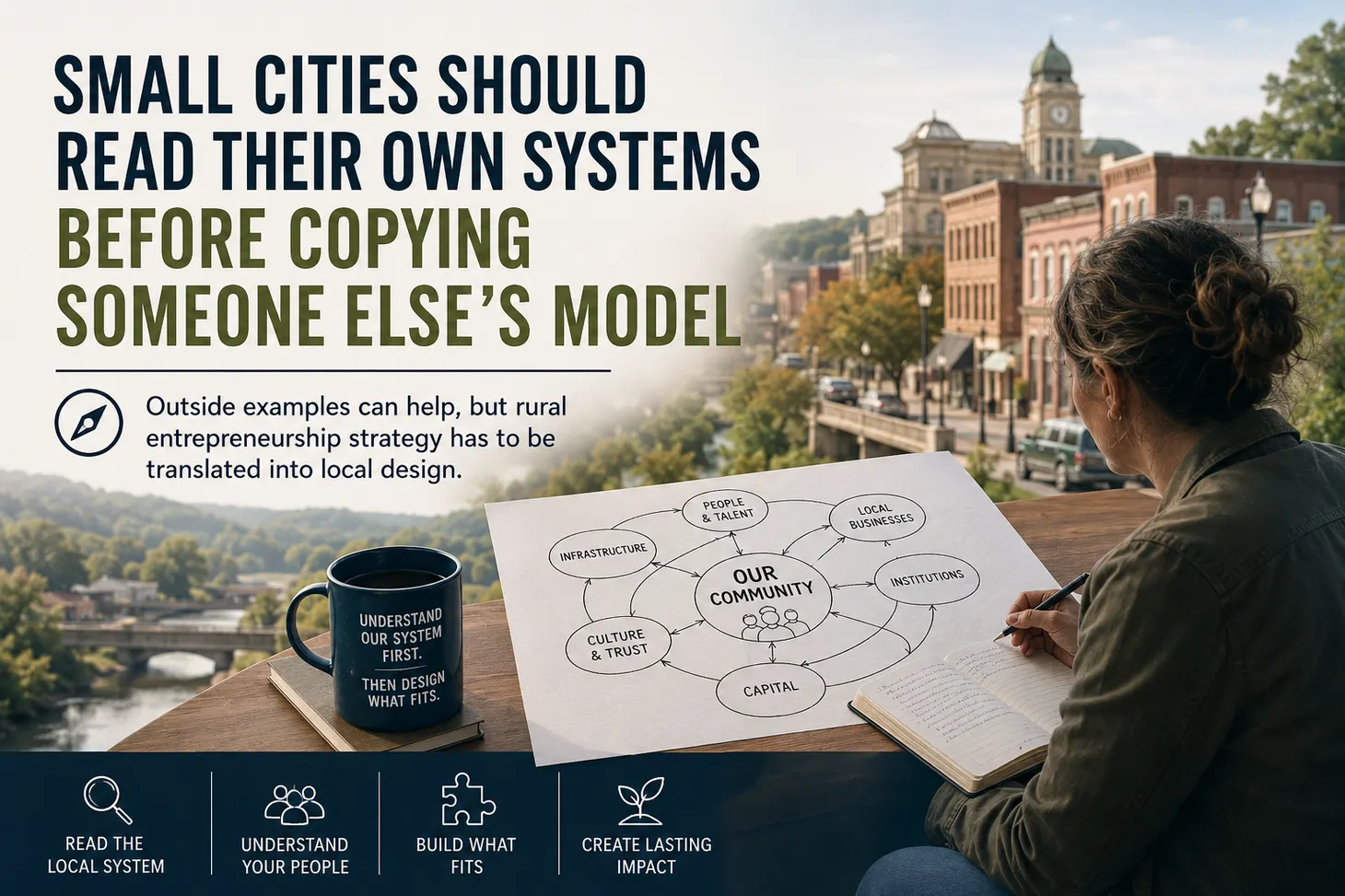
If economic development keeps using the same scoreboard everywhere, rural communities will keep being misunderstood.
The better question is not only, “How big was the announcement?” The better question is, “How much did this matter here?”
That shift changes how we see the work. A 15-job expansion may be a major win. A hospital reopening may be an economic development project. A broadband partnership may be infrastructure for future business growth. A technical center may be a workforce strategy, a talent retention strategy, and a community confidence strategy all at once. A small business retention save may matter more than a recruitment lead that never had a realistic chance of landing.
Rural economic development requires a standard that accounts for local consequence. Not every meaningful win will look impressive from a distance. But the people living there know what it means.
The Lesson for Economic Developers
The lesson from Robert Harrington’s work is not that rural economic development should ignore recruitment, jobs, or investment. Those things still matter. The lesson is that rural success has to be understood on its own terms.
Economic development in a rural community is often about strengthening the conditions that make future growth possible. It is about preserving what cannot easily be replaced. It is about solving bottlenecks before they become permanent ceilings. It is about creating enough confidence that people keep building.
That work deserves more respect than it gets.
Because not every major success looks like a major announcement. Sometimes it looks like 15 jobs saved. Sometimes it looks like a hospital reopening. Sometimes it looks like a technical center that should not have been possible. Sometimes it looks like a community that has more hope, more capacity, and more room to keep going than it had before.
If the economic development profession cannot recognize that as real success, the problem is not rural America.
The problem is the profession’s scoreboard.
Sitehunt is site selection software that automates industrial site research for economic developers so they can respond to site selection RFIs in minutes instead of days.
Econ Dev Show Newsletter
Join the newsletter to receive the latest updates in your inbox.