Workforce Development Is Not a Side Program: It Is Economic Development Infrastructure.
Because the real test of economic development begins the day after the ribbon cutting.

 Dane Carlson
Most communities say workforce development matters. They include it in proposals, bring it up during site visits, and point to their community colleges, workforce boards, training programs, and education partners as evidence that they are prepared for growth.
But too often, workforce still sits beside the economic development strategy instead of inside it.
That is the mistake.
John Loyack’s conversation on the Econ Dev Show points to a harder and more useful truth: workforce development is not a support program that becomes relevant after the deal closes. It is core infrastructure. If a community cannot answer the labor question the day after the ribbon cutting, it was not as ready as it thought.
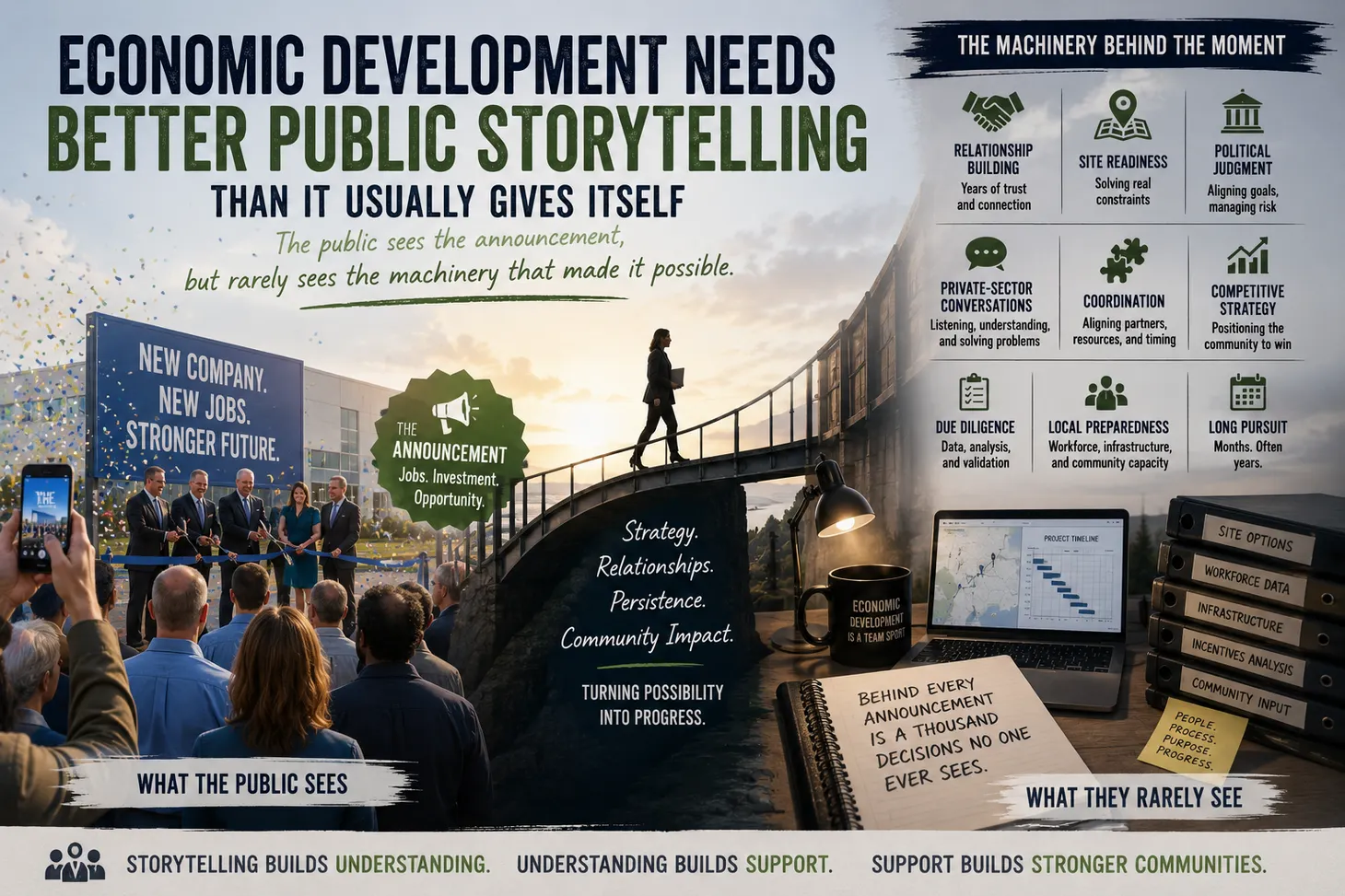
This is where many economic development strategies begin to break down. They are built to win the announcement, but not always built to support what comes next. The press release celebrates capital investment, new job creation, and local momentum. Then the employer has to do the harder work of hiring, training, retaining, and scaling a workforce.
That is when the real system gets tested.
The Hard Part Starts After the Win
Economic development teams spend a lot of time trying to get to yes. They work to land the project, secure the site, close the deal, announce the investment, and show progress to the community.
Those wins matter. But they are not the finish line.
The harder question comes next: where do the workers come from?
Loyack makes that question concrete at a scale communities immediately understand. It is one thing to say a region has talent. It is another thing to explain what happens when an employer needs 500 workers, or 1,000, or 5,000. At that point, workforce is no longer a marketing point. It becomes an operating question.
A community may have strong sites, good incentives, public support, and a compelling business case. None of that removes workforce risk. If the labor answer depends on improvisation, the project becomes more fragile the moment it moves from announcement to execution.
That is why some communities sound confident about workforce before the deal and defensive about it after the deal. They treated talent like a supporting argument, while the employer experiences it as a delivery requirement.
Disconnected Silos Fail Under Pressure
One of the most useful warnings in the episode is about disconnected silos.
Every community knows this problem. Education sits in one lane, workforce boards in another, economic development somewhere else, customized training in a separate process, and apprenticeship programs often managed through yet another structure. Inside each institution, the arrangement may make sense. To an employer trying to make a major location or expansion decision, it can feel fragmented.
And that matters because companies do not care whether the local org chart explains the confusion. They care whether the system can respond clearly, quickly, and coherently.
The real questions are practical ones. Who coordinates the response? Who owns the ramp-up plan? Who can build the training pathway? Who understands the employer’s timeline? Who keeps the process moving when demand spikes?
Those questions reveal whether a region has a workforce operating system or merely a collection of workforce assets.
This is where the North Carolina Community College System stands out as more than an education story. It functions like a workforce operating system, not because it does everything alone, but because it helps make the labor answer more coordinated, more legible, and more useful to employers.
That is what companies need. Not just partners, but a system.
Community Colleges Are Not Adjacent to the Strategy
Economic developers often describe community colleges as partners. That is true, but it is also too weak.
Community colleges are not just helpful institutions to mention in a proposal. In serious workforce systems, they are part of how statewide economic development actually gets delivered. When community colleges carry customized training, ApprenticeshipNC pathways, specialized programs, and statewide reach, they are not adjacent to the strategy. They are infrastructure inside the strategy.
That distinction changes the timing.
If community colleges are treated as optional partners, they are brought in too late and asked to react after the project has already taken shape. But if they are treated as core infrastructure, they help shape the answer earlier. They become part of the risk-reduction strategy before the employer has to ask the hardest questions.
That is a better position for everyone.
Employers want to know whether the workforce challenge has already been addressed. They want evidence that the community has a response mechanism, not just a relationship list. A relationship list says, “We know the right people.” A workforce system says, “Here is how this gets done.”
Alignment Is Not the Outcome
Economic development has no shortage of partnership language. Alignment, collaboration, convening, and coordination are all useful words, but they are incomplete if they do not lead to something more concrete.
Alignment is not the outcome. Risk reduction is.
Customized training matters because it reduces uncertainty around workforce ramp-up. Apprenticeships matter because they build longer-term talent pipelines instead of forcing employers to restart the same labor search again and again. Specialized industry support matters because some sectors need more than broad enthusiasm. A statewide network matters because companies need reach, speed, and consistency across markets.
All of those tools point to the same practical standard: workforce development becomes strategically meaningful when it reduces employer risk in a visible way.
That is why calling it core infrastructure is not rhetorical inflation. It is operationally accurate. Communities already understand that infrastructure determines whether a project can succeed. Roads matter. Utilities matter. Sites matter. Permitting matters. The labor system belongs in that same category.
Without it, the rest of the strategy is weaker than it looks.
You Cannot Market Around a Weak Workforce System
Many communities still try to market around the weakness. They promote talent, quality of life, population growth, educational assets, and a business-friendly environment. Those things have value, but they cannot cover for a workforce system that has not been built to respond under pressure.
Eventually, the employer asks harder questions. How fast can the region move? Who coordinates the training response? What specific programs already exist? What happens if hiring demand spikes? How does the community support retention, not just recruitment? How are long-term talent pipelines being built? What happens after the first wave of hiring?
That is when general workforce language stops being enough.
The strongest communities are not the ones with the best paragraph about talent. They are the ones that built the answer before the prospect arrived. They can show the employer how the system works, explain who does what, and move from pitch to execution without rebuilding the process from scratch.
That is the difference between having workforce assets and having workforce infrastructure.
A Better Test for Workforce Readiness
Loyack’s episode points toward a more useful diagnostic for economic developers. Do not ask only whether your community has workforce partners. Ask whether your workforce system behaves like infrastructure.
Can it scale? Can it respond early? Can it reduce employer risk? Can the employer experience it as one system instead of disconnected silos? Can it support recruitment, training, retention, and long-term pipeline development? Can it move at the speed of the project?
Those questions are harder, but they are also more honest.
Workforce development is not important because everyone says it is important. It is important because it determines whether the rest of the economic development strategy can hold up once the announcement becomes reality.
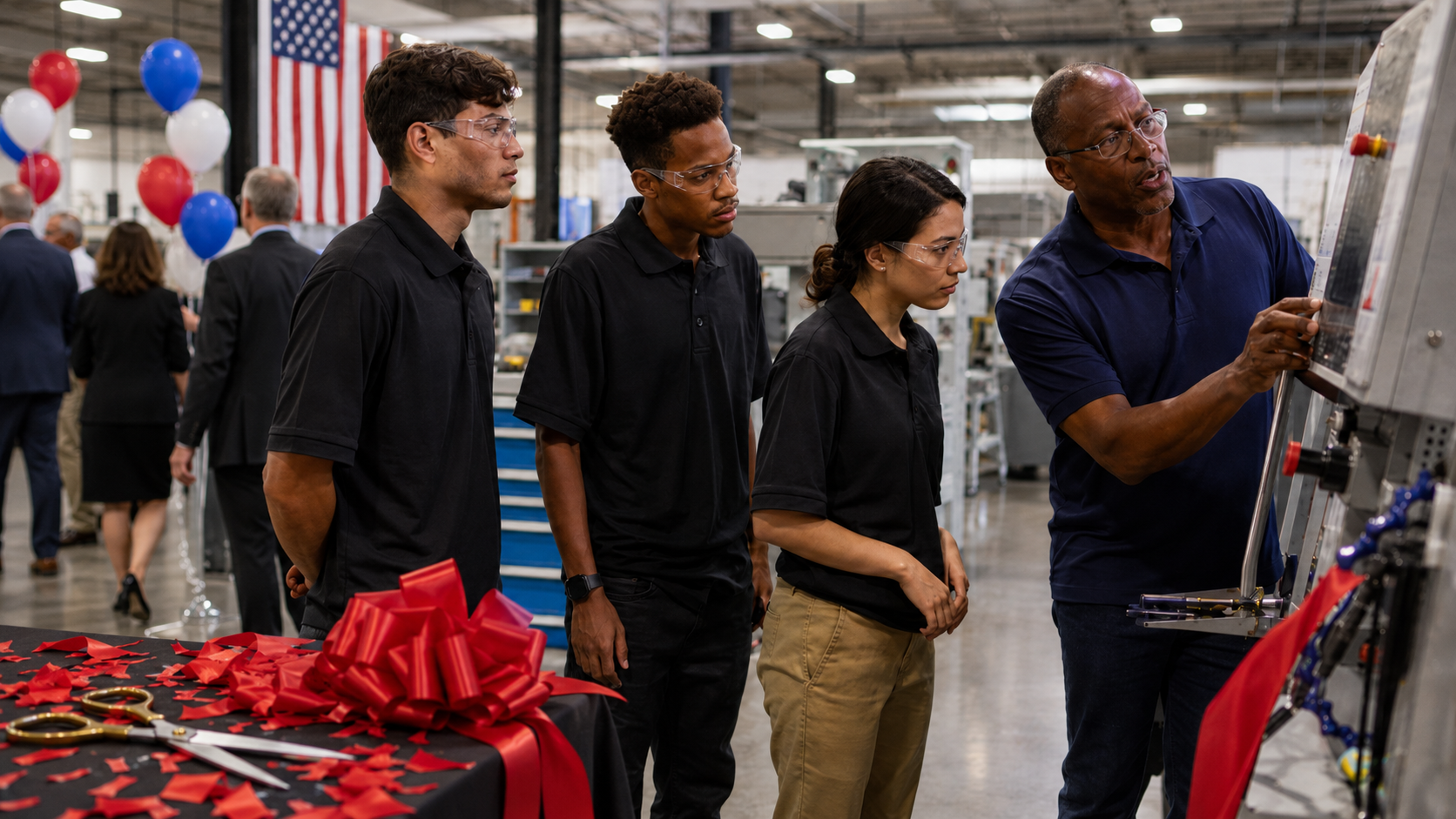
A ribbon cutting does not prove the system works. The months after it do.
Build the Labor Answer Before You Need It
What makes the North Carolina example compelling is not simply that the state has strong community colleges. It is that the North Carolina Community College System is positioned as part of the state’s answer to growth.
That is the lesson.
Workforce development cannot sit outside the economic development strategy and be called in after the fact. It has to be designed into the system from the beginning.
The communities that understand this will be better prepared for the projects they win. They will be more credible with employers and less dependent on improvisation when hiring pressure arrives. Most importantly, they will have a stronger answer to the question that matters after every announcement:
Can this place actually deliver?
That is the standard.
Workforce development is not a side program. It is part of the real work.
Sitehunt helps economic developers prepare better answers before the RFI arrives.
From site data and infrastructure details to workforce, logistics, utilities, and property readiness, Sitehunt helps communities understand how their sites stack up and where the gaps are.
Because winning the project is not just about having a site. It is about proving you can deliver.

Econ Dev Show Newsletter
Join the newsletter to receive the latest updates in your inbox.