The Economic Developer as Chief Remover of Obstacles
How one rural Kansas operator offers a better definition of what local economic development actually requires

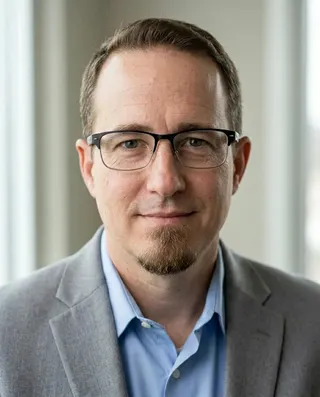
 Dane Carlson
Economic development strategy often sounds bigger than the work that actually moves a place forward.
Communities talk about vision, branding, recruitment, entrepreneurship, tourism, downtown revival, and growth. All of that matters. But in small and rural communities, progress often depends less on how impressive the strategy sounds and more on whether someone is close enough to the ground to remove the local bottlenecks that keep good ideas from becoming real outcomes.
That is what makes Lea Ann Seiler’s phrase so useful.
When Dane Carlson introduced Seiler on the Econ Dev Show, he noted that she had once described herself as the “chief remover of obstacles” in her community. Seiler, a lifelong Kansan, served for 14 years as the Economic Development and Tourism Director for Hodgman County, Kansas, where her work centered on rural revival, entrepreneurship, and helping small communities move forward.
“Chief remover of obstacles” is a memorable line, but it is more than a good quote. It may be one of the clearest operating definitions of local economic development, especially in a rural place.
The Best Small-Community Strategy Is Often a Bottleneck Strategy
A lot of economic development work is described at the level of goals: support entrepreneurs, revive downtown, strengthen tourism, create jobs, grow the local economy, and build momentum.
Those are all good aims. The problem is that they are often too broad to guide the day-to-day work in a community where staff, time, and capacity are thin. A rural economic developer cannot simply admire the big picture. Someone has to figure out why the next thing is not moving.
An obstacle-removal mindset starts with more practical questions. What is blocking progress right now? What process is confusing? What local issue is slowing a business owner down? What connection has not been made? What small barrier is keeping a bigger project from moving?
That is not small thinking. It is operational thinking.
In a place like Hodgman County, where very small communities such as Hanston and Jetmore are part of the local economic landscape, development work has to operate inside real constraints. There are fewer people, fewer institutions, fewer spare layers of capacity, and less room for slow processes that nobody owns. Under those conditions, local bottlenecks matter. Sometimes they matter more than the plan surrounding them.
Execution Matters More Than Grand Framing
That is why Seiler’s “CRO” framing is so useful. It shifts the role of the economic developer away from abstract boosterism and toward execution. The job is not only to describe a better future for the community. The job is to help things happen that would otherwise stall.
That may mean helping an entrepreneur navigate a confusing process. It may mean connecting a tourism idea to the people who can actually implement it. It may mean making sure downtown momentum is not stopped by a fixable local barrier. It may mean being the person who knows who to call, where the friction is, and how to get the issue unstuck.
This kind of work is easy to underrate because it often looks ordinary from the outside. It does not always produce a dramatic public storyline, and it may not sound as impressive as a new strategy, a new campaign, or a new initiative. But community progress usually depends on whether someone is doing that ordinary work consistently.
That is especially true in rural economic development, where one person may carry several functions at once. In those places, a single unresolved obstacle can slow momentum across entrepreneurship, tourism, downtown development, business retention, and quality-of-life efforts.
Obstacle Removal Is a Better Way to Understand the Job
The economic development field often describes its practitioners with broad, polished words: marketer, convener, recruiter, strategist, storyteller. There is truth in all of those labels, but they can become too vague to guide real work.
“Chief remover of obstacles” is useful because it describes what the job feels like when it is done well. The economic developer notices where friction lives. The role is not to personally own every solution. The role is to make sure local progress does not keep dying in the same places.
That can mean helping an entrepreneur understand what to do next, getting the right people into the same conversation, clarifying responsibility when a project gets stuck, removing small barriers before they become excuses for inaction, or turning a community goal into the next concrete step.
None of this is glamorous, but it is often the work that matters most.
Rural Revival Depends on Local Problem Solving
Seiler is described as passionate about rural revival and entrepreneurship. That pairing matters because rural revival is often discussed in big, inspirational language, while entrepreneurship is often treated like a program category. In practice, both depend on whether the local environment is navigable enough for people to try, persist, and grow.
That is why obstacle removal is strategic, not merely reactive. If the local operator understands what keeps people from moving forward, entrepreneurship support becomes more concrete. Tourism work becomes more connected to execution. Downtown energy becomes easier to sustain. Community progress becomes less dependent on speeches and more dependent on whether the system is getting easier to move through.
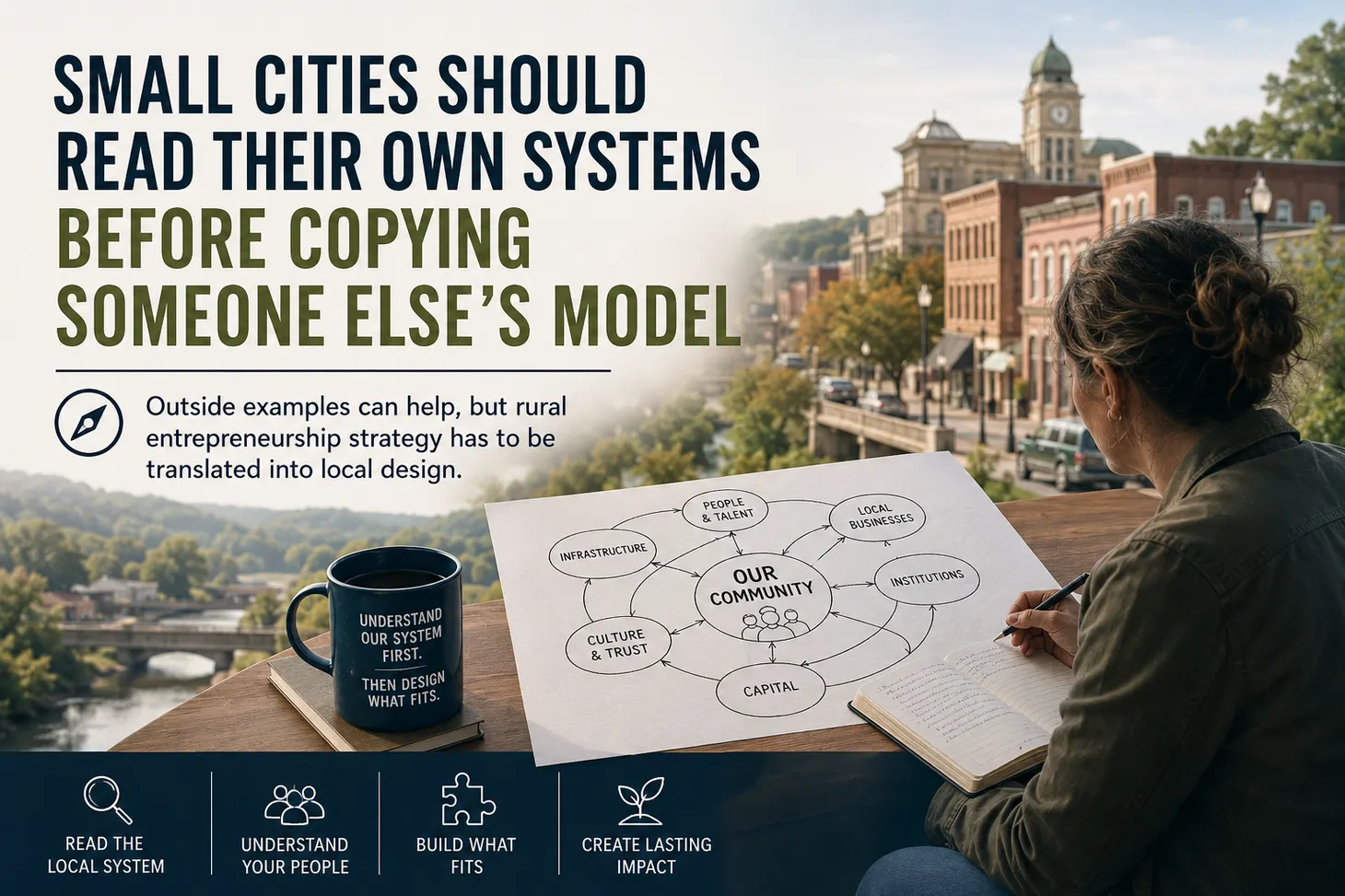
This is also why small communities should be careful about borrowing development language without borrowing the discipline underneath it. A place can talk about innovation, entrepreneurship, quality of life, and growth all day and still remain stuck if no one is dealing with the actual local bottlenecks.
The language may inspire people, but the obstacle removal is what lets them act.
The Better Strategic Standard
The strongest lesson in Seiler’s framing is that economic development strategy should be judged partly by the friction it removes.
Not every local operator needs to call themselves a chief remover of obstacles. But more communities would benefit from asking the questions built into that phrase. Where does progress keep getting stuck? What local bottlenecks are slowing entrepreneurship, tourism, downtown activity, or business growth? Which barriers are structural, and which are simply unowned? What could move right now if someone took responsibility for getting the issue unstuck?
Those are strategy questions. They sound smaller than vision language because they are closer to execution. That is exactly why they matter.
Lea Ann Seiler’s phrase is memorable because it makes the economic developer’s role concrete. In a place like Hodgman County, with small communities and limited capacity, the person who removes the right obstacle may create more real momentum than the person who writes the most polished abstract plan.
Economic development still needs strategy. But in many rural places, strategy works best when someone is close enough to the ground to know what has to be removed before anything larger can move.
Sitehunt helps economic developers remove the site-selection obstacles before they slow down a project. From infrastructure details to RFI requirements, Sitehunt turns scattered property data into clear, usable site intelligence so your community can respond faster and with more confidence. Learn more at Sitehunt.io.
Econ Dev Show Newsletter
Join the newsletter to receive the latest updates in your inbox.