20 Things Economic Developers Need to Know This Week
The stories Dane thinks you need to see. August 13, 2026 edition.


Welcome to this week's issue of What Economic Developers Need to Know This Week, where we explore the evolving dynamics of our economy.
This week we have 20 tools, stories, graphics, charts and videos that I think you'll find informative, useful, inspiring, and perhaps even humorous. Some are economic development related directly, and some only indirectly.
If you're wondering what to do with the info in this newsletter, send something to your board members. It will make you look good!
Today's email is brought to you by Resource Development Group
Resource Development Group and Convergent Nonprofit Solutions have recently announced a merger of these two well respected firms. RDG is now operating as Resource Development Group, a Convergent Company and will lead the combined operations in economic development and chamber engagements. Meanwhile, the Convergent banner will take the forefront on efforts on supporting traditional philanthropic and higher education organizations
This merger maintains RDG's innovative and custom approach while also creating the deepest bench of economic development and chamber fundraising expertise in the industry, the most complete data set in the country regarding economic development and chamber funding, and the greatest flexibility to be able to support engagement models tailored specifically to every market, regardless of size.
Whether you’re a single county EDO ready to kick off your first fundraising campaign or a large regional organization on your third funding cycle, they have the team and experience to get you the results you’re looking for.
1) Economic development and developers in the news #256: Big projects reward work completed before a prospect calls. This week's roundup covers 47 executives and organizations in 25 states. From Amkor's $7 billion Arizona project to Illinois site-preparation grants, the common advantage is capacity ready to move.

2) Podcast 231, speed wins in economic development: You may be shortlisted before you know a project exists. Mike Swesey explains why current property data, a clear workforce fit, and fast, credible answers keep communities in contention. Speed wins when the answer is already ready.

3) 21 new economic development jobs this week: The field is hiring for far more than dealmaking. These 21 openings span 14 states and pay $50,606 to $241,896 where listed. Directors, analysts, business advisers, arts staff, and railroad managers show how widely the profession now reaches.

4) Economic development and developers in the news #255: Infrastructure now includes research and child care, not just roads and utilities. The prior roundup covers 46 executives and organizations in 31 states, including Connecticut's QuantumCT investment and a Maine town treating municipal child care as an attraction tool.

5) Podcast 230, no is never the final answer: First learn whether no means impossible, unavailable, or misunderstood. Andrew Sloss explains how better questions uncovered job grants, workforce funds, and tuition benefits that helped retain a struggling retailer.

6) 56 new economic development jobs from the prior week: The profession stretches from community coordination to utilities and data centers. These 56 openings cover 25 states and pay $39,461 to $307,769 where listed. The range is a useful inventory of the field's expanding remit.

Sitehunt helps economic developers find and understand their sites, match them to projects, and respond with confidence in minutes instead of scrambling for days.
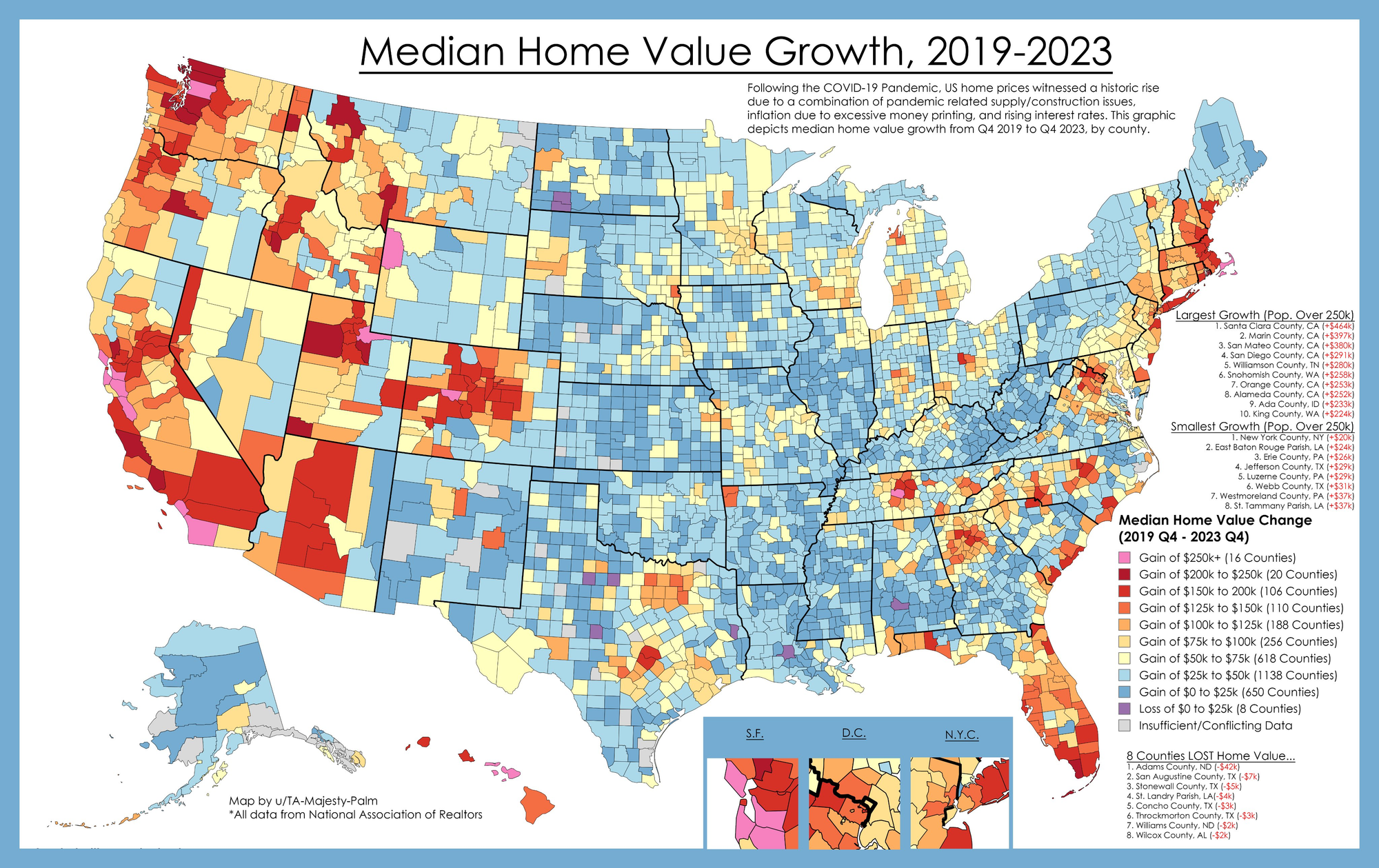
7) The housing boom was national, but the windfall was local:
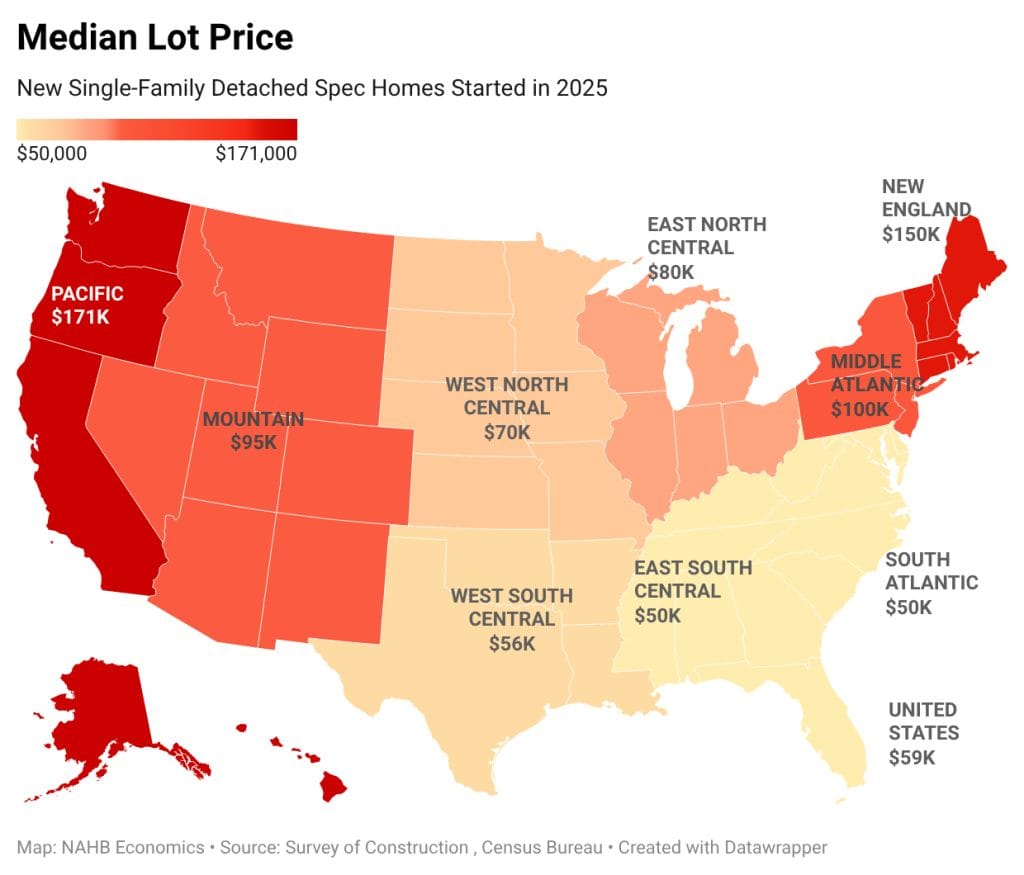
8) Smaller lots are not solving expensive land: Builders are using less ground, but scarcity still wins. NAHB data puts the 2025 median lot at $59,000. The Pacific combines small lots with a $171,000 median, showing how regulation, infrastructure, and buildable supply matter more than acreage alone.
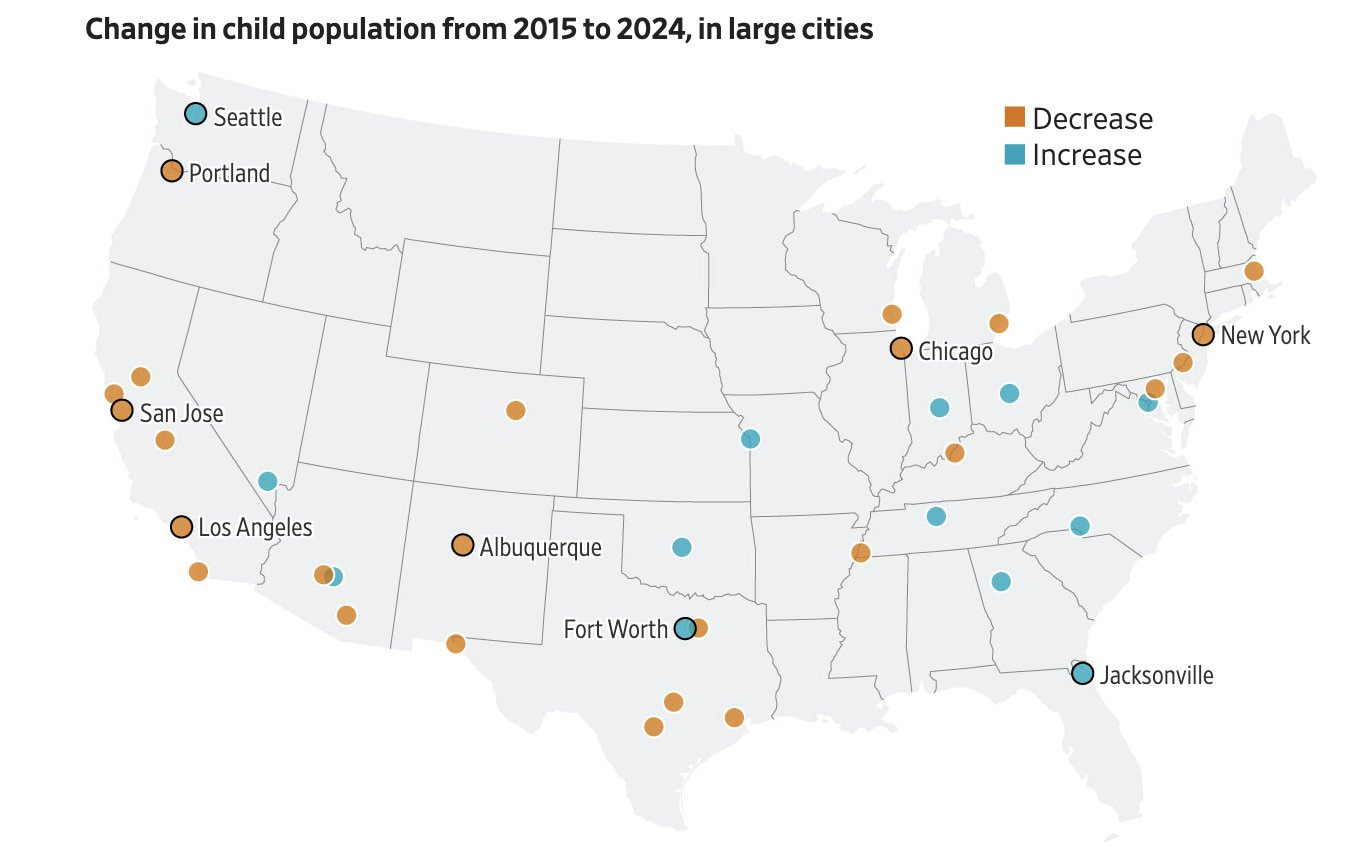
9) America's big cities are losing children: A place can add adults while hollowing out its future. Large urban-county birthrates fell 18% from 2010 to 2024, and child populations shrank across most major cities. Fewer children mean smaller schools and a thinner future workforce.
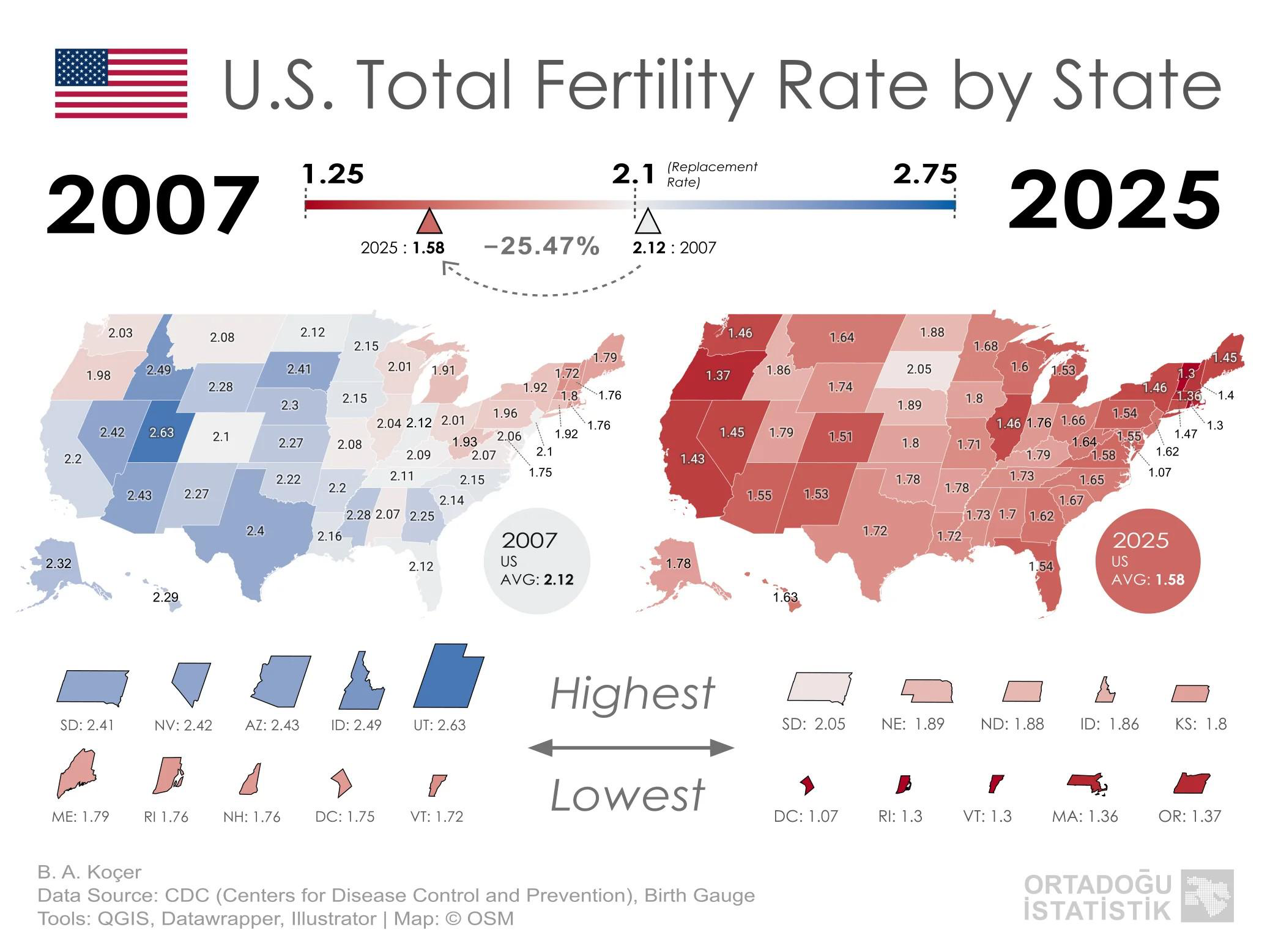
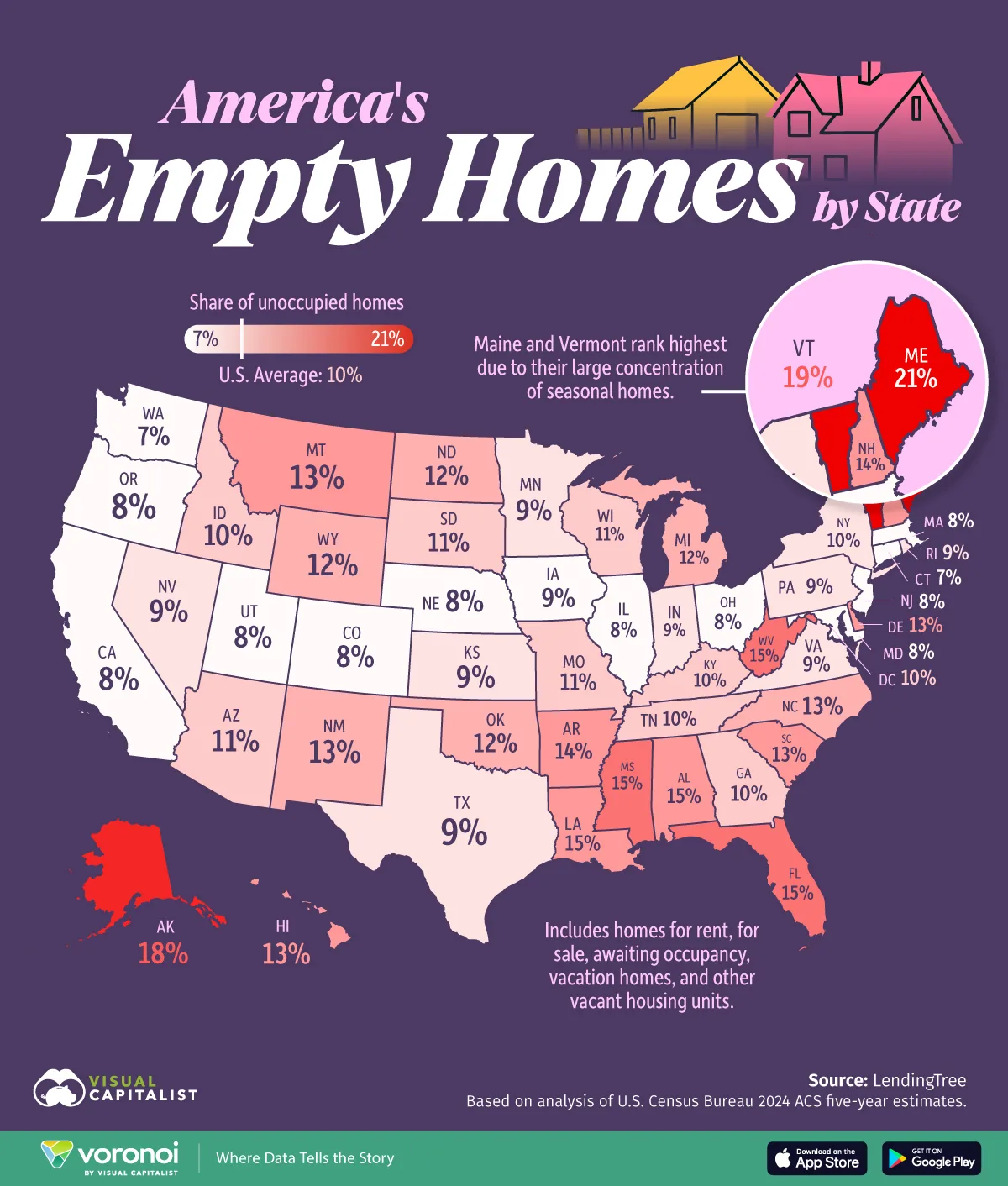
10) America has 14.5 million vacant homes, but most are not for sale: Vacancy is a classification, not a housing strategy. Of the units in this state comparison, 4.7 million are seasonal and fewer than 800,000 are listed. Count a home as supply only after asking what would return it to year-round use.
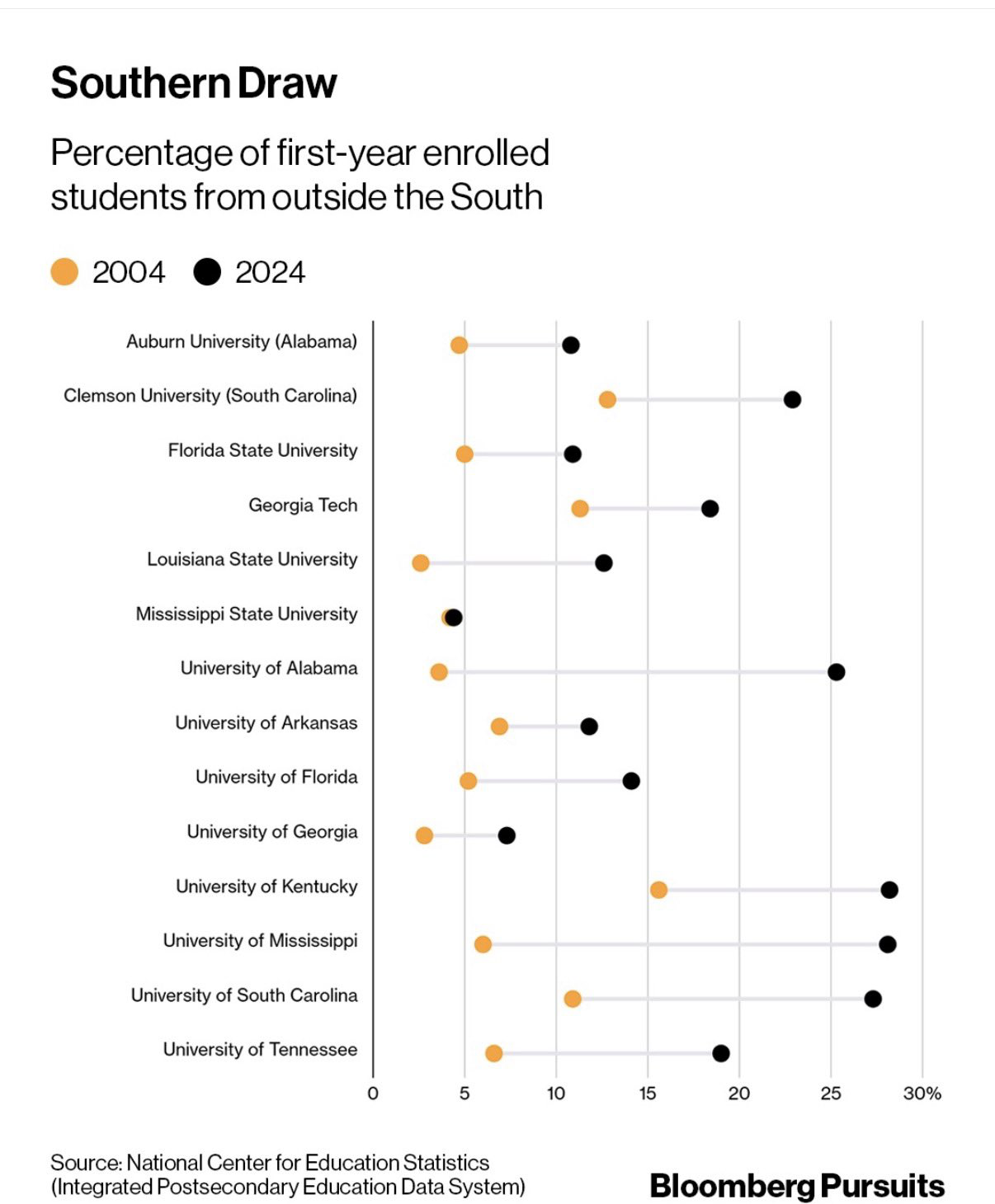
11) Southern universities have built a talent-import system: The economic-development opportunity begins after enrollment. Alabama's out-of-region freshman share rose from roughly 4% to 25% between 2004 and 2024. The next job is turning those four-year visitors into workers, founders, and households.
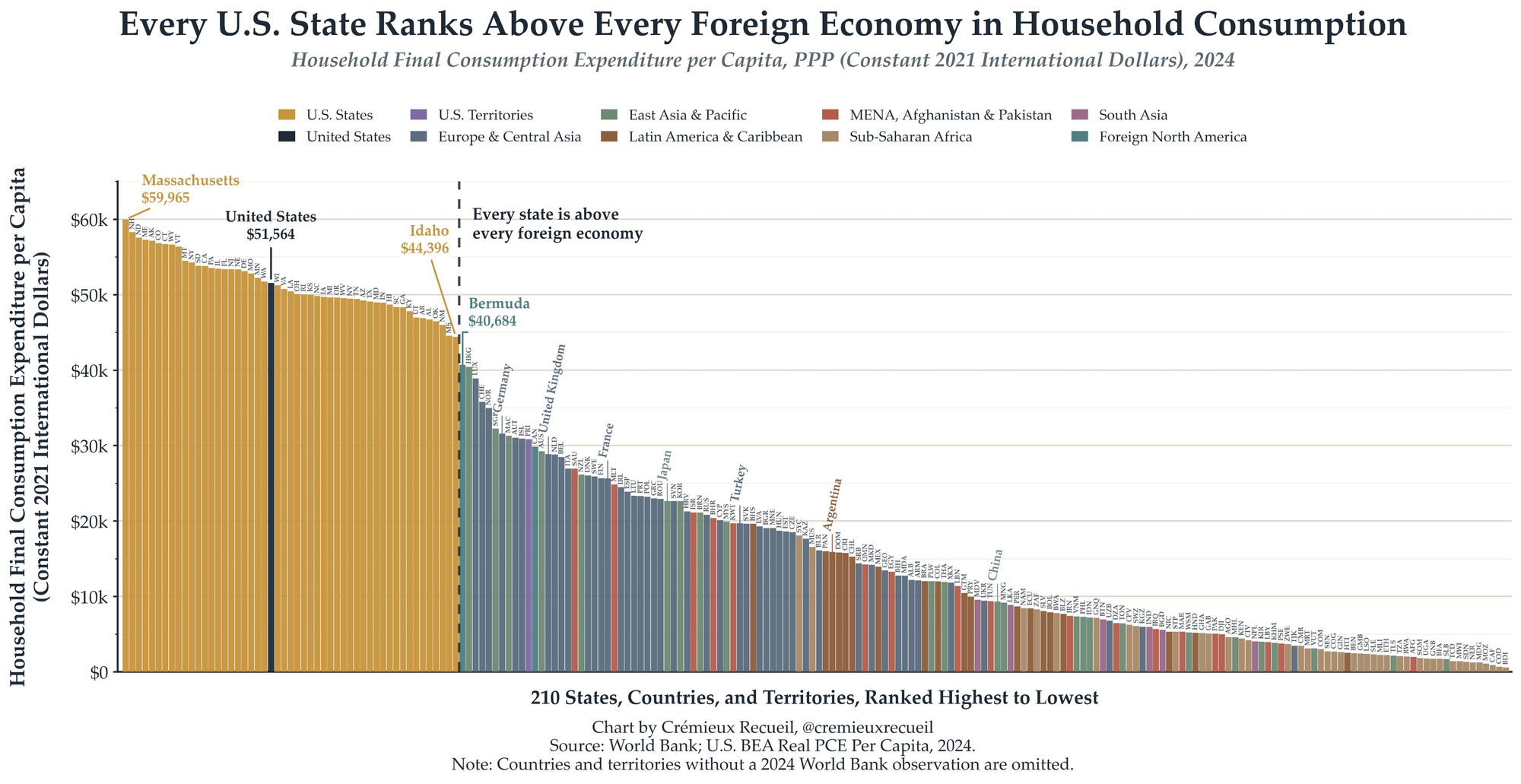
12) Even America's lowest-consuming state outspends every foreign economy per person: U.S. purchasing power extends far beyond its richest coasts. In this 2024 comparison, Massachusetts reaches $59,965 per person and Idaho still exceeds every country shown. Consumption is not well-being, but it reveals the depth of American markets.
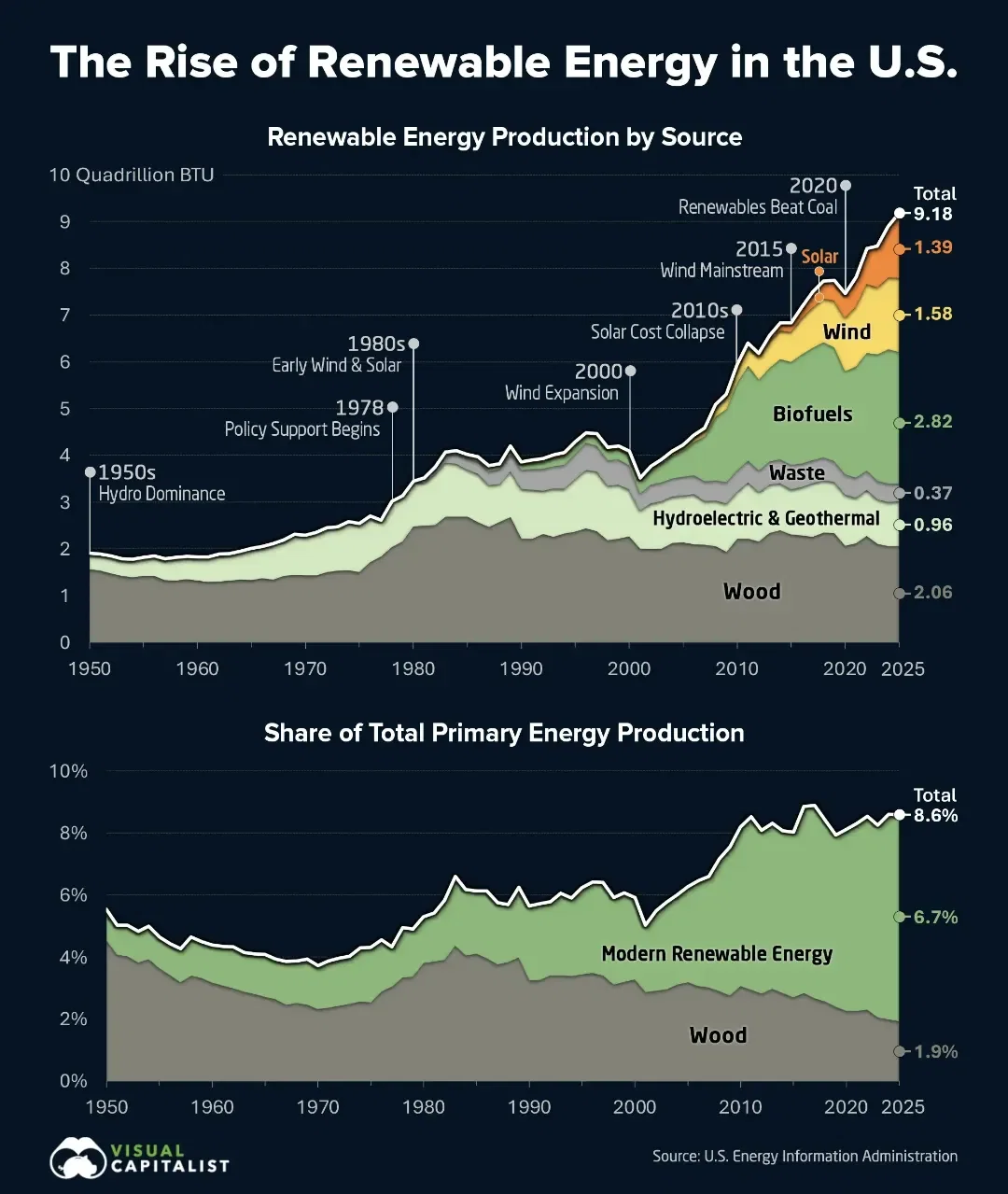
13) Renewable energy is breaking records without dominating the system: Growth and limited share can both be true. U.S. renewable production hit 9.18 quadrillion Btu in 2025, yet renewables supply only 8.6% of primary energy. For projects, local capacity and delivery time matter more than the national headline.
14) What happened in 1971?: Correlation is an invitation to investigate, not proof of cause. These charts show wages, productivity, inequality, housing, and debt bending around the early 1970s, then point toward the end of dollar-gold convertibility. Treat that explanation as a hypothesis and inspect the evidence.
15) The job market has side doors: The best application may be proof that you understand the work. Maja's field guide says to find people doing work you value, identify where they are stuck, and show how you can help. Workforce programs should teach this alongside resumes.
16) Taxi and ambulance drivers rarely die of Alzheimer's disease: The apparent advantage comes from solving routes, not driving them. Among nearly 9 million death certificates, about 1 in 100 of these drivers died of Alzheimer's versus 1 in 60 people overall. The association suggests continuous navigation may exercise the hippocampus.
17) Jungle Jim's turned groceries into tourism: The spectacle works because the business underneath it works. The family-owned Ohio store carries more than 180,000 products and draws roughly 82,000 shoppers a week without outside funding. This tour shows how expertise and decentralized buying built a destination competitors cannot copy.
18) Your arts economy may be hiding in garages: A maker who sells beyond the county is an exporter. Econ Dev Ops says small towns should find the makers already bringing outside money home, then give them the same retention help as any other business.
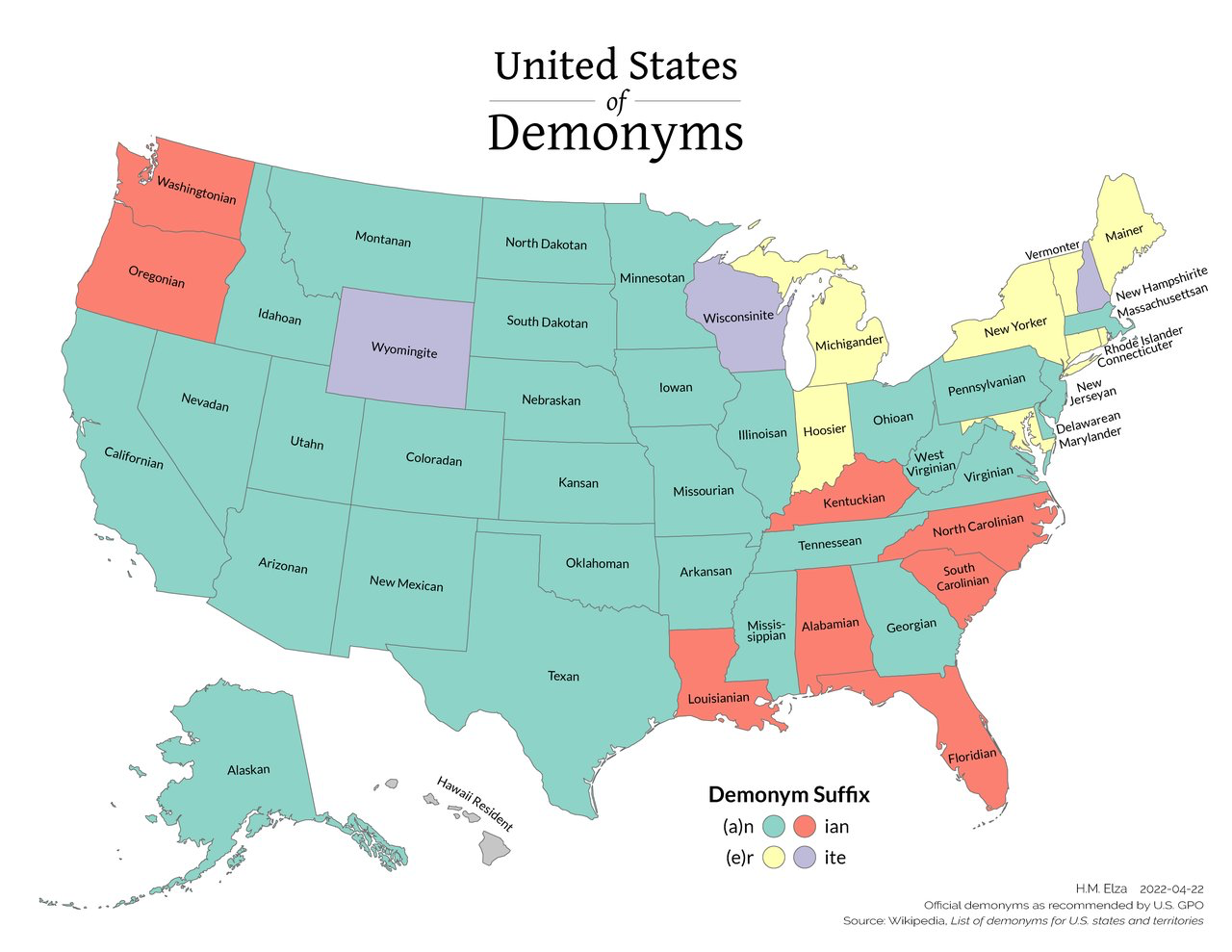
19) What do you call someone from your state?: The best place identity is discovered, not invented. This map runs from Michigander and Hoosier to Wyomingite and New Hampshirite. The language residents already use for themselves is stronger raw material than branding copy imposed from outside.
20) Leadership appears before the title: Watch who makes the coalition more capable. They take initiative, keep promises, share credit, and move people toward solutions. Authority may open a door; trust and follow-through get everyone through it.