25 Things Economic Developers Need to Know This Week
The stories Dane thinks you need to see. August 27, 2026 edition.


Welcome to this week's issue of What Economic Developers Need to Know This Week, where we explore the evolving dynamics of our economy.
This week we have 25 tools, stories, graphics, charts and videos that I think you'll find informative, useful, inspiring, and perhaps even humorous. Some are economic development related directly, and some only indirectly.
If you're wondering what to do with the info in this newsletter, send something to your board members. It will make you look good!
Today's email is brought to you by Resource Development Group
Resource Development Group and Convergent Nonprofit Solutions have recently announced a merger of these two well respected firms. RDG is now operating as Resource Development Group, a Convergent Company and will lead the combined operations in economic development and chamber engagements. Meanwhile, the Convergent banner will take the forefront on efforts on supporting traditional philanthropic and higher education organizations
This merger maintains RDG's innovative and custom approach while also creating the deepest bench of economic development and chamber fundraising expertise in the industry, the most complete data set in the country regarding economic development and chamber funding, and the greatest flexibility to be able to support engagement models tailored specifically to every market, regardless of size.
Whether you’re a single county EDO ready to kick off your first fundraising campaign or a large regional organization on your third funding cycle, they have the team and experience to get you the results you’re looking for.
This Week On Econ Dev Show
1) Economic development and developers in the news #258: Capacity and coordination are deciding where growth lands. This week's roundup covers 80 economic development executives and organizations in 35 states, with recurring pressure around sites, workforce transitions, housing, infrastructure, and project transparency.

2) Podcast 233, infrastructure, trust, and the future of economic development: Trust is now part of the infrastructure stack. Will Williams explains why communities should plan power and large sites years ahead, evaluate data centers like other industrial prospects, and communicate before controversy forces the conversation.
3) 31 new economic development jobs this week: The field is hiring across the whole delivery system. These 31 openings span 21 states, British Columbia, and remote roles, with listed pay from $47,050 to $200,000.

4) Last week's 21 things economic developers need to know: The August 20 issue is still a useful briefing on the constraints behind growth. Catch up here for housing production, industrial power, shipbuilding, talent, demographics, and local identity.


Sitehunt helps economic developers find, understand and enrich their sites, match them to projects, and respond with confidence in minutes instead of scrambling for days.
Economic Development Practice
5) The expanding mandate for economic developers: The job has shifted from dealmaking to systems stewardship. Mary Ellen Wiederwohl points to housing, transit, childcare, infrastructure, and quality of place as core economic inputs, with Atlanta, Chattanooga, Phoenix, Nashville, and Oklahoma City showing what the broader mandate looks like in practice.
6) Why some economies cannot just snap out of decline: A locked-in economy is not waiting for a better recruitment pitch. Jim Gibson explains how business relationships, shared assumptions, and institutions can all reinforce an old path. Changing direction requires coordinated economic, organizational, and political work.
7) It is the ecosystem, stupid: Do not confuse startup activity with startup support. Paul O'Brien argues that many founder programs optimize for cohorts, attendance, and press rather than stronger companies. Measure founder progression, capital access, durable mentorship, and outcomes instead.
8) Project Confidential: Good satire finds the weak spots in the operating model. This new economic development satire site has already covered labor sheds that expand until the numbers improve, shovel-ready sites waiting on a shovel, and board retreats that retreat from previous decisions.
Infrastructure And Place
9) SpaceX announces Starbase, Louisiana: This is an ecosystem project disguised as a facility announcement. SpaceX says the new Louisiana base will support thousands of Starship flights a year, while this week's news roundup reports a proposed $100 billion investment and 3,000 jobs. The real development question is how suppliers, infrastructure, housing, and workforce grow around it.
10) The death of Market Street: Downtown recovery needs demand and design at the same time. Noah Smith argues that remote work, crime, single-use zoning, and street policy compounded one another in San Francisco. Crime is falling and office-to-housing conversions are starting, but weekday foot traffic remains about half its 2019 level.
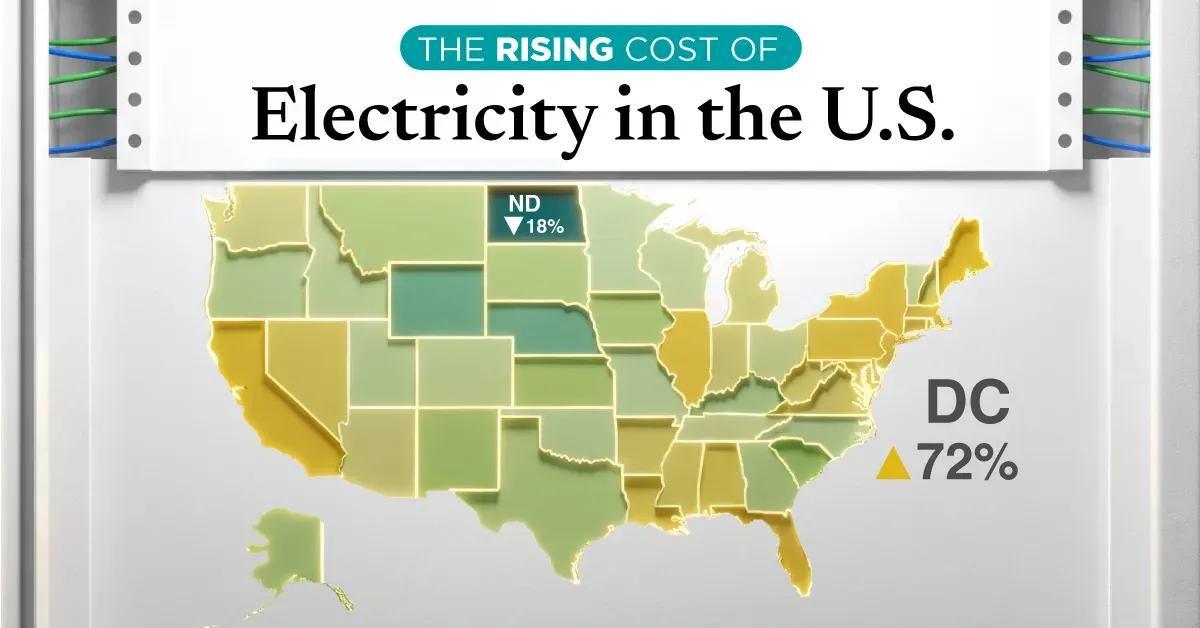
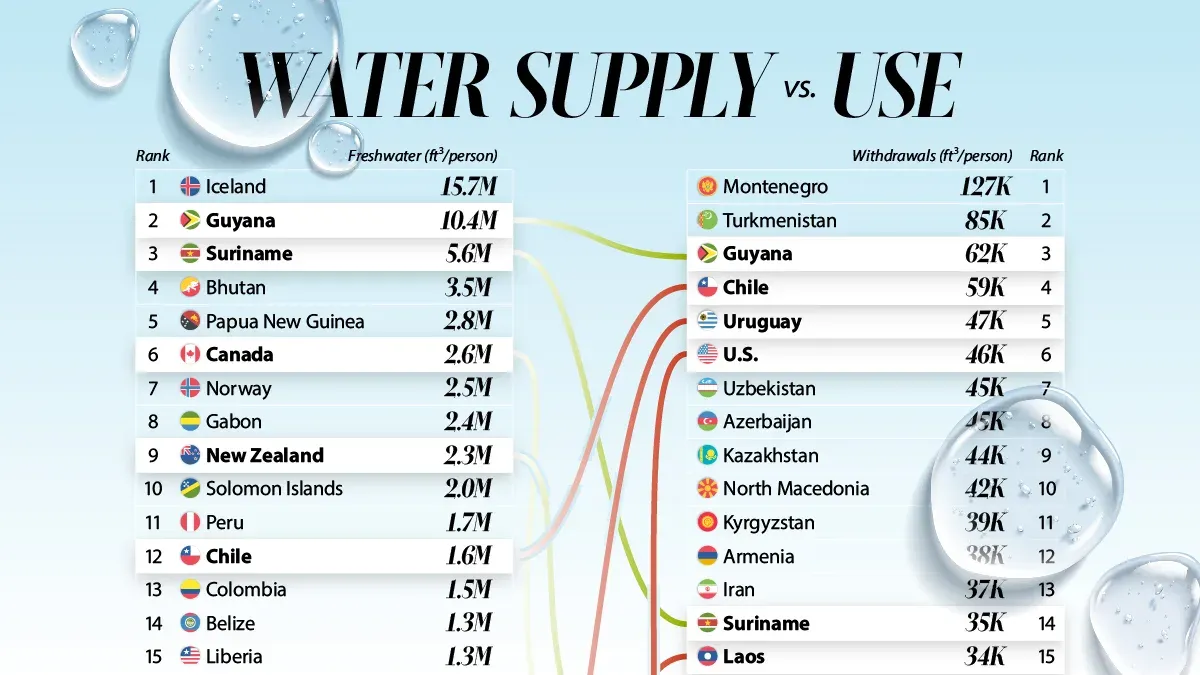
11) Power and water are becoming allocation problems: Utilities are no longer background inputs to site readiness. U.S. retail electricity prices rose roughly 30% from 2020 to 2025, while the country ranks 54th in renewable freshwater supply per person but sixth in withdrawals. National abundance can still produce severe local constraints.
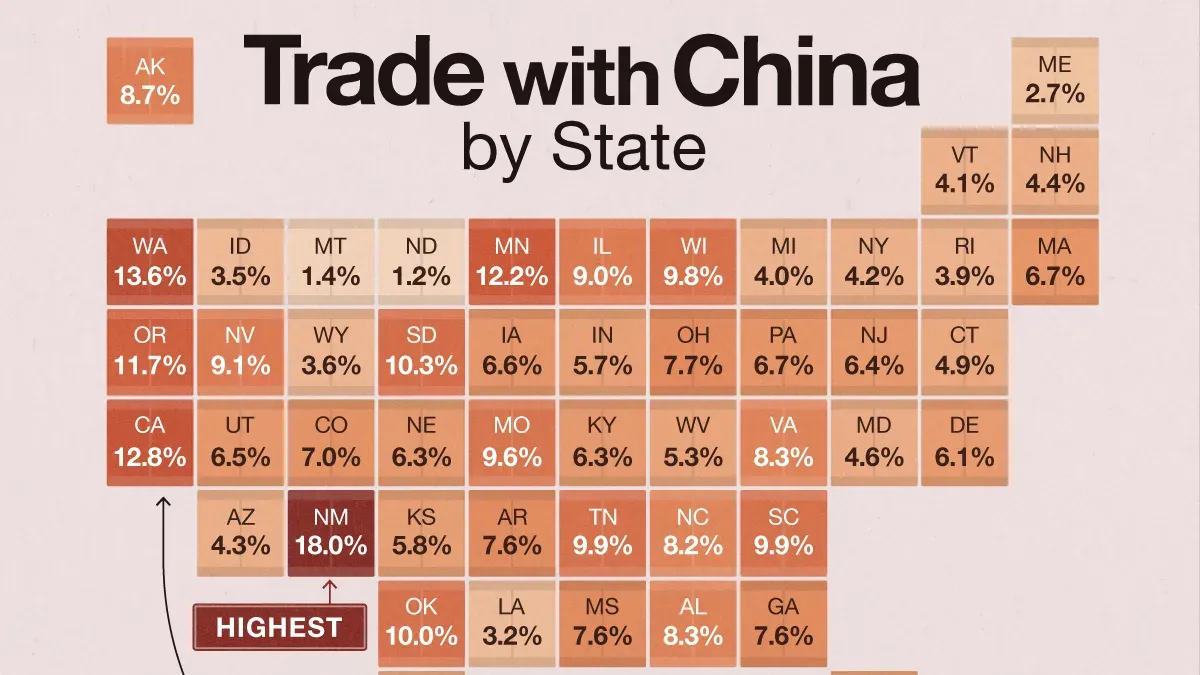
12) Which states rely most on trade with China: Exposure is not the same thing as volume. New Mexico led with China representing 18% of its goods trade, while California handled $86.3 billion but had a smaller 12.8% exposure. The distinction matters when estimating how tariffs or supply-chain shifts will hit a state.
Workforce And Entrepreneurship
13) Amazon is closing Mechanical Turk after 21 years: AI did not eliminate human data work; it reorganized the market around it. The platform closes September 30 after once serving more than 500,000 workers, leaving remaining users and businesses to migrate to newer data-labeling platforms.
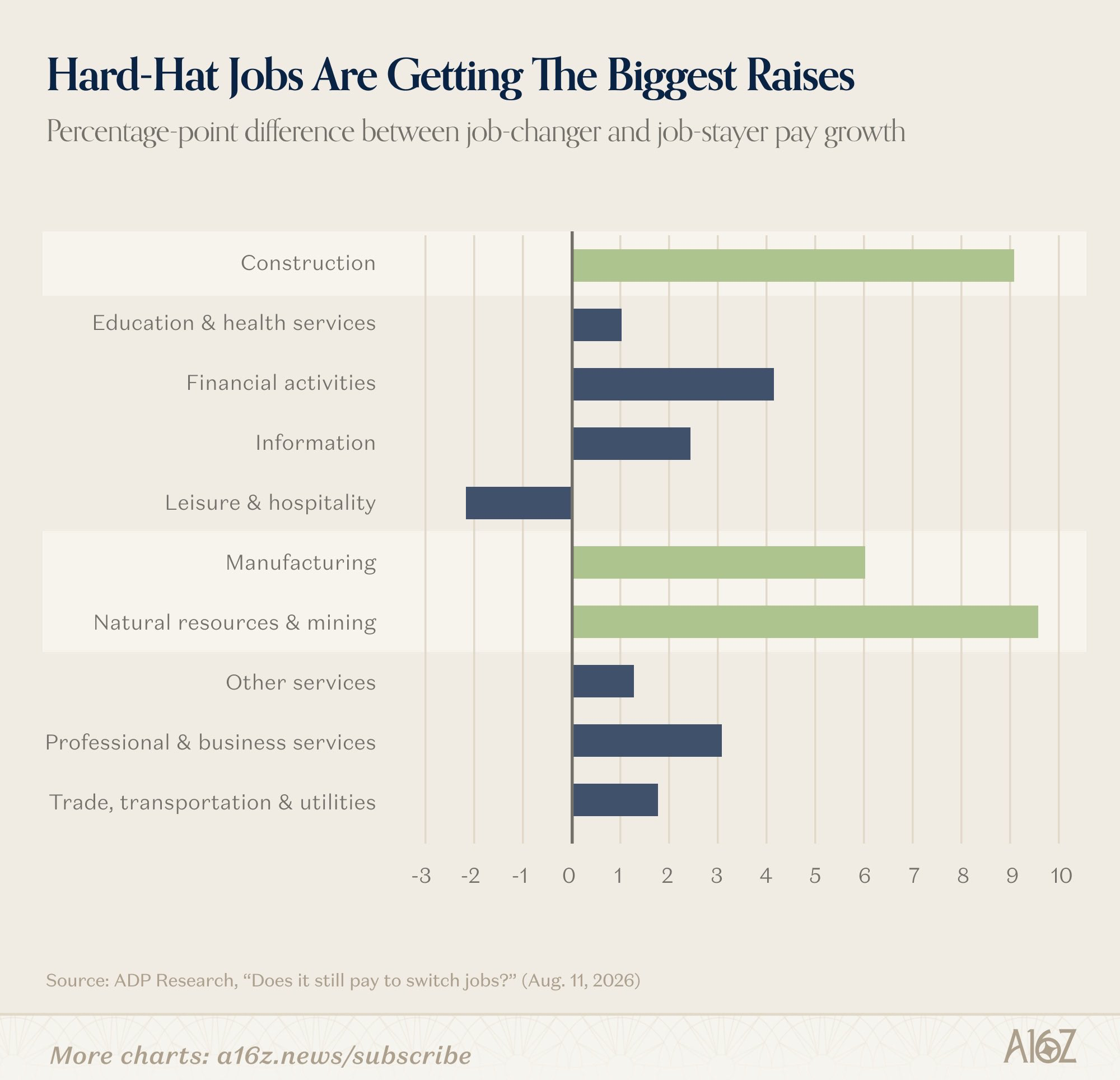
14) Hard-hat jobs are getting the largest switching raises: The job-change premium has moved toward the physical economy. ADP data show job changers in construction and natural resources gaining roughly nine percentage points more pay growth than stayers, with manufacturing near six points.
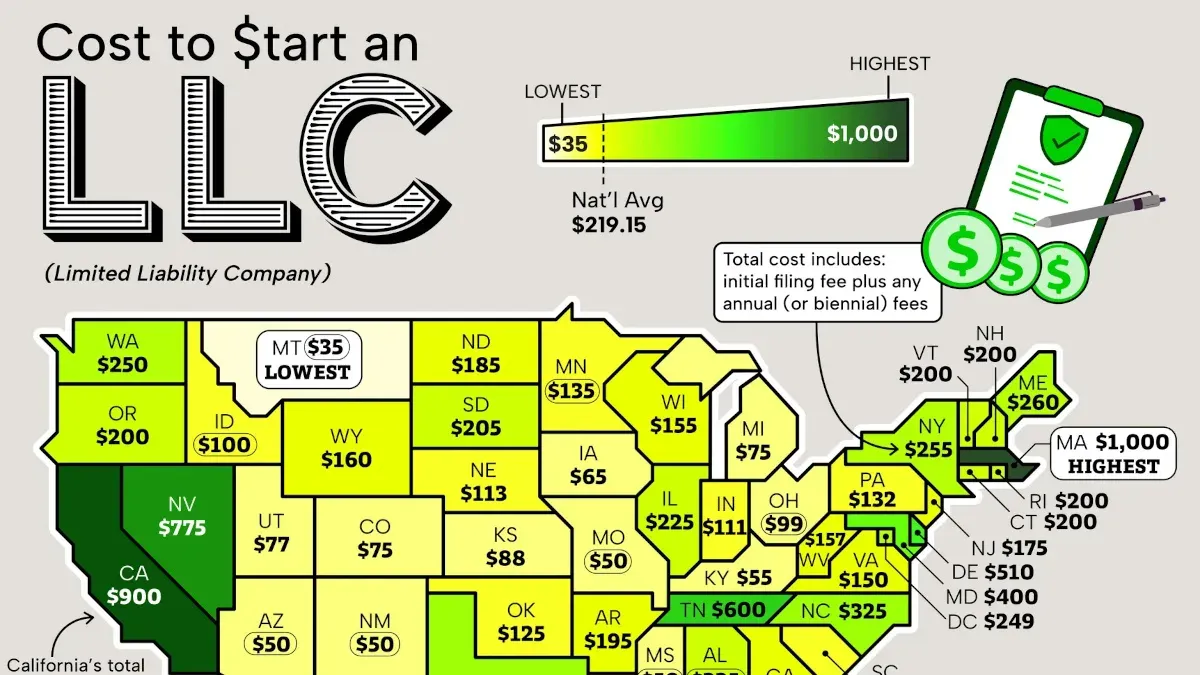
15) What it costs to start an LLC in every state: A low filing fee can hide recurring friction. Combined initial and recurring costs range from $35 in Montana to $1,000 in Massachusetts, with a national average of $219.15. For most founders, forming elsewhere simply adds foreign-registration costs back home.
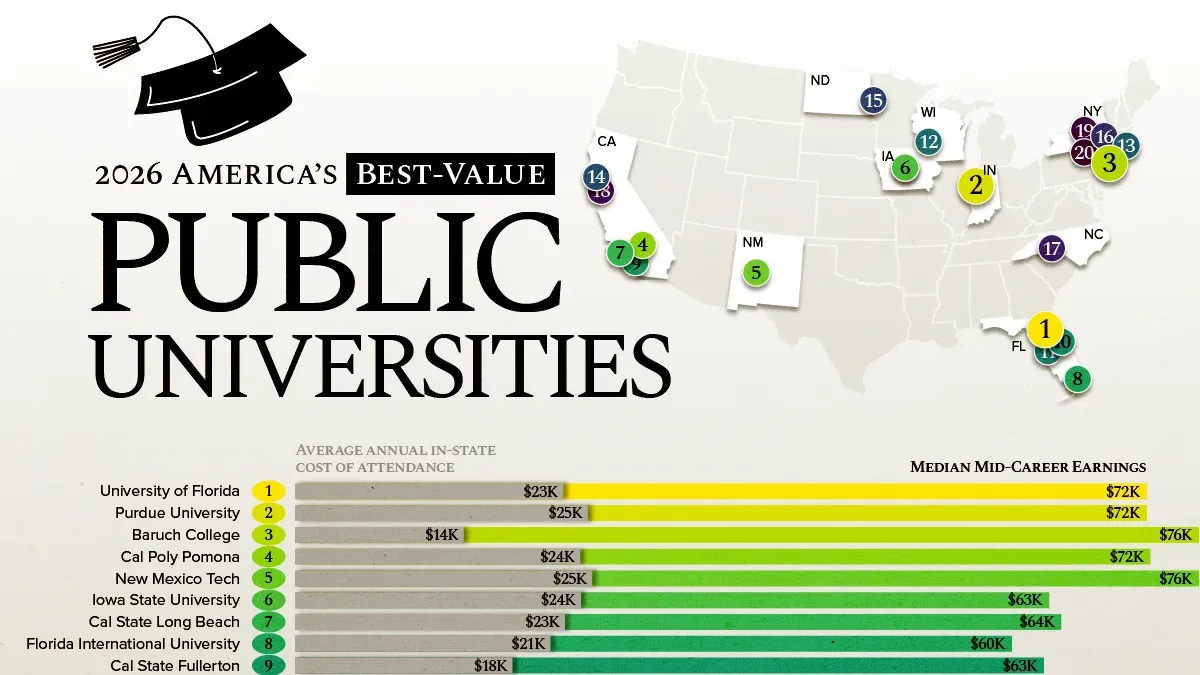
16) America's best-value public universities: Talent pipelines deserve an outcomes measure. This ranking combines below-median attendance costs with graduation rates and earnings ten years after enrollment. The University of Florida ranks first, while New Mexico Tech posts the list's highest median earnings.
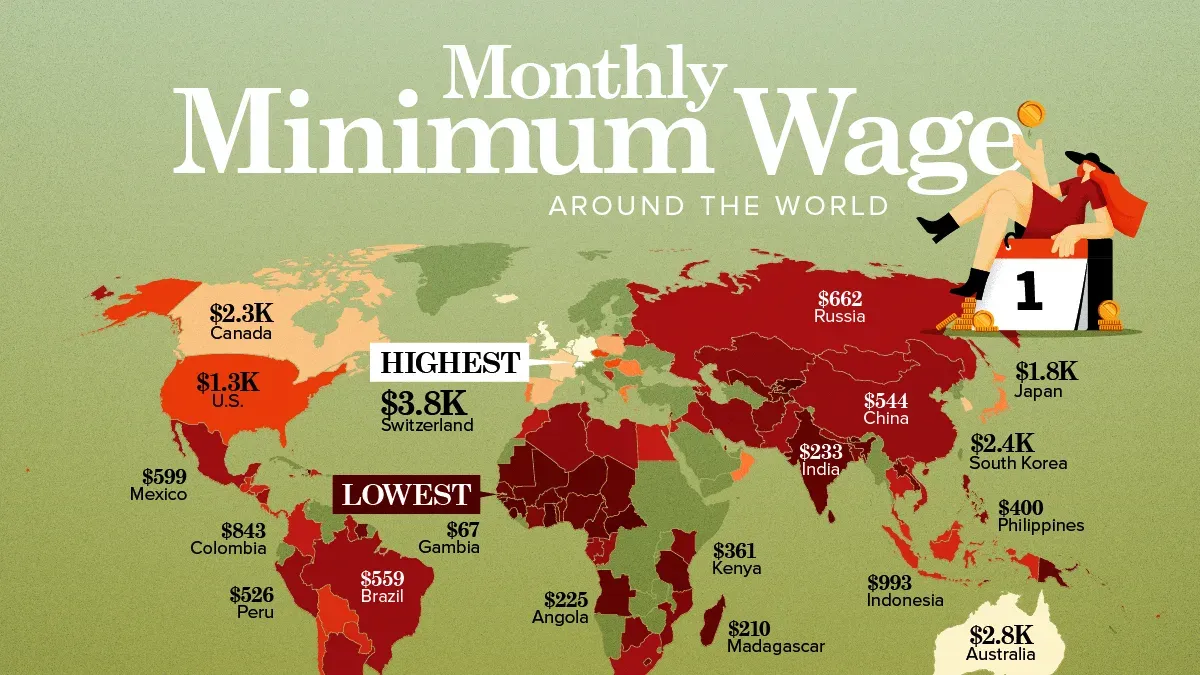
17) Minimum wages around the world: A wage floor means little without purchasing power. Using the federal rate, the U.S. ranks 25th of 130 countries at a PPP-adjusted $1,257 per month. The federal minimum has been unchanged for 17 years, although 30 states and Washington, D.C., set higher rates.