21 Things Economic Developers Need to Know This Week
The stories Dane thinks you need to see. August 20, 2026 edition.


Welcome to this week's issue of What Economic Developers Need to Know This Week, where we explore the evolving dynamics of our economy.
This week we have 21 tools, stories, graphics, charts and videos that I think you'll find informative, useful, inspiring, and perhaps even humorous. Some are economic development related directly, and some only indirectly.
If you're wondering what to do with the info in this newsletter, send something to your board members. It will make you look good!
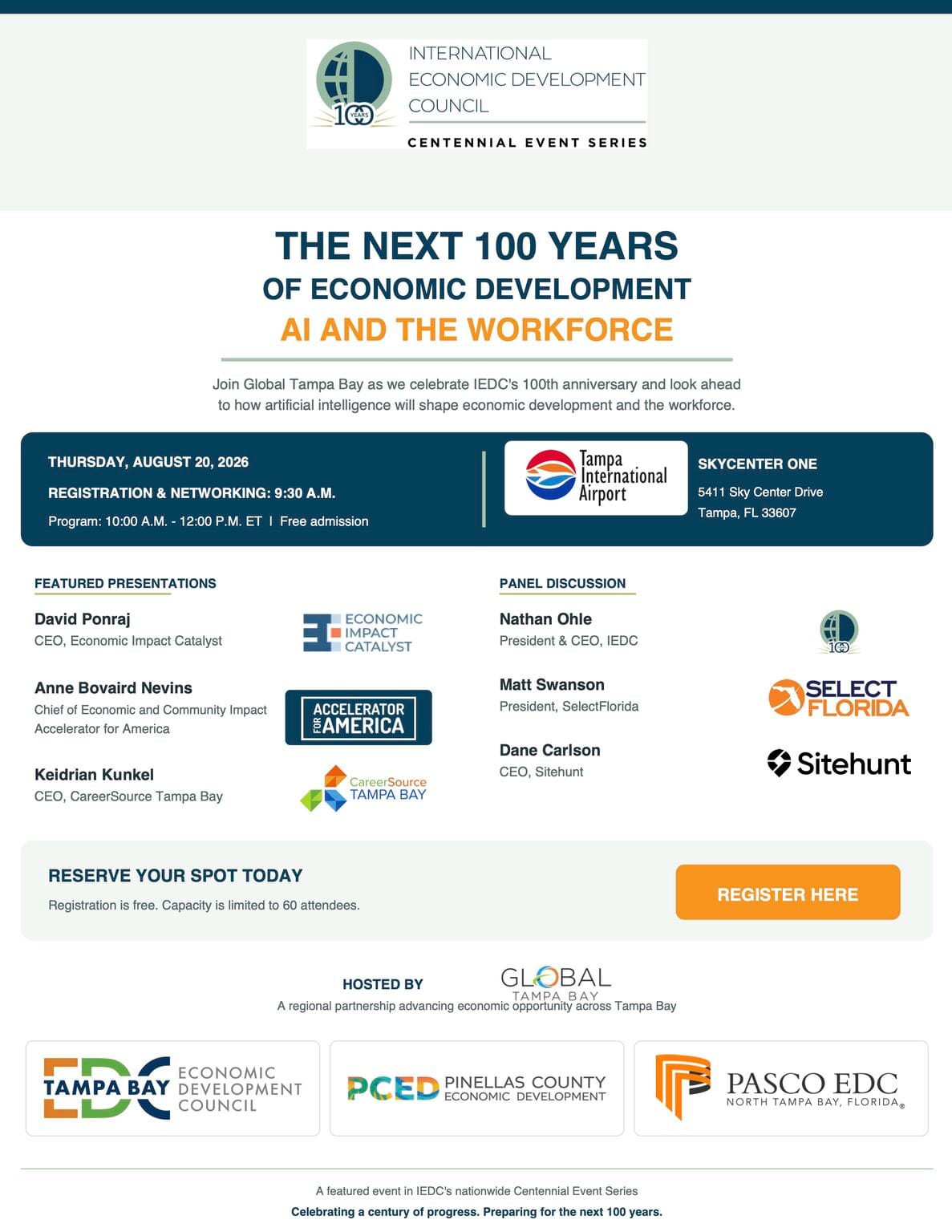
FYI, this is where I am today:
Today's email is brought to you by Resource Development Group
Resource Development Group and Convergent Nonprofit Solutions have recently announced a merger of these two well respected firms. RDG is now operating as Resource Development Group, a Convergent Company and will lead the combined operations in economic development and chamber engagements. Meanwhile, the Convergent banner will take the forefront on efforts on supporting traditional philanthropic and higher education organizations
This merger maintains RDG's innovative and custom approach while also creating the deepest bench of economic development and chamber fundraising expertise in the industry, the most complete data set in the country regarding economic development and chamber funding, and the greatest flexibility to be able to support engagement models tailored specifically to every market, regardless of size.
Whether you’re a single county EDO ready to kick off your first fundraising campaign or a large regional organization on your third funding cycle, they have the team and experience to get you the results you’re looking for.
1) Economic development and developers in the news #257: Readiness is becoming a bundle, not a checklist. This week's roundup treats child care, talent data, and faster industrial-site delivery as seriously as roads and utilities.

2) Podcast 232, stop marketing your community like everywhere else: Memorable beats comprehensive. Bethany Quinn explains why communities should concentrate on one or two genuine strengths, connect their marketing work, and explain the work locally before budget season.

3) 43 new economic development jobs this week: The field is hiring for the whole delivery system. These 43 openings span 22 states and Canada, with listed pay from $43,509 to $218,731 and roles in projects, compliance, planning, workforce, communications, and leadership.
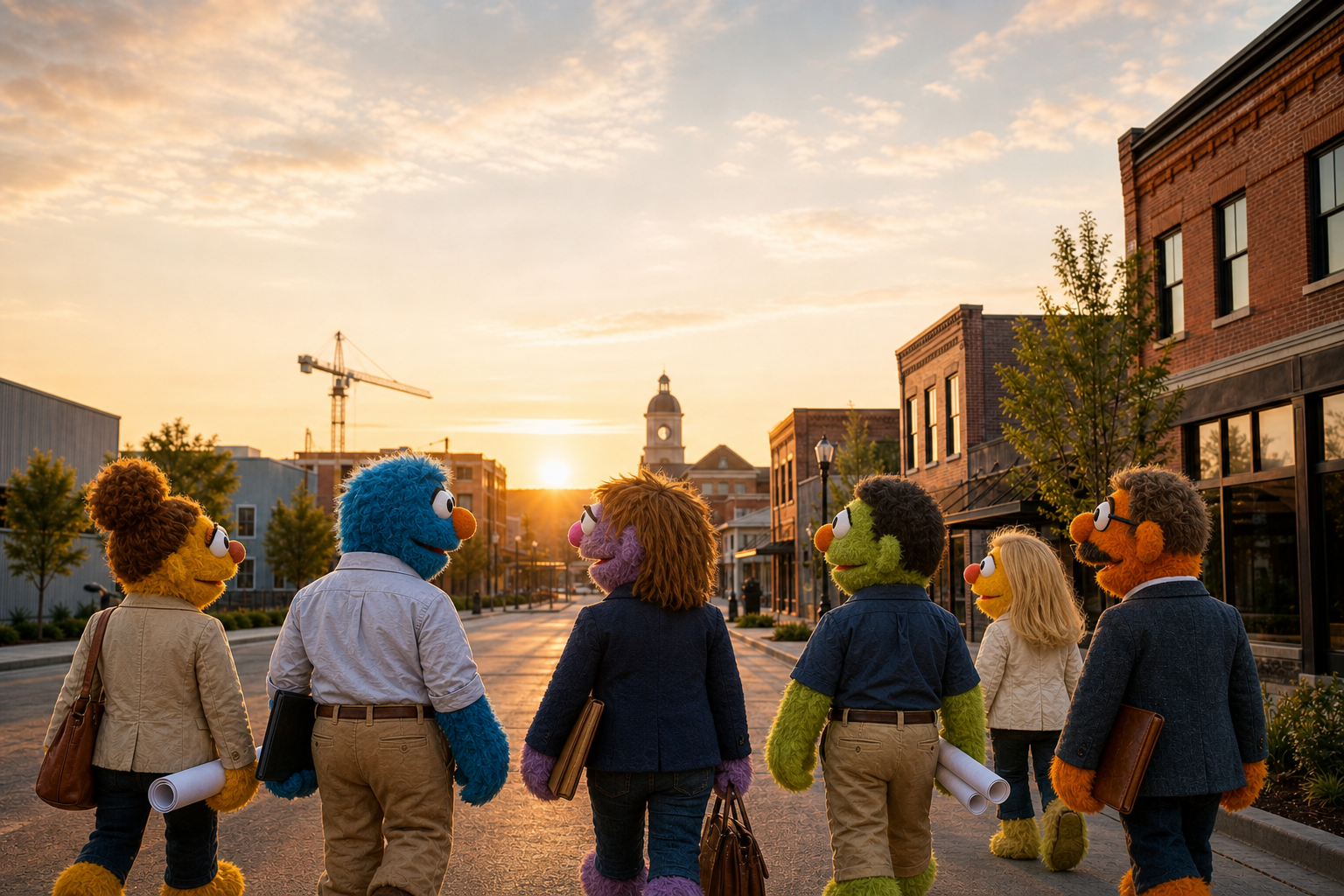
4) Last week's 20 things economic developers need to know: A weekly briefing is most useful when the stories reveal a pattern. The August 13 issue connects housing production, talent migration, energy, place identity, and local makers in one quick scan.


Sitehunt helps economic developers find and understand their sites, match them to projects, and respond with confidence in minutes instead of scrambling for days.
5) Aerospace is a very large manufacturing ecosystem: The supply-chain opportunity extends far beyond the final assembly line. Jacob Hall notes that U.S. aerospace manufacturing produced more than $215 billion in revenue last year, up 35% since 2021, across more than 3,000 registered companies.
6) America's ancestry is written on the map: Local identity often begins with the migration stories that built a place. This interactive Census ancestry map is a useful prompt for understanding where community traditions, institutions, and connections came from.
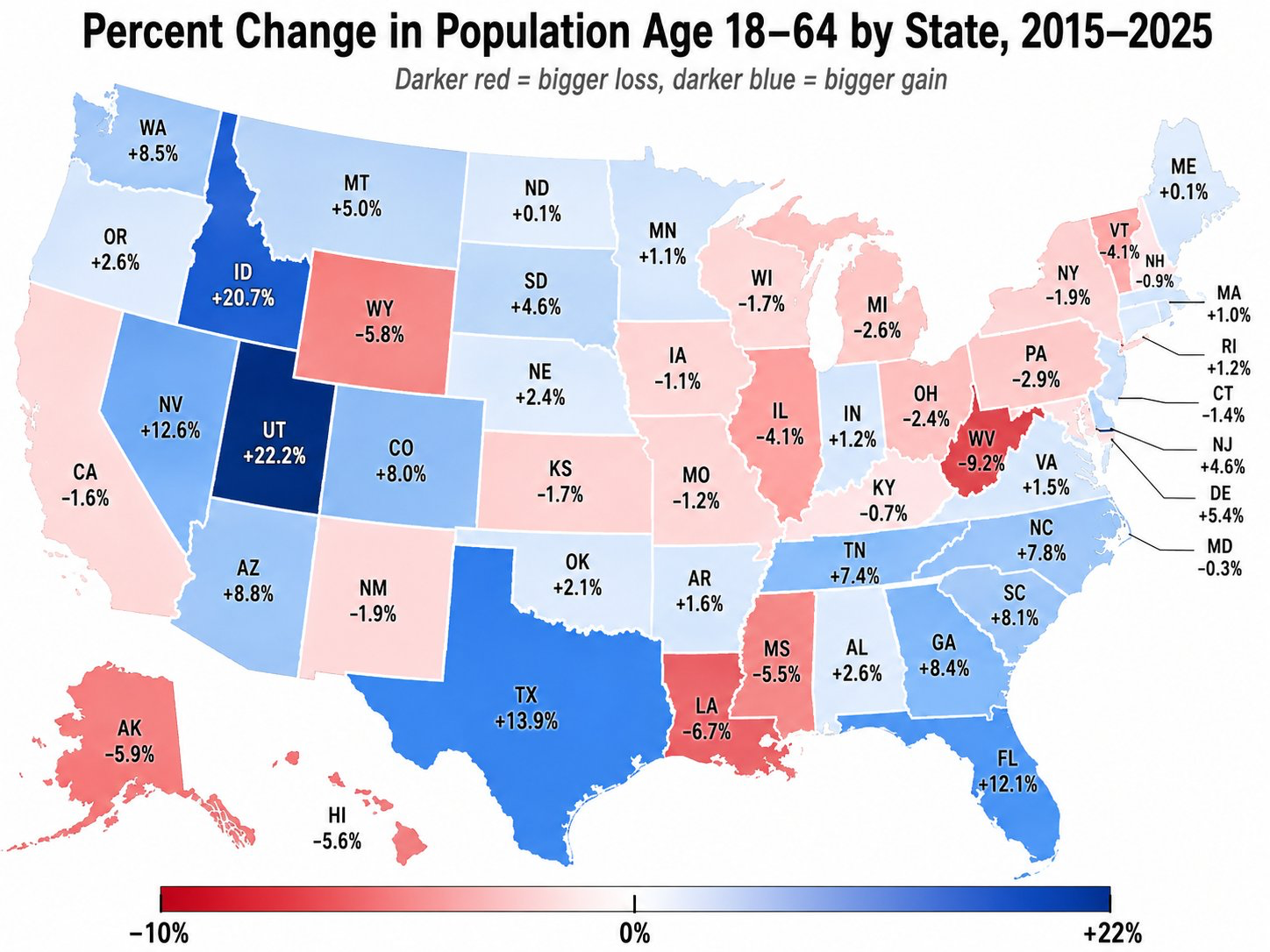
7) Working-age growth is separating the states: Total population can hide the labor-market story. From 2015 to 2025, the 18-to-64 population rose 22.2% in Utah and 20.7% in Idaho, but fell 9.2% in West Virginia and 6.7% in Louisiana. Recruitment capacity follows available workers, not the headline population.
8) Your target list is not the deliverable: Attractiveness is not the same thing as winnability. Devin Hillsdon-Smith's test is simple: if a rival county could put its name on your target-industry strategy without changing it, the list probably ignores the sites, power, water, and labor you can actually deliver.
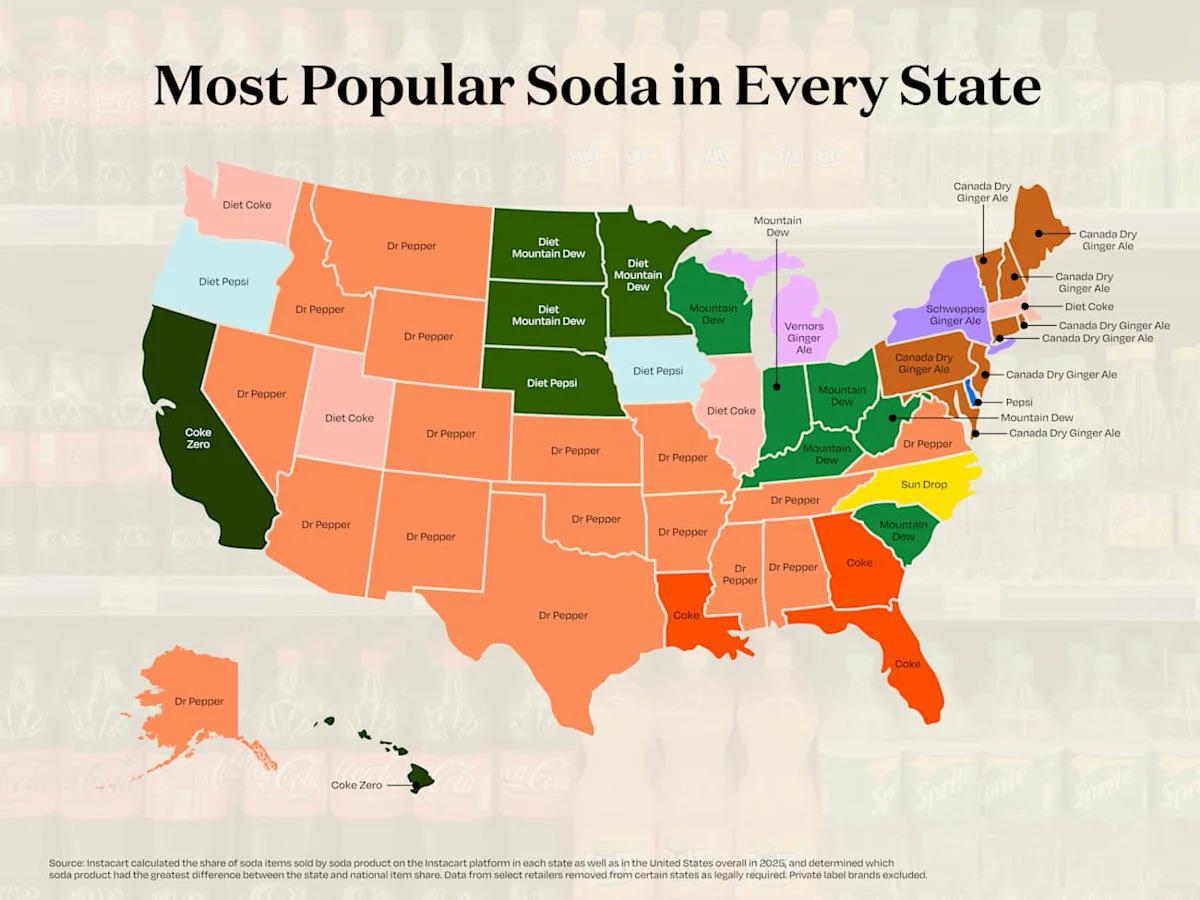
9) Dr Pepper's national footprint is a lesson in local taste: National averages flatten the market. Ginger ale dominates much of the Northeast, Mountain Dew claims parts of Appalachia, Sun Drop stands alone in North Carolina, and Coke holds the Deep South. Local preference is strategy, not trivia.
10) Ordinary abundance is easy to overlook: Yesterday's impossible luxuries are today's background infrastructure. This interactive apartment restores some wonder to clean water, refrigeration, electric light, medicine, washing machines, and the many systems that make ordinary life possible.
11) Wide-leg pants are an economics lesson: Trends can become self-reinforcing until saturation helps reverse them. This short video uses fashion's swing between baggy and skinny jeans to explain reflexivity, the feedback loop between what people expect and what they choose.
12) The neighborhood supermarket is becoming a tourist attraction: Ordinary commerce can deliver the authenticity travelers want. The BBC reports that 77% of travelers enjoy visiting grocery stores abroad. The attraction is not spectacle; it is a low-cost look at how a place actually lives.
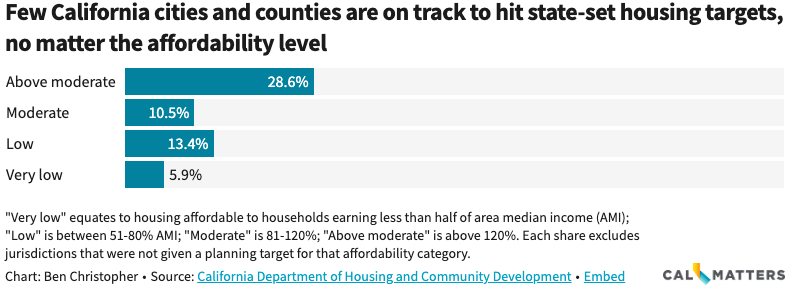
13) Planning for housing is not producing housing: California's mandates show the difference. The state told localities to plan for 2.5 million homes by 2030, but only five jurisdictions are permitting fast enough to hit every income-level target. Track what gets built, not only what the plan allows.
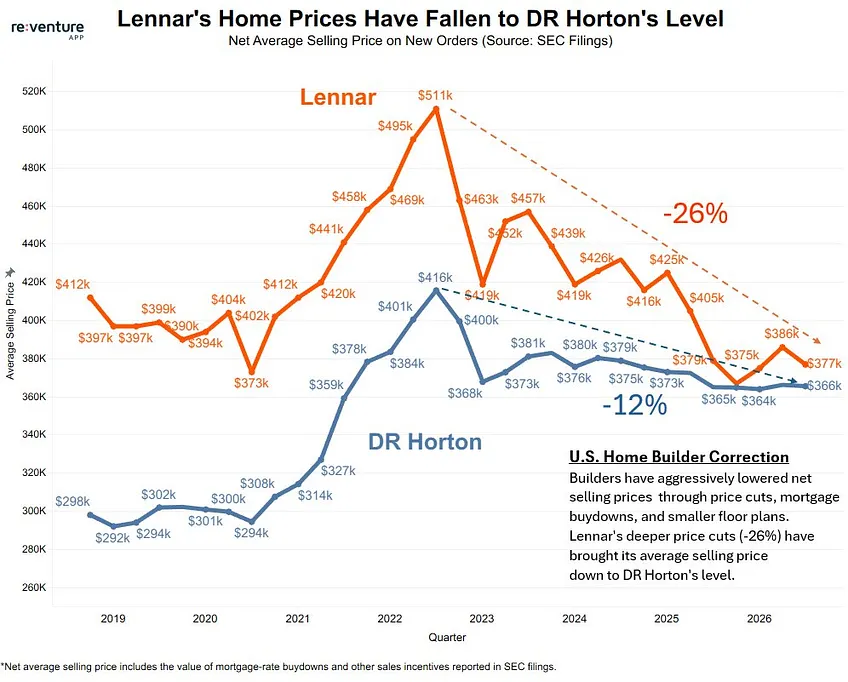
14) Big builders are manufacturing affordability: Price cuts and incentives are revealing a much softer new-home market. Lennar's net average price has fallen from $511,000 to $377,000, while D.R. Horton has cut from $415,000 to $366,000. The national median new-home price has cooled even as the broader Case-Shiller index remains elevated.
15) The big housing bill is a collection of small levers: The provisions that matter are the ones that relax a binding constraint. Brian Potter's section-by-section review finds potentially useful changes for infill review, home repairs, conversions, and local incentives, but warns that authorization does not automatically become housing supply.
16) Hanwha wants a second major U.S. shipyard: Foreign capital could add capacity, but defense work guarantees close scrutiny. The South Korean company has made a preliminary offer of up to $1.2 billion for Austal USA, whose Mobile yard builds Navy and Coast Guard vessels and submarine modules.
17) The White House wants a foreign-sourcing bridge to domestic shipbuilding: The proposed bargain trades near-term overseas production for new U.S. yards, workers, suppliers, and know-how. The memo also calls for a fifth public Navy shipyard, though domestic builders argue that every hull built abroad diverts work from the industrial base Washington says it wants to rebuild.
18) The biggest fortunes usually begin with ownership: The upper end of wealth is built by owning an enterprise, not only earning a salary. Barry Ritholtz's list starts with founding and selling ordinary businesses, then adds company equity, inheritance, real estate, finance, professional firms, and franchises.
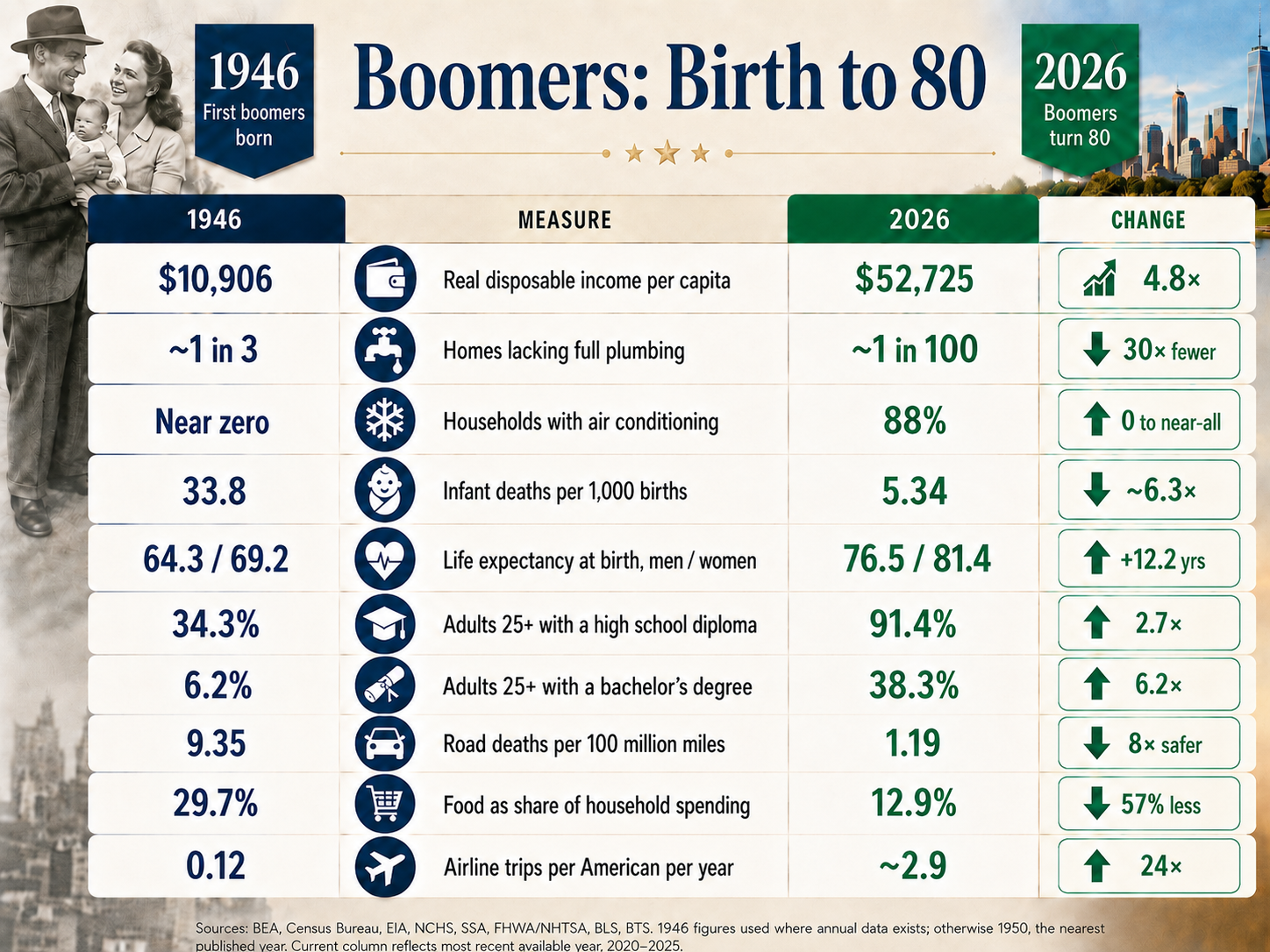
19) The first baby boomers turn 80 this year: The coming inheritance is enormous, but it will not be broadly redistributive. Bruce Mehlman notes that Boomers and older Americans still hold nearly two-thirds of U.S. assets, while almost three-quarters of the likely heirs are already in the top 10% of net worth.
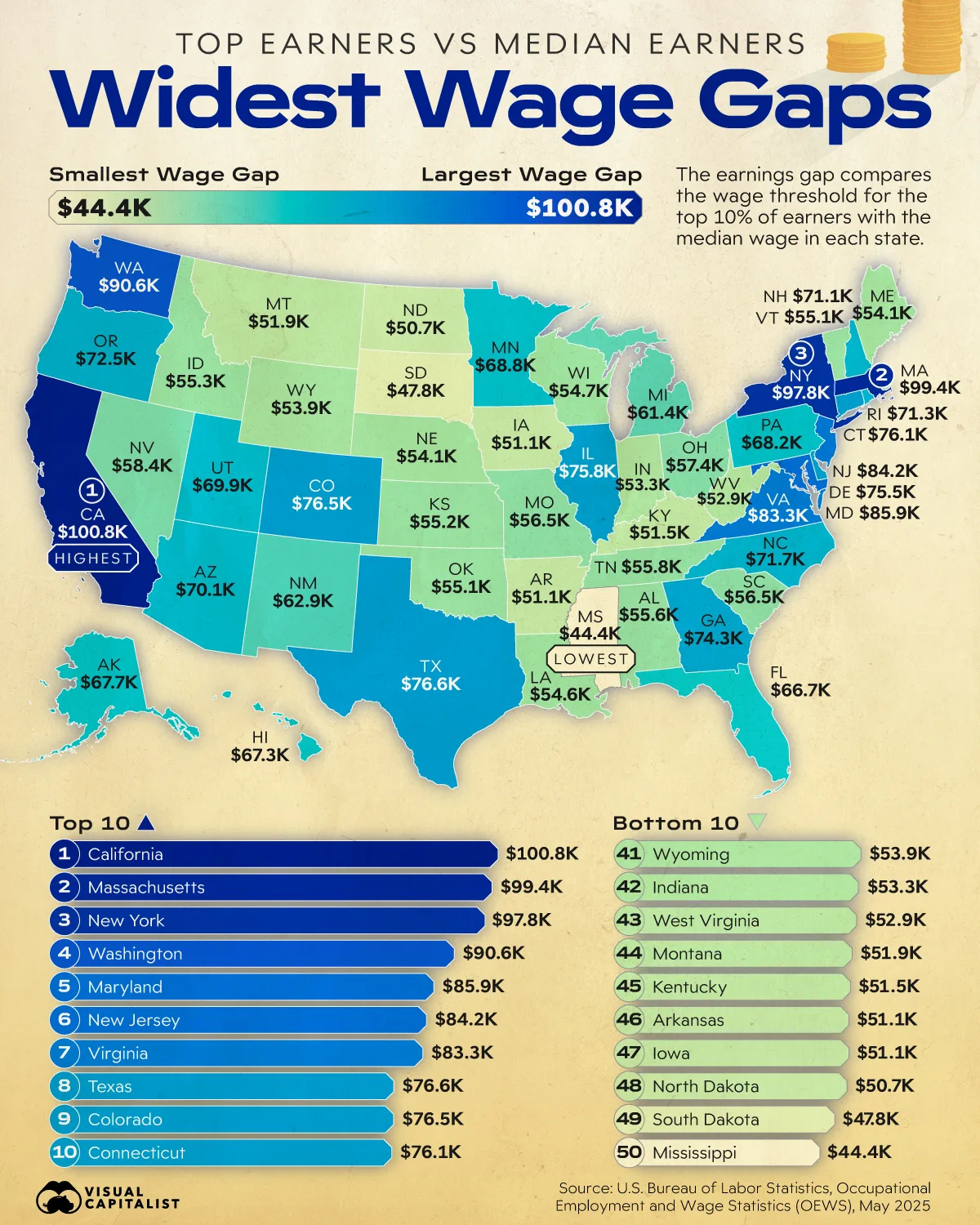
20) A high wage ceiling can hide an ordinary paycheck: California's top-earner threshold sits $100,840 above its median wage. That is the widest state gap in this BLS-based comparison; Mississippi's is the narrowest at $44,380. Talent marketing should not confuse star salaries with typical earnings.
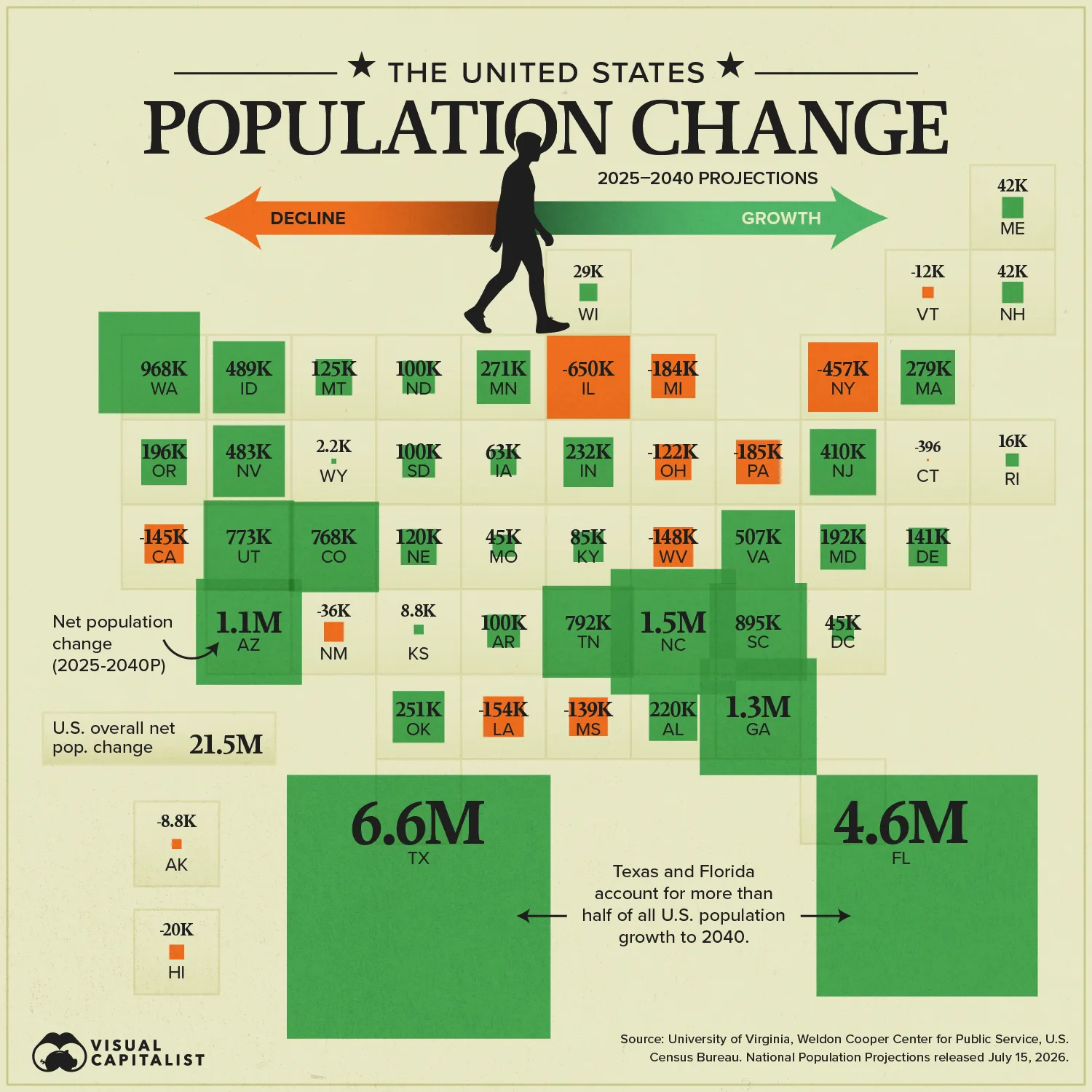
21) U.S. growth is becoming more concentrated: Two states are projected to capture more than half of the country's increase. Texas and Florida account for 11.2 million of the 21.5 million people the nation may add by 2040, while 14 states are projected to shrink.