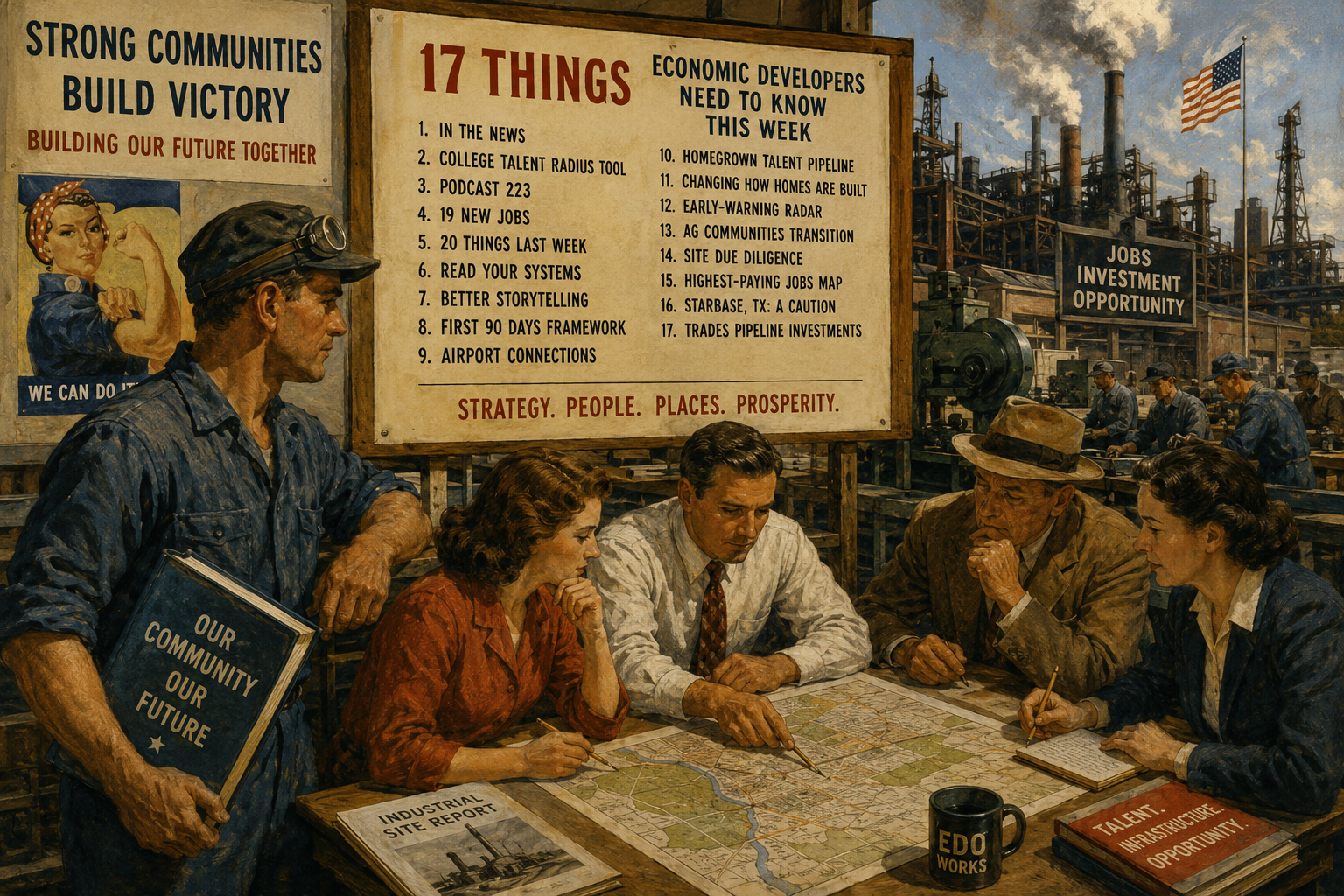
17 Things Economic Developers Need to Know This Week
The stories Dane thinks you need to see. June 18, 2026 edition.

Welcome to this week's issue of What Economic Developers Need to Know This Week, where we explore the evolving dynamics of our economy.
This week we have 17 tools, stories, graphics, charts and videos that I think you'll find informative, useful, inspiring, and perhaps even humorous. Some are economic development related directly, and some only indirectly. 🤔
If you're wondering what to do with the info in this newsletter, send something to your board members. It will make you look good!
Today's email is brought to you by Resource Development Group
Resource Development Group and Convergent Nonprofit Solutions have recently announced a merger of these two well respected firms. RDG is now operating as Resource Development Group, a Convergent Company and will lead the combined operations in economic development and chamber engagements. Meanwhile, the Convergent banner will take the forefront on efforts on supporting traditional philanthropic and higher education organizations
This merger maintains RDG's innovative and custom approach while also creating the deepest bench of economic development and chamber fundraising expertise in the industry, the most complete data set in the country regarding economic development and chamber funding, and the greatest flexibility to be able to support engagement models tailored specifically to every market, regardless of size.
Whether you’re a single county EDO ready to kick off your first fundraising campaign or a large regional organization on your third funding cycle, they have the team and experience to get you the results you’re looking for.
1) Economic development and developers in the news #248: 52 economic development executives and organizations in 28 states.
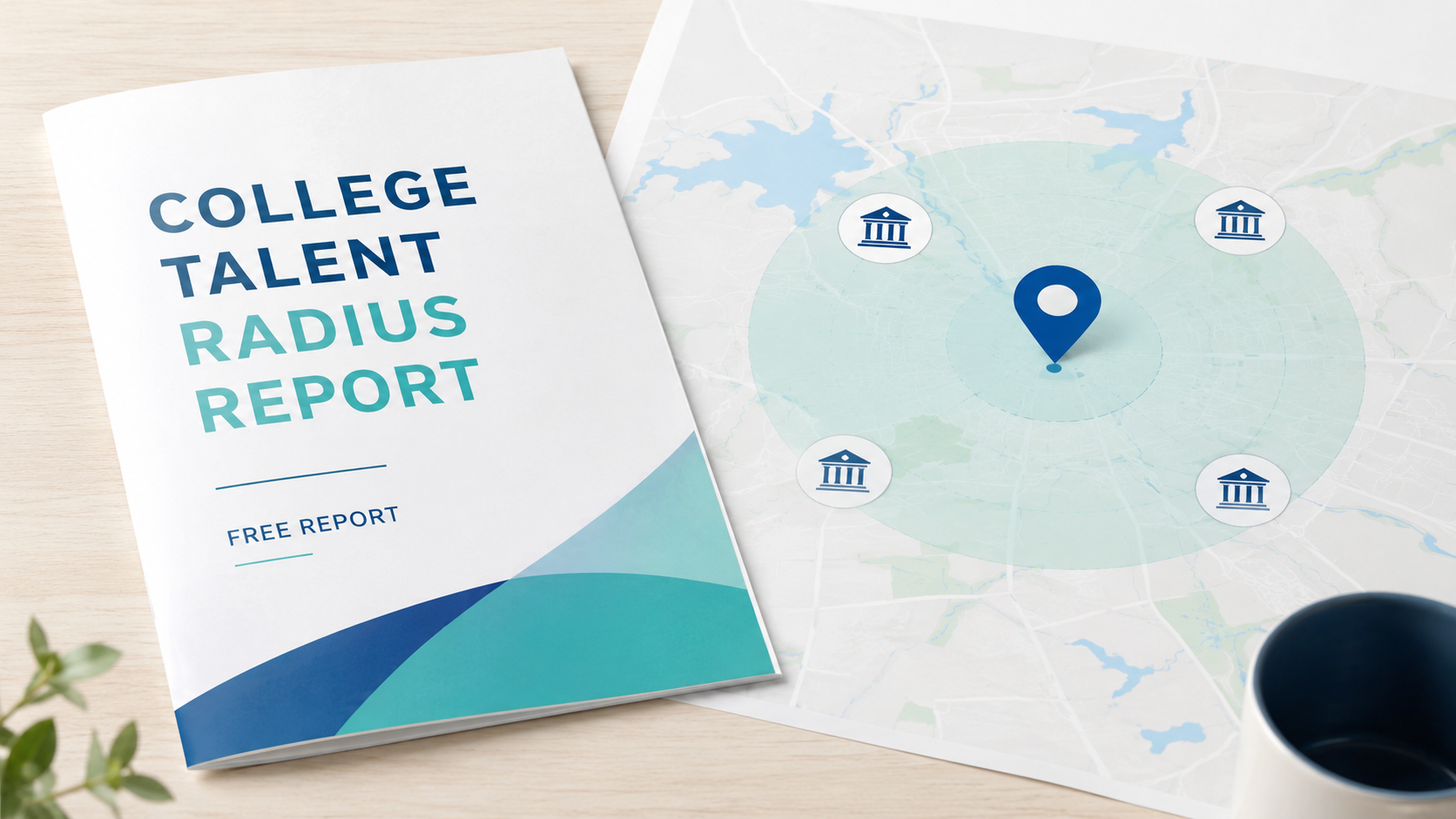
2) New free college talent radius report tool: Workforce answers should not require a spreadsheet marathon. The new Sitehunt tool lets you enter a city or map point, choose a radius up to 120 miles, and generate a printable report with nearby colleges, enrollment, degree completions, leading programs, distances, and a map of the regional college network. Try it: Build a College Talent Radius Report.
3) Podcast 223: The Power of Powerlessness: A small organization can sometimes convene better because it does not threaten anyone. Michael Hecht of Greater New Orleans Inc. talks about recovery, trust, regional coalition-building, and why economic developers need enough history and political science to understand how durable change actually happens. Listen: The Power of Powerlessness with Michael Hecht.
4) 19 new economic development jobs this week: The hiring signal runs from local staff roles to national tech and data center work.
5) 20 things economic developers needed to know last week: Catch up on the previous issue for the energy, site selection, business formation, and labor-market links that set up several of this week's themes.

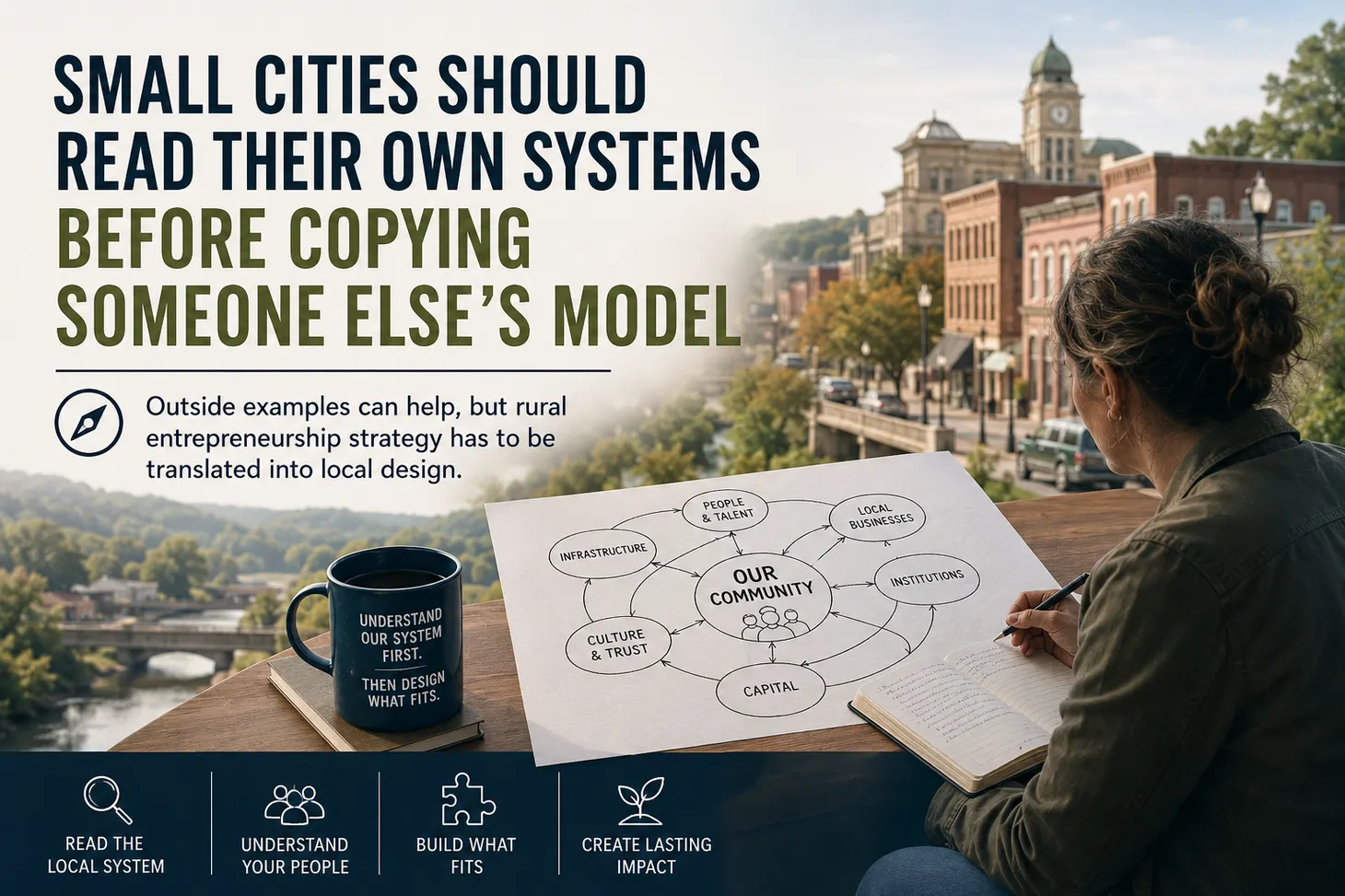
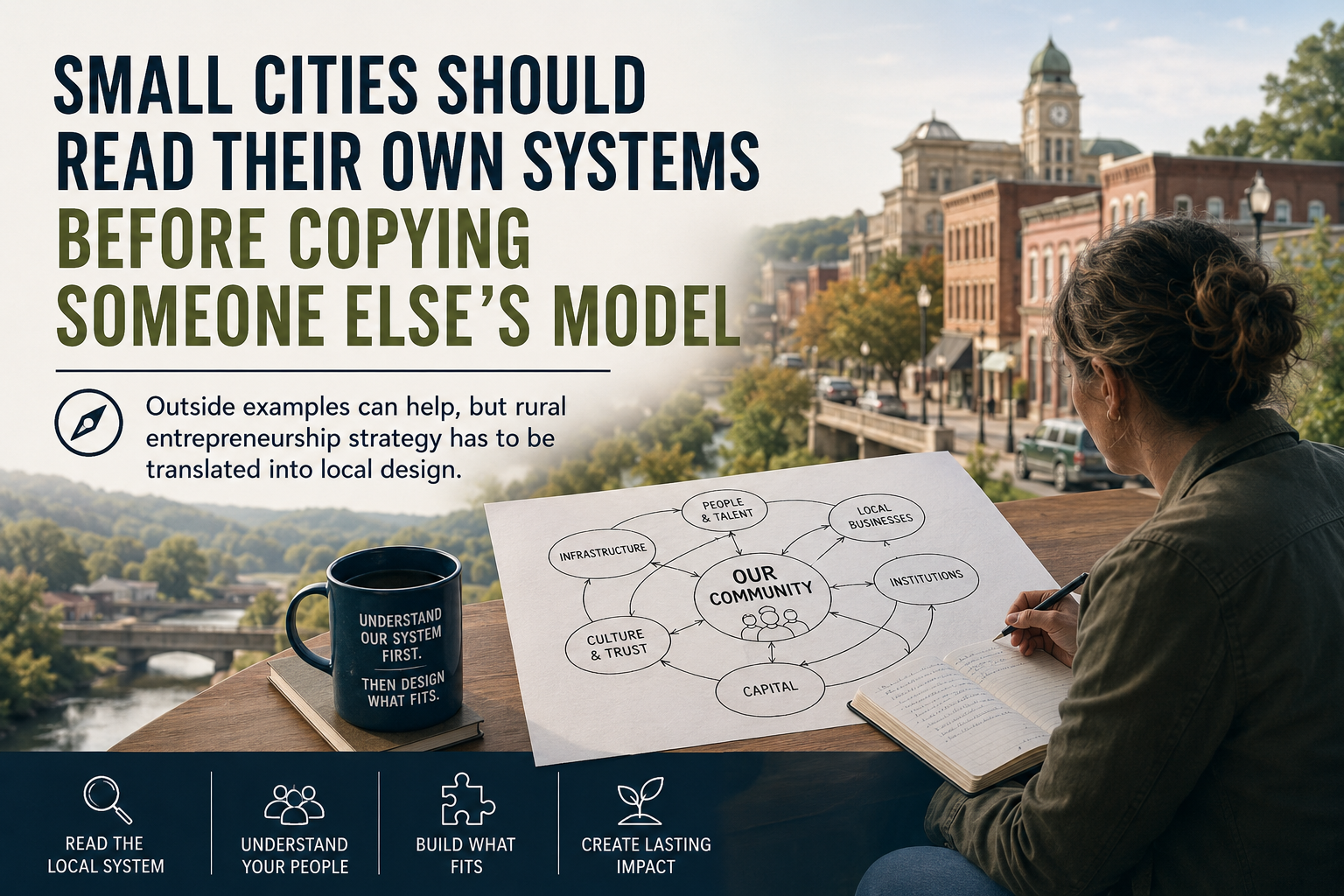
6) Small cities should read their own systems first: Do the diagnostic work before copying the model. A coworking space, accelerator, or incubator only works if the local system can carry it. The better rural entrepreneurship question is not "can we afford the smaller version?" but "what does this place actually need first?" Read: Small Cities Should Read Their Own Systems Before Copying Someone Else's Model.
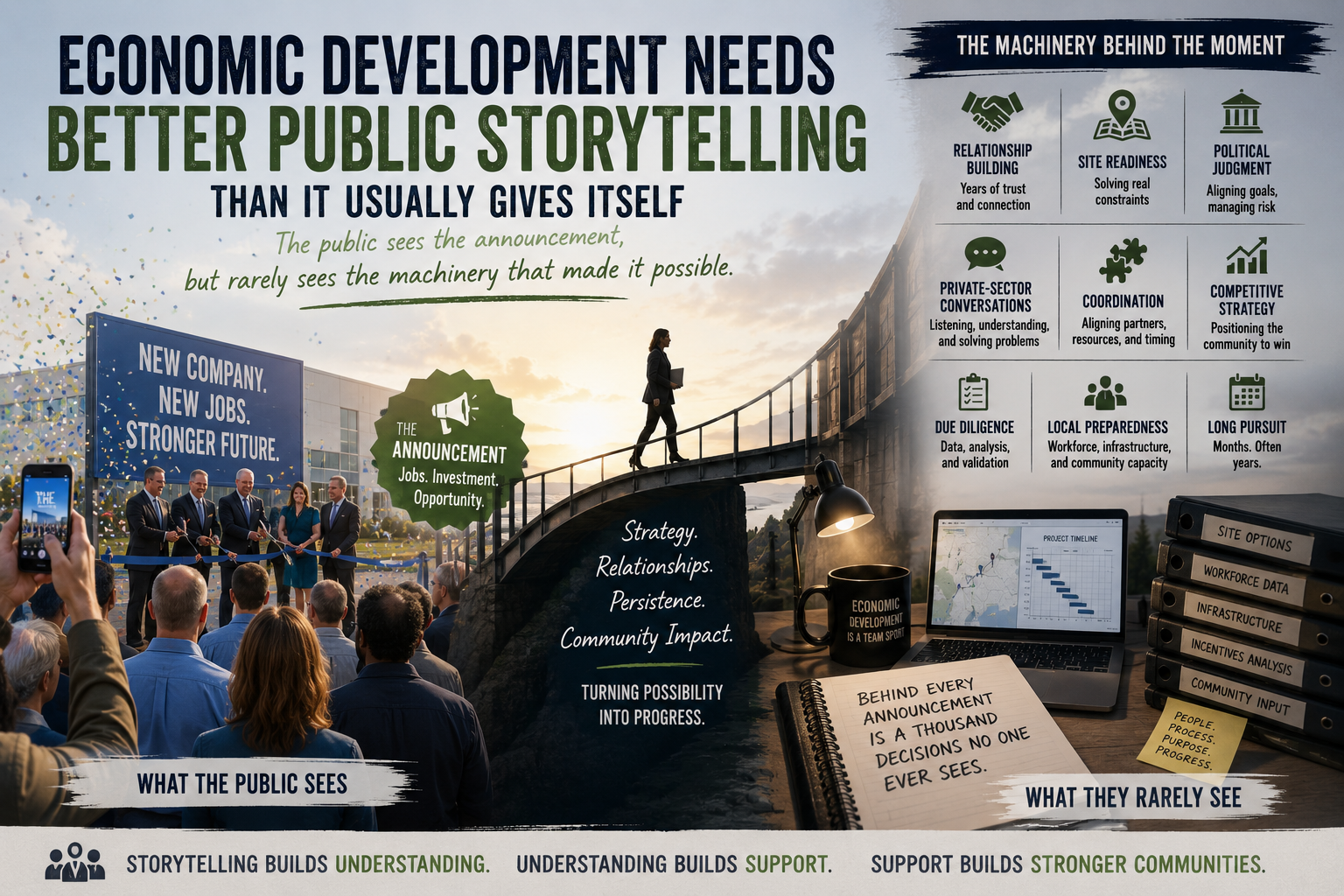
7) Economic development needs better public storytelling: The public sees the announcement, not the machinery. This piece argues that the field needs more narrative translation, because residents, students, reporters, and elected officials often see incentives and ribbon cuttings but miss the pursuit work, site constraints, relationship-building, and judgment behind the outcome. Read: Economic Development Needs Better Public Storytelling Than It Usually Gives Itself.
8) A first-90-days framework helps new economic development leaders inherit the map: The new person inherits responsibilities faster than they inherit context. Includes a practical onboarding frame: capture predecessor notes, listen before resetting direction, separate immediate duties from longer-range interpretation, and build a real map of downtown, business-support systems, stakeholder expectations, and unresolved local issues. Read: A First-90-Days Framework Helps New Economic Development Leaders Inherit the Map.
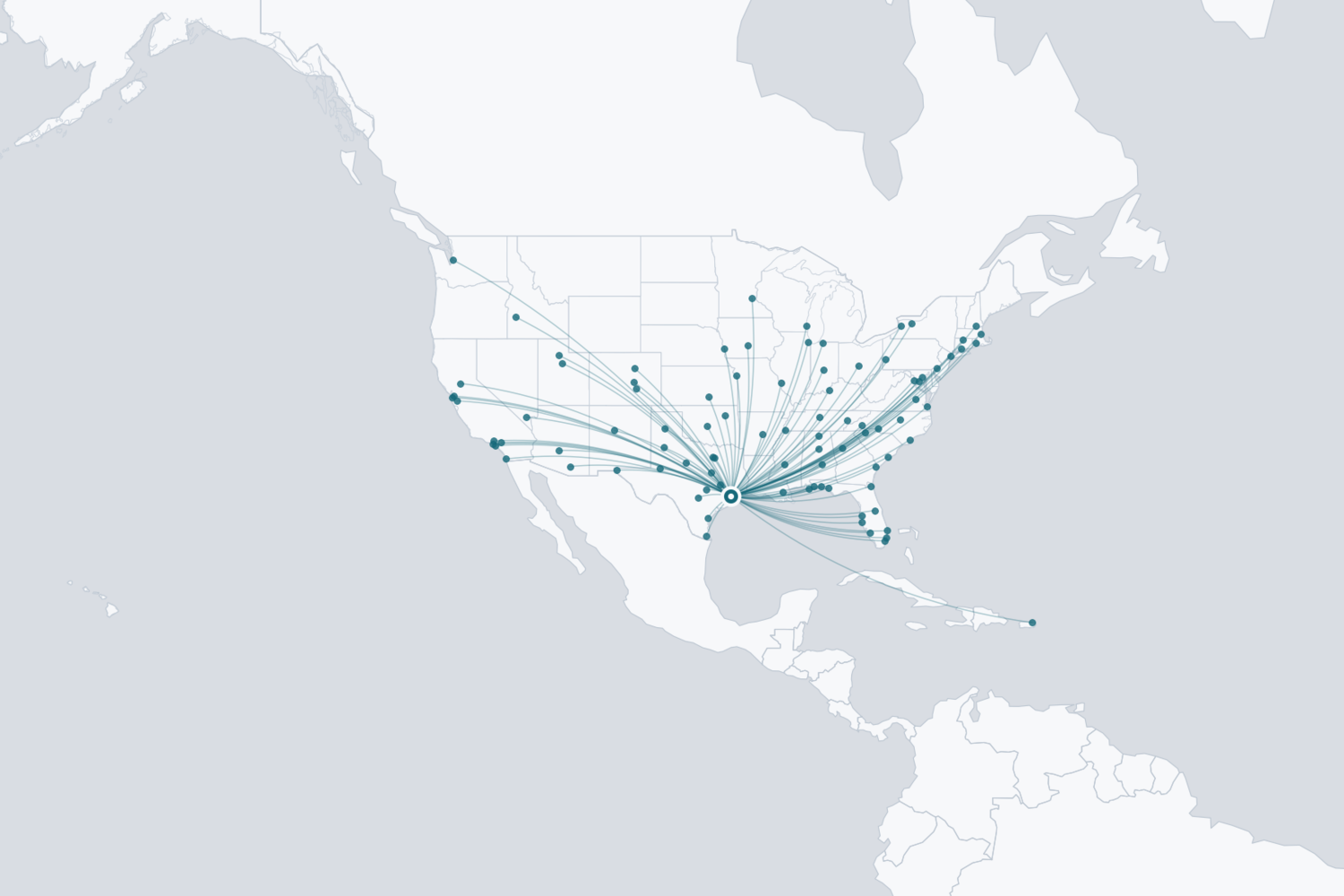
9) Sitehunt's free Airport Connections tool: Show air service at a glance. Sitehunt's free Airport Connections tool helps economic developers quickly show where a city or airport connects, with searchable domestic and international route maps that can be downloaded or embedded. Try it: Airport Connections.
10) Build a homegrown talent pipeline from the ground up: A workforce strategy starts with the people already in the community. Golden Shovel's whitepaper frames the work around career awareness, accessible training, removing barriers, stemming youth outmigration, developing local talent, and coordinating the systems that turn potential workers into actual career pathways. Download: workFORCE: How to Build a Homegrown Talent Pipeline From the Ground Up.
11) A former SpaceX team is trying to change how homes are built: Housing supply is partly a materials and manufacturing problem. Plantd, a North Carolina startup founded by former SpaceX engineers, is making structural building panels from a fast-growing perennial grass instead of conventional wood-based OSB. The useful economic development angle is the whole stack: agricultural feedstock, rural manufacturing, housing costs, certification, scale-up risk, and a 10 million panel order from D.R. Horton that is far larger than current capacity. Watch: He Left SpaceX to Change How Homes Are Built.
12) Build an early-warning radar for your BRE program: Existing employers leave public signals before they leave the community. Dillion Roberts lays out a practical way to monitor WARN filings, local news, and hiring activity so an EDO can see red, yellow, and green flags before the bad news arrives through Facebook or a council member. The larger point is simple: retention work needs a signal system, not just relationships and annual visits. Read: How to Build an Early-Warning Radar for Your BRE Program.
13) The transition every agricultural community will face: Automation does not become local opportunity automatically. Jim Gibson uses agricultural technology and processing automation to ask what happens when labor is displaced but the community has not built a second sector ready to absorb it. The warning for rural economic developers is sharp: national productivity gains can still become local employment shocks if transition planning is late. Read: The Transition Every Agricultural Community Will Face.
14) Industrial site due diligence is where deals are saved or killed: A site is not executable just because it is identified. Devin Hillsdon-Smith's Business Facilities piece walks through the unglamorous work that protects capital: Phase I and Phase II environmental reviews, soil borings, bearing capacity, shallow bedrock, zoning, public hearings, wetlands, species issues, utility capacity, transformer lead times, water and sewer proof, and fiber redundancy. Read: the Business Facilities article.
15) The highest-paying job in every state: Scarce specialized talent is its own economic geography. Read: Mapped: The Highest-Paying Job in Every State.
16) Starbase, Texas, as an economic development cautionary tale: The story is not just rockets. It is land use, governance, infrastructure, environmental conflict, and civic identity. The New York Times opinion piece is worth reading through an EDO lens because single-company places can move fast, but they also concentrate risk and make the community's public story harder to separate from the anchor employer. Read: the Starbase opinion piece.
17) Big business is spending to create more mechanics and electricians: The skilled-trades shortage is now a corporate strategy problem. The Wall Street Journal reports that Ford is watching a dealership mechanic shortage of about 5,000 workers, Bloomberg Philanthropies is launching a $90 million trades push, Lowe's Foundation has pledged $250 million to train 250,000 people by 2035, and BlackRock is committing $100 million to help train electricians in Texas. For EDOs, this is the labor-market version of site readiness: the pipeline has to be built before the project needs it. Read: The U.S. Needs Mechanics and Electricians. Big Business Is Spending to Create Some.