20 Things Economic Developers Need to Know This Week
The stories Dane thinks you need to see. May 21, 2026 edition.


Welcome to this week's issue of What Economic Developers Need to Know This Week, where we collect links, charts, and ideas about the economy and place.
This week: 27 stories, graphics, and rabbit holes that are (mostly) relevant to economic development, and occasionally just funny.
If you're wondering what to do with the info in this newsletter: forward one item to a board member or elected official. It makes you look prepared.
Today's email is brought to you by Resource Development Group
Resource Development Group and Convergent Nonprofit Solutions have recently announced a merger of these two well respected firms. RDG is now operating as Resource Development Group, a Convergent Company and will lead the combined operations in economic development and chamber engagements. Meanwhile, the Convergent banner will take the forefront on efforts on supporting traditional philanthropic and higher education organizations
This merger maintains RDG's innovative and custom approach while also creating the deepest bench of economic development and chamber fundraising expertise in the industry, the most complete data set in the country regarding economic development and chamber funding, and the greatest flexibility to be able to support engagement models tailored specifically to every market, regardless of size.
Whether you’re a single county EDO ready to kick off your first fundraising campaign or a large regional organization on your third funding cycle, they have the team and experience to get you the results you’re looking for.
1) Economic development and developers in the news #244: 89 economic development executives and organizations in 31 states. A fast scan of the announcements, projects, leadership moves, and local wins economic developers were sharing this week. Read: Economic Development and Developers in the News #244.

2) Podcast 219: The field finally has a handbook you can read before the next board meeting. Glenn Athey talks through the practical craft of economic development, from strategy and institutions to the day-to-day work of helping places compete. Listen: The Economic Development Handbook We All Needed with Glenn Athey.
3) 26 new economic development jobs this week: Roles in 20 states, from $35,000 to $198,000. The weekly jobs post is a practical market check on who is hiring, where the openings are, and what salary bands are showing up across the profession. Browse: 26 New Economic Development Jobs This Week.
4) Last week's 27 things issue: The May 14, 2026 catch-up link. This is the source-file link back to last week's issue, not a repeated outside-link item. Read: 27 Things Economic Developers Need to Know This Week.
5) Why entrepreneurship-led economic development works best inside BRE: The next wave of local innovation may start inside your existing businesses. Entrepreneurship support is easier to make real when it is tied to relationships, expansion conversations, supplier needs, and the companies already rooted in the community. Read: Why Entrepreneurship-Led Economic Development Works Best Inside BRE.

6) How one community turned a brand into a decision-making tool: A community brand is only useful if people can use it. The useful test is not whether a logo looks polished, but whether the brand helps leaders, partners, and residents make clearer choices about what belongs and what does not. Read: How One Community Turned a Brand Into a Decision-Making Tool.

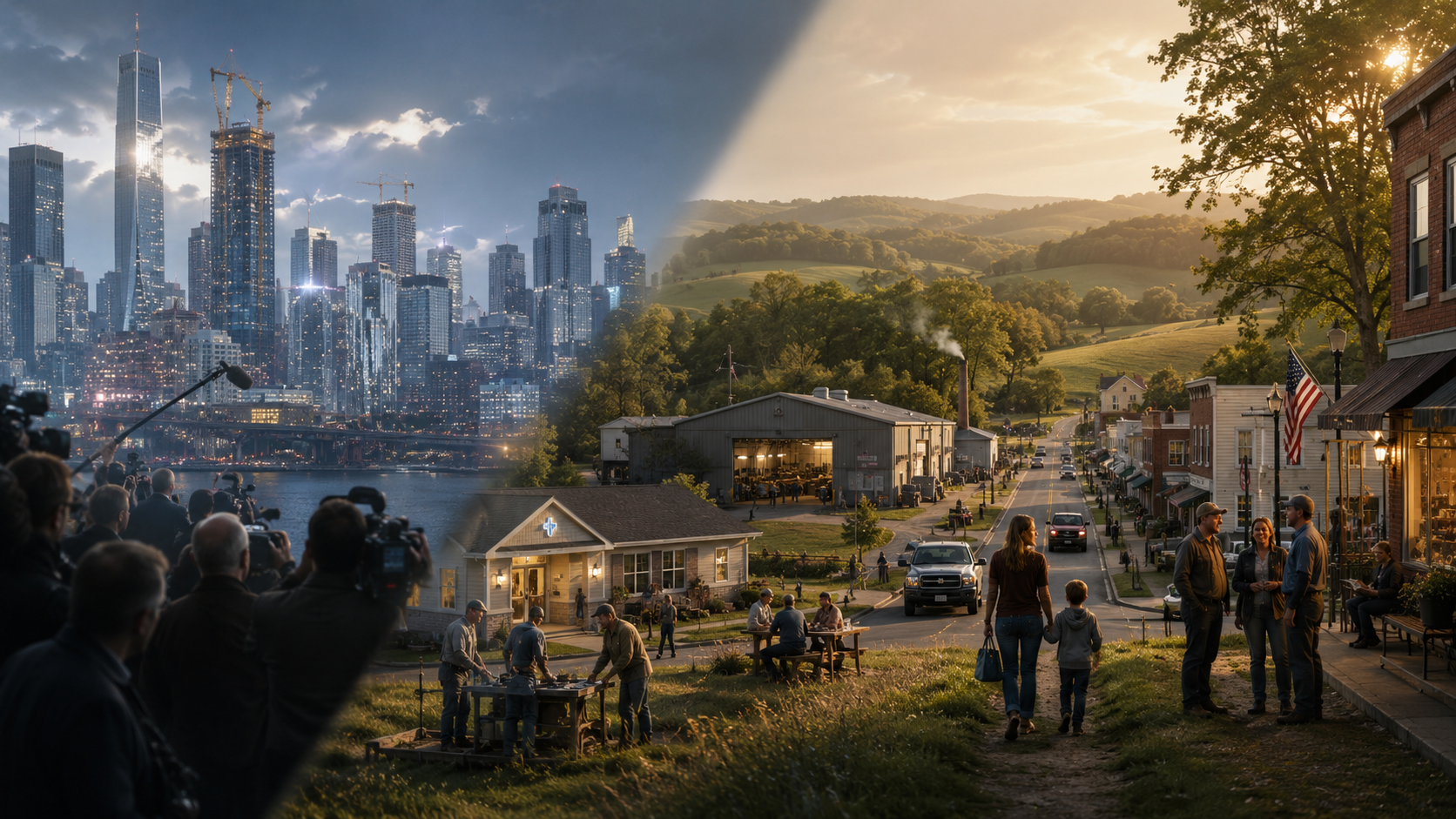
7) Economic development has an urban bias: Rural success is often smaller in the headline and larger in the community. If the profession only recognizes metro-scale wins, it misses the smaller employers, local operators, and capacity-building work that keep rural economies moving. Read: Economic Development Has an Urban Bias.
Sitehunt is site selection software that automates industrial real estate research so economic developers can respond to site selection RFIs in minutes instead of days.
8) Economic developers waste too much time pitching the place before they understand the problem: Business attraction works best when it starts with the company's concern, not the community's brochure. The best first move is to understand the operational constraint before reaching for the pitch deck. Read: Economic Developers Waste Too Much Time Pitching the Place Before They Understand the Problem.

9) Economic development marketing needs to think more like B2B marketing: Economic developers need to move from promotion to pipeline. Targeting, segmentation, useful content, follow-up, and measurement matter more than another generic awareness campaign. Read: Economic Development Marketing Needs to Think More Like B2B Marketing.

10) The town that wrote itself: Round Rock became the Sports Capital of Texas because it named itself an authentic identity before overbuilding around it.
The city already had the raw ingredients: In 2003–2004, instead of building a bunch of facilities and then trying to market them, Round Rock claimed the title and used that brand as a strategic filter for the next twenty years. The big lesson: the brand was not a slogan. It became a capital investment strategy. Round Rock kept stacking investments that reinforced the identity: Dell Diamond, Old Settlers Park upgrades, the Sports Center, the Multipurpose Complex, Kalahari, and continued expansions. Each project made the next one more believable.
Let the town's real characters, conflicts, and assets lead the story before the marketing language arrives.
11) Rural America isn't dying, it's adapting: The rural story is less about disappearance than adjustment. Brownfield's column points to consolidated services, new small businesses, housing friction, childcare gaps, healthcare distance, and the math families do when they choose to stay rooted.
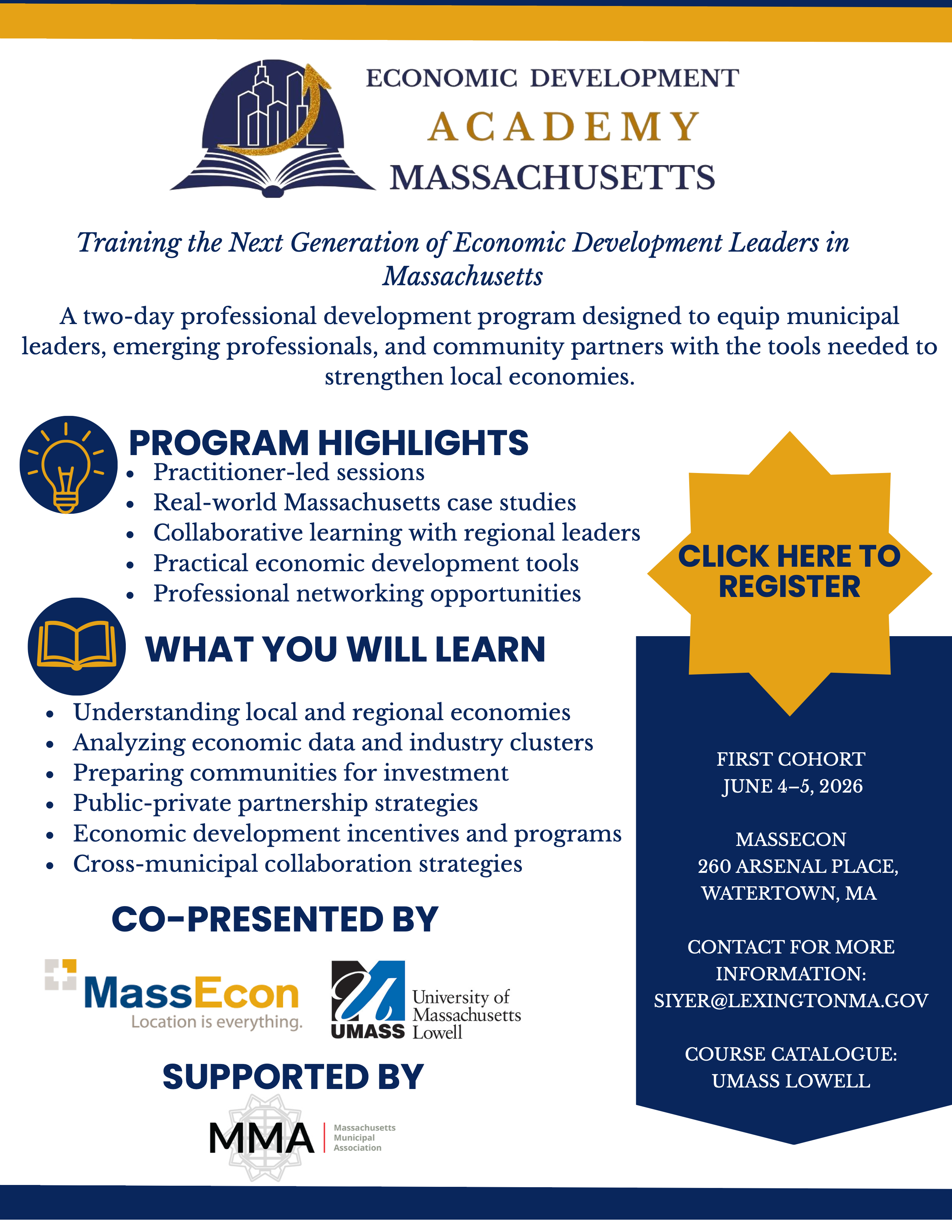
12) Economic Development Academy of Massachusetts: The profession is getting more formal training infrastructure at the local level. The first two-day cohort is June 4-5, 2026 in Watertown, with MassEcon, UMass Lowell, and the Massachusetts Municipal Association framing the program around data, clusters, investment readiness, partnerships, incentives, and cross-municipal collaboration. Register: Economic Development Academy.
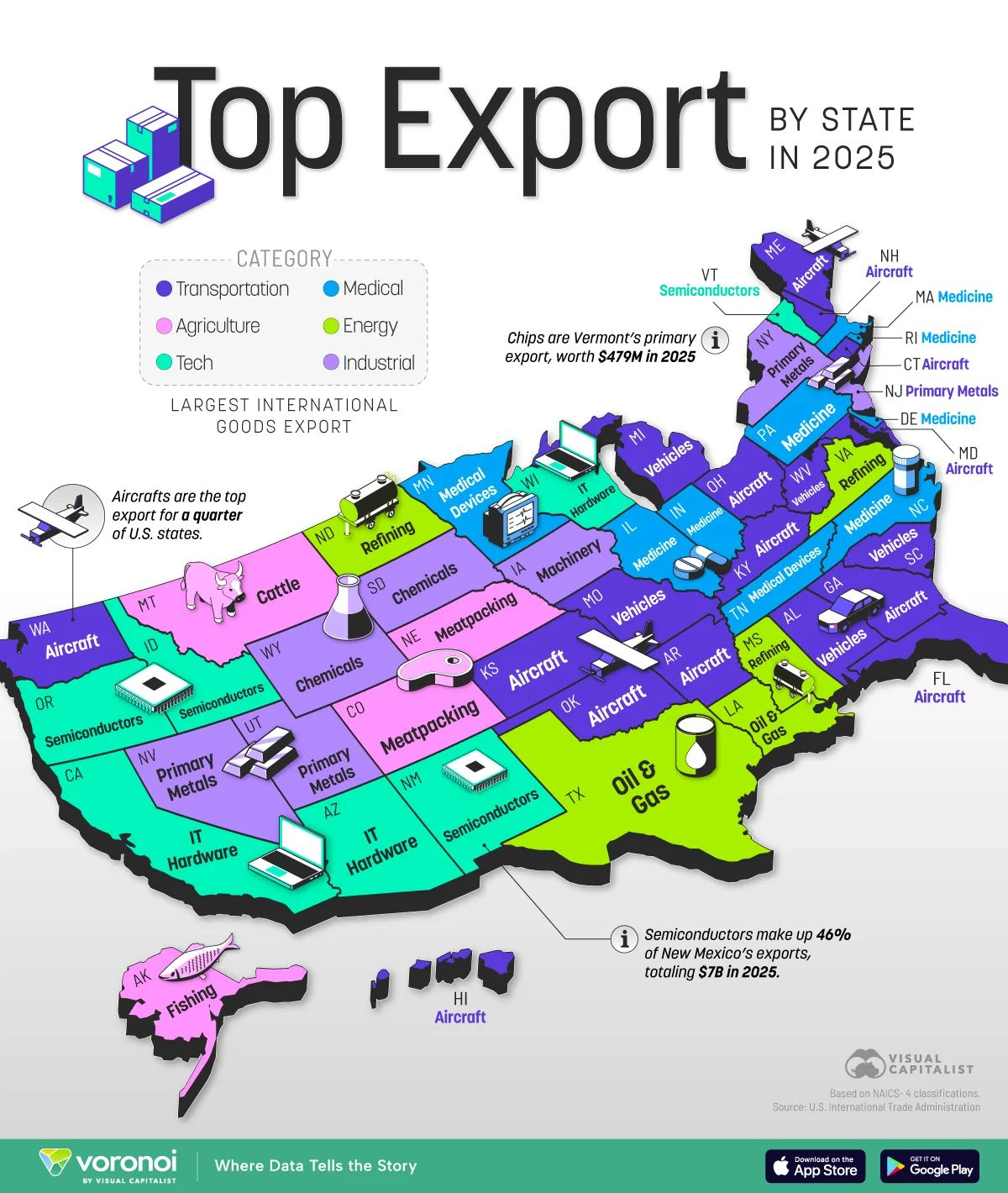
13) Top export by state in 2025: State economies still specialize in very different things. Aircraft lead in a quarter of states, while semiconductors stand out in places like Vermont, Oregon, and New Mexico. The map is a quick reminder that trade strategy, workforce, infrastructure, and supplier development are not one national conversation.
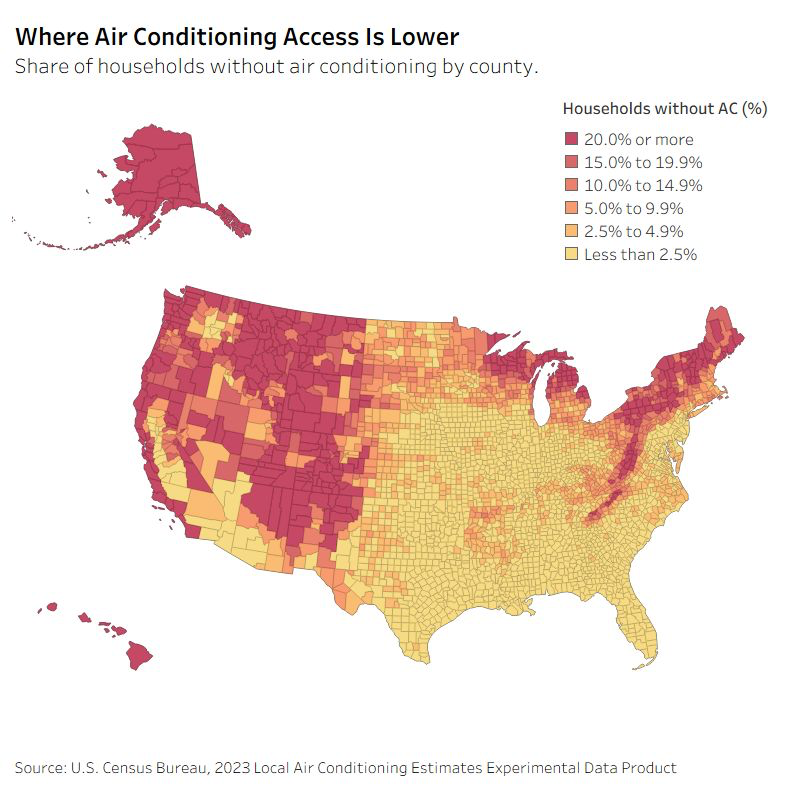
14) Where air conditioning access is lower: 120 years after air conditioning was invented, basically every place in the US that needs air conditioning has it.
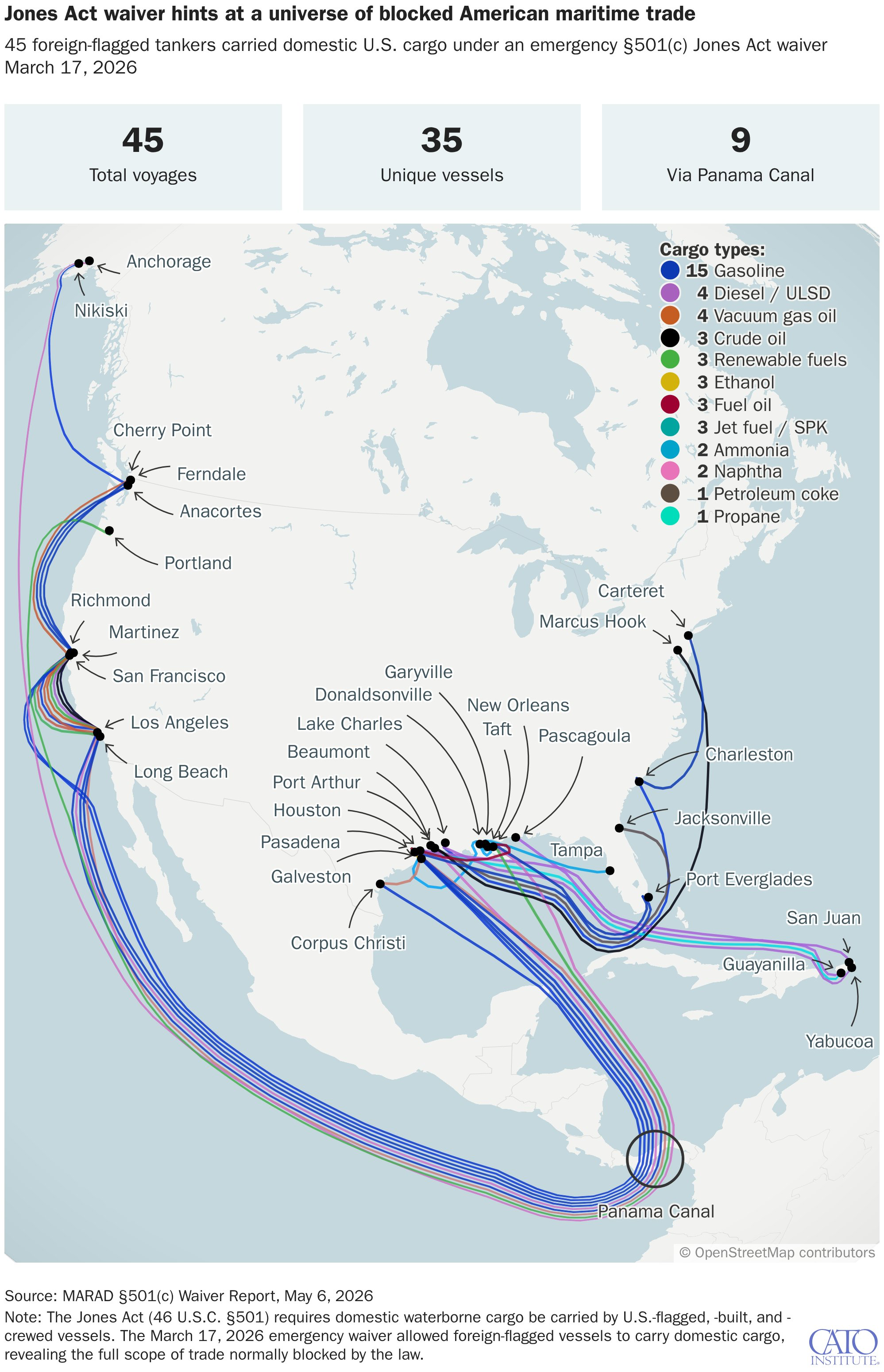
15) I’ve long said the Jones Act is strangling the U.S. economy, and this map shows what I mean. Since March, an emergency waiver has allowed 45 domestic cargo voyages by 35 foreign-flagged tankers, moving gasoline, diesel, crude oil, jet fuel, propane, ethanol, and other essentials between American ports.
In other words, the trade was there. The demand was there. The routes were there. What was missing was the legal capacity to move that cargo under normal Jones Act rules. America has the energy, the ports, the customers, and the need. But the Jones Act blocks much of that domestic maritime trade unless ships are U.S.-flagged, U.S.-built, and U.S.-crewed.
So instead of a strong, flexible coastal shipping network, we get higher costs, fewer options, and emergency waivers when reality finally breaks through the policy.
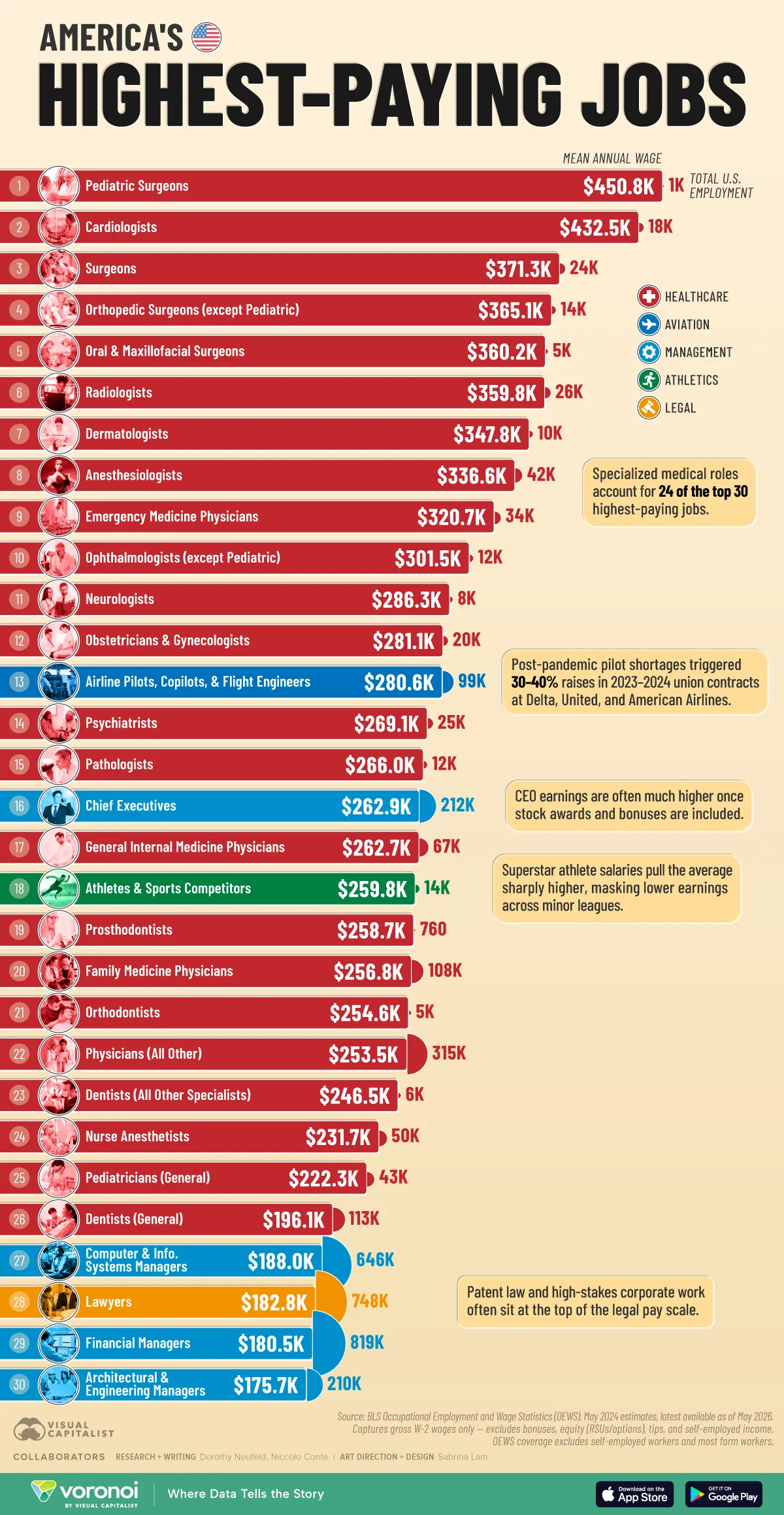
16) Ranked: the 30 highest-paying jobs in America: High pay is still heavily concentrated in specialized healthcare. Medical roles take 24 of the top 30 spots, with pediatric surgeons at the top and pilots, chief executives, athletes, computer and information systems managers, lawyers, financial managers, and architectural and engineering managers rounding out the non-medical mix.
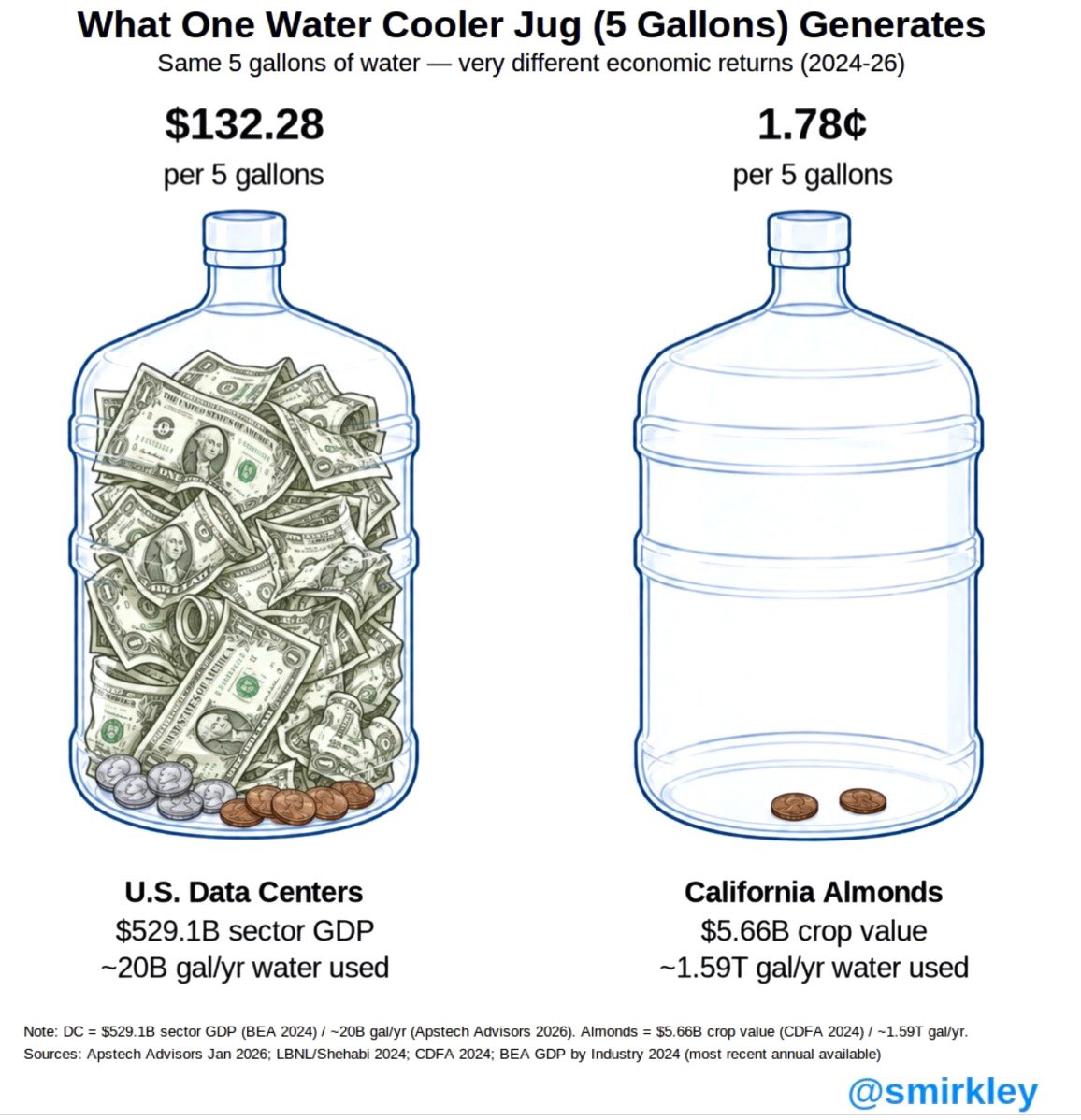
17) Data centers, water, and economic return: The local resource debate is getting sharper. One chart argues that five gallons of water can produce very different economic returns in data centers versus almonds, while a related article raises the community-side concerns around water supply, drought exposure, cooling technology, and disclosure. Read: Is there enough water to quench the thirst of AI super data centers?.
18) Aaron Lubeck and Idyllic Musing on urbanism and cities: City-building arguments move fast on social platforms, but the operating question is old. Are local rules helping useful places adapt, or making normal infill, small-scale development, and street-level complexity harder than they need to be? Read: Aaron Lubeck on LinkedIn and Idyllic Musing on X.
19) Why saying hello to strangers can be good for you: Weak ties are not soft infrastructure, they are part of how places work. NPR revisits research and reader examples showing that casual interactions with strangers and acquaintances can improve mood, belonging, and daily connection, which is useful context for downtowns, civic trust, and community life.
20) oz2.org: Opportunity Zones 2.0 will need better shared explanation than the first round got. oz2.org is an AI-powered education and strategy platform for investors, developers, economic development organizations, and communities trying to understand and navigate the next Opportunity Zone program.