27 Things Economic Developers Need to Know This Week
The stories Dane thinks you need to see. May 14, 2026 edition.

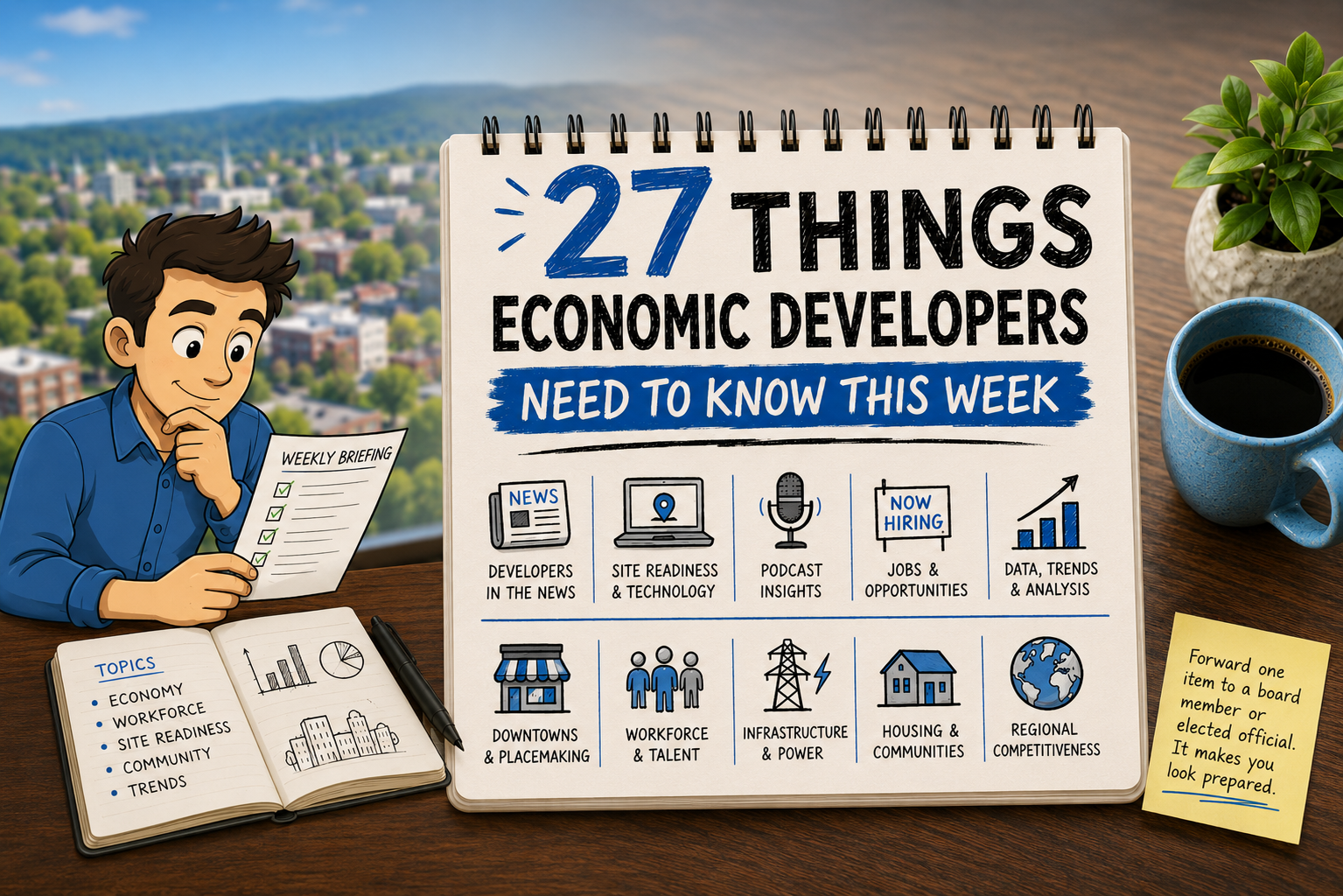
Welcome to this week's issue of What Economic Developers Need to Know This Week, where we collect links, charts, and ideas about the economy and place.
This week: 27 stories, graphics, and rabbit holes that are (mostly) relevant to economic development, and occasionally just funny.
If you're wondering what to do with the info in this newsletter: forward one item to a board member or elected official. It makes you look prepared.
Today's email is brought to you by Resource Development Group
Resource Development Group and Convergent Nonprofit Solutions have recently announced a merger of these two well respected firms. RDG is now operating as Resource Development Group, a Convergent Company and will lead the combined operations in economic development and chamber engagements. Meanwhile, the Convergent banner will take the forefront on efforts on supporting traditional philanthropic and higher education organizations
This merger maintains RDG's innovative and custom approach while also creating the deepest bench of economic development and chamber fundraising expertise in the industry, the most complete data set in the country regarding economic development and chamber funding, and the greatest flexibility to be able to support engagement models tailored specifically to every market, regardless of size.
Whether you’re a single county EDO ready to kick off your first fundraising campaign or a large regional organization on your third funding cycle, they have the team and experience to get you the results you’re looking for.
1) Economic development and developers in the news: 86 economic development executives and organizations in 34 states. A fast scan of the announcements, projects, leadership moves, and local wins economic developers were sharing this week.

2) Sitehunt gives you your Friday afternoons back: Its about fewer 4:59 p.m. scrambles. Site readiness depends on being able to answer the prospect quickly, clearly, and with fewer hand-built spreadsheets.

3) Podcast 218: "We can do that" is not the same as "here is exactly how." Mark Williams talks through what site selectors wish economic developers understood, especially around credibility, readiness, and the details behind a confident answer. Listen: What Site Selectors Wish Economic Developers Understood.

4) 26 new economic development jobs this week: Roles in 16 states, from $55,000 to $197,000. A practical market check on who is hiring, where the openings are, and what the salary bands look like.

5) Last week's 19 things you need to know: Read: 19 Things Economic Developers Need to Know This Week.

Sitehunt
Sitehunt automates industrial real estate research so economic developers can respond to site selection RFIs in minutes instead of days.
Dane, the host of the Econ Dev Show, is the founder and CEO of Sitehunt.
6) Downtown revitalization gets weaker when communities wait for outsiders to save it: The strongest downtown strategies start with the businesses already producing value close to home. Local ownership, local operators, and local deal flow are not consolation prizes, they are the base layer.

7) How a technology center can function like an economic development tool: Workforce institutions can become implementation partners, not just support infrastructure. The best regional growth strategies turn training capacity into something employers can actually build around.
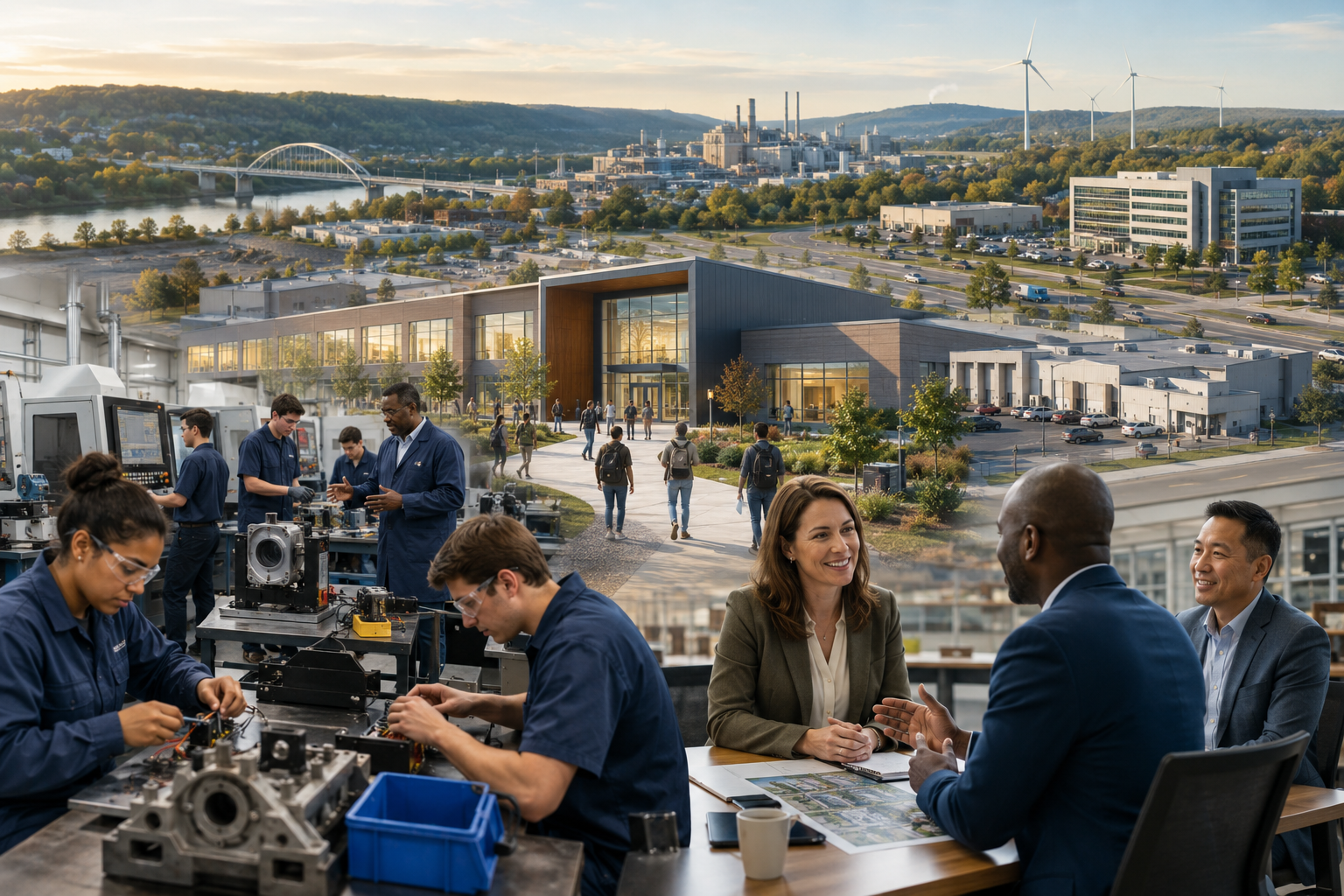
8) Regions do not compete globally when they sound local and fragmented: Regional alignment is more useful than another inventory of assets. Buyers, investors, and talent need a coherent market story, not a stack of disconnected municipal talking points.

9) Why many communities need an economic development organization that can actually build things: Coordination is not enough when the missing capacity is execution.

10) Cheap land does not matter if the power is not real: For electricity-intensive projects, power readiness is now a first-pass site test. Communities cannot paper over uncertain capacity with acreage, incentives, or generic utility language.

11) Devin Hillsdon-Smith on housing as infrastructure: A labor shed is not enough if the market cannot absorb the people. For a project that needs hundreds of workers, housing capacity becomes a recruitment constraint, not a side conversation.
12) A more civil data center discourse: Data center debates are no longer technical sidebars. Site Selection's piece argues for better questions, earlier expectations, and more disciplined public engagement after a $500 million Indianapolis data center vote became a flashpoint.
13) Turning the data center boom into long-term, local prosperity: Communities should negotiate for more than construction jobs and tax base. Brookings frames hyperscaler demand for mega-sites, grid access, and permits as leverage for local talent, innovation, compute, and ecosystem commitments.
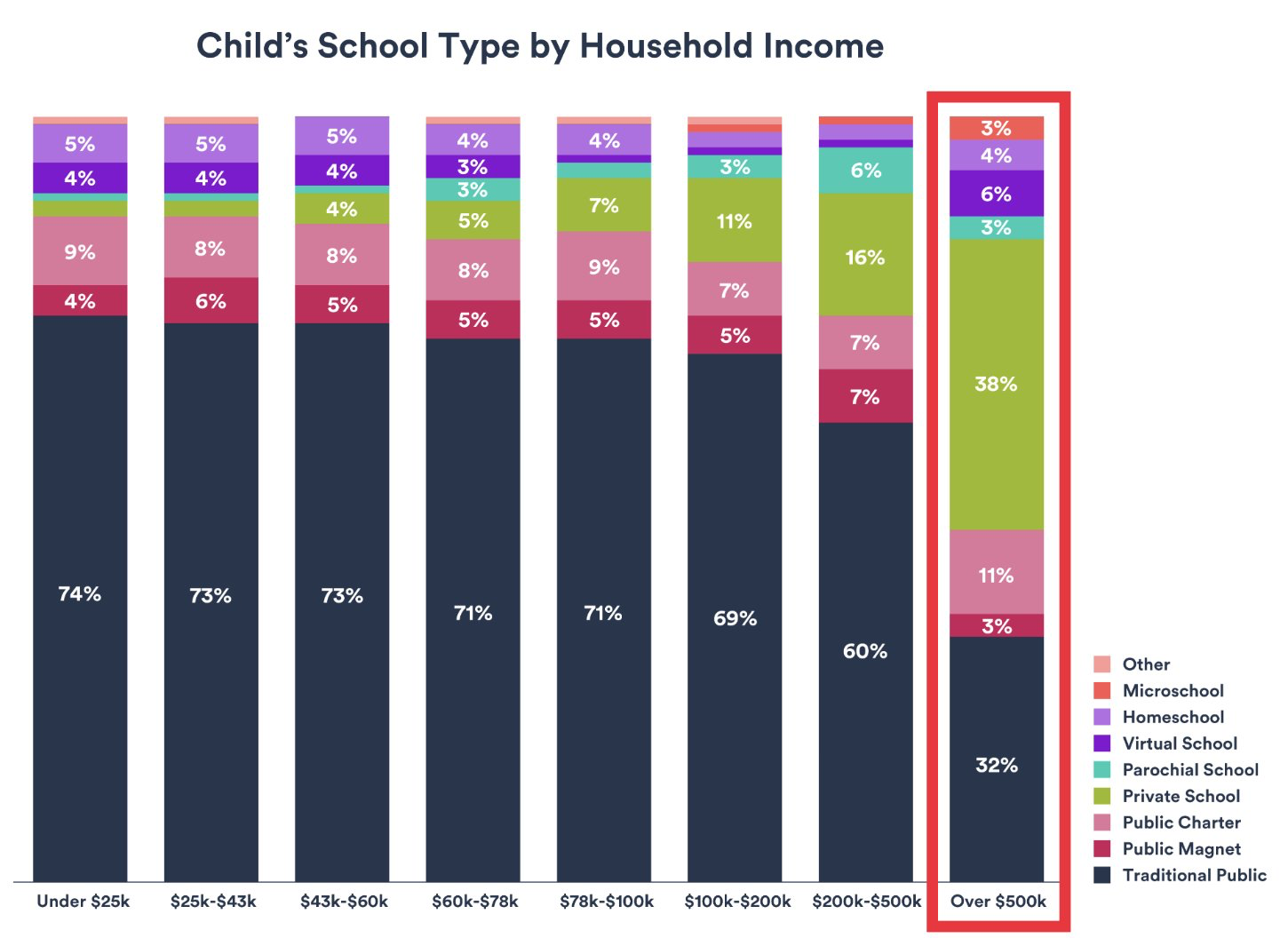
14) Child's school type by household income: Education choice looks very different at the top of the income distribution. The chart is useful context for workforce, housing, and family-attraction conversations because school access is part of how households sort themselves across places.
And on a personal note, all three of my sons were homeschooled. Our youngest graduated last weekend, which means that long, wonderful, exhausting, formative season of life has officially come to an end after more than 20 years.
So I suppose I can now count myself as a successful Homeschool Principal.
More importantly, congratulations to my wife on her well-earned “retirement” from teaching. For more than two decades, she poured love, patience, discipline, creativity, and faithfulness into our boys, and I’m grateful beyond words.
15) Beyond sales tax: Most incorporated places are small, and most economic development finance guidance is not built for them. The piece starts with the fact that 75% of U.S. incorporated places have fewer than 5,000 residents, then walks through practical revenue tools small municipalities can actually understand and right-size.
16) Jim Gibson on generic community vision statements: If every town can swap its name into your mission statement, it is not a strategy.
17) The new local order: Global turbulence turns into local operating questions. Kenny McDonald argues that technological change, volatility, and geopolitical realignment are reshaping how regions need to think about resilience, culture, and problem-solving.
18) The invisible workforce: Economic development is often most visible when someone finally explains the invisible work. REDnews Texas profiled the Econ Dev Show and the people behind Texas growth, which given the title, is a useful reminder that the profession still has a storytelling problem.
19) Why startup ecosystems fail at scale: Activity is not capacity. Paul O'Brien's playbook argues that pitch events, accelerators, and innovation-district language do not matter much if the region lacks the throughput, shared infrastructure, mentor depth, and capital pathways to serve more founders.
20) Houston startups: The strongest startup stories are built on specific regional advantages. Houston's case is not generic tech branding, it is energy, space, medicine, logistics, corporate customers, domain expertise, and a massive diverse market in one region.
21) Trapped buildings: Some land-use systems preserve structures so tightly that adaptation becomes nearly impossible. Buildings that could not be built today but also cannot be substantially changed raise a practical downtown question: are the rules helping places evolve, or freezing them in a form no one can use?
Ask ChatGPT what percentage of buildings in your town meet these criteria.
22) The 20 ingredients of an outstanding downtown: Downtown improvement is easier to discuss when the ingredients are concrete. This three-part series is a useful prompt for boards, Main Street teams, and city staff trying to move from vague aspiration to observable street-level conditions. Watch: Part 1, Part 2, and Part 3.
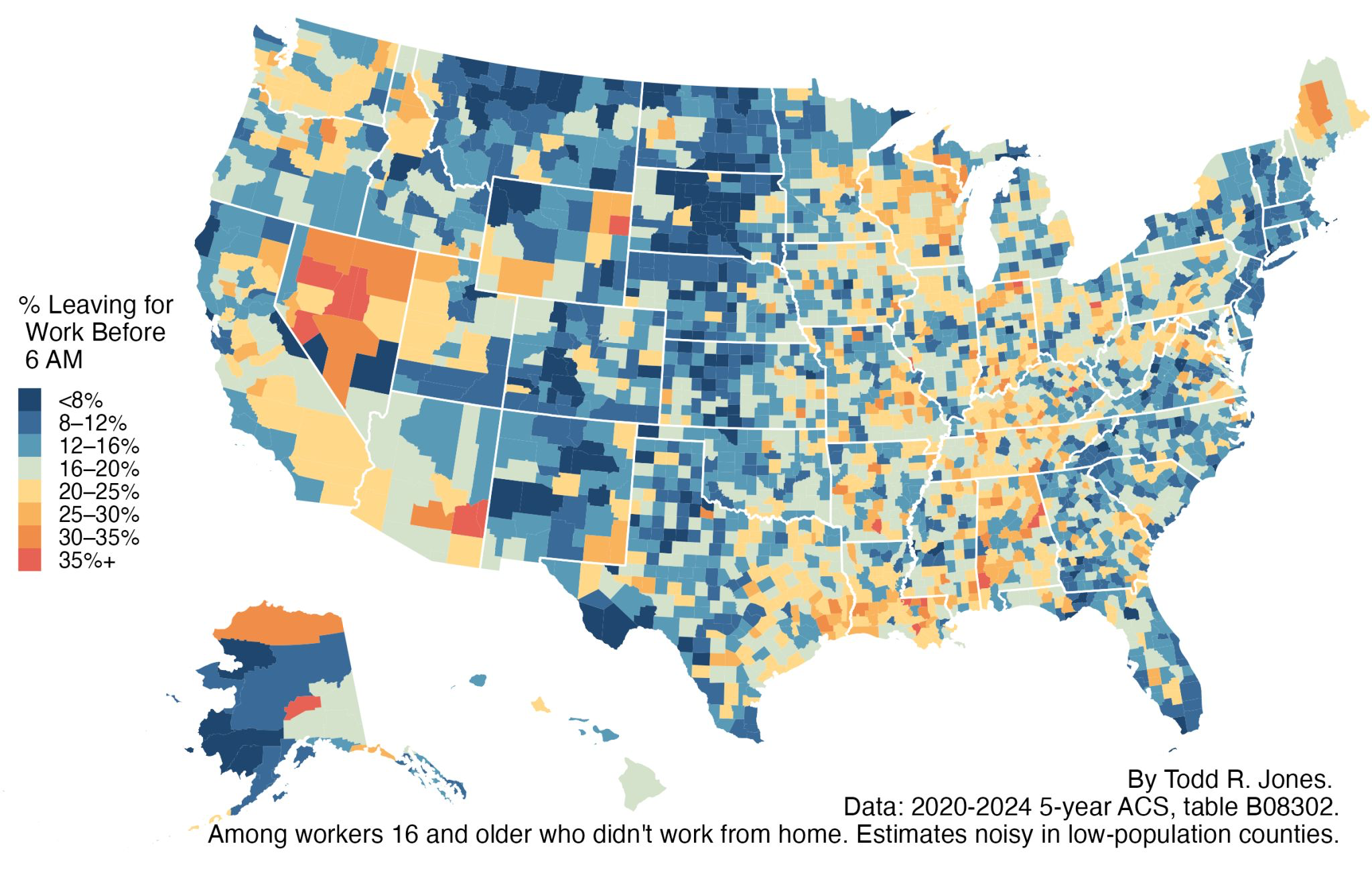
23) Share of workers who leave for work before 6 a.m.: Shift timing is part of workforce access. Early departures can point to industrial work patterns, long commutes, school and childcare friction, and places where the normal office-worker view of transportation misses the real labor market.
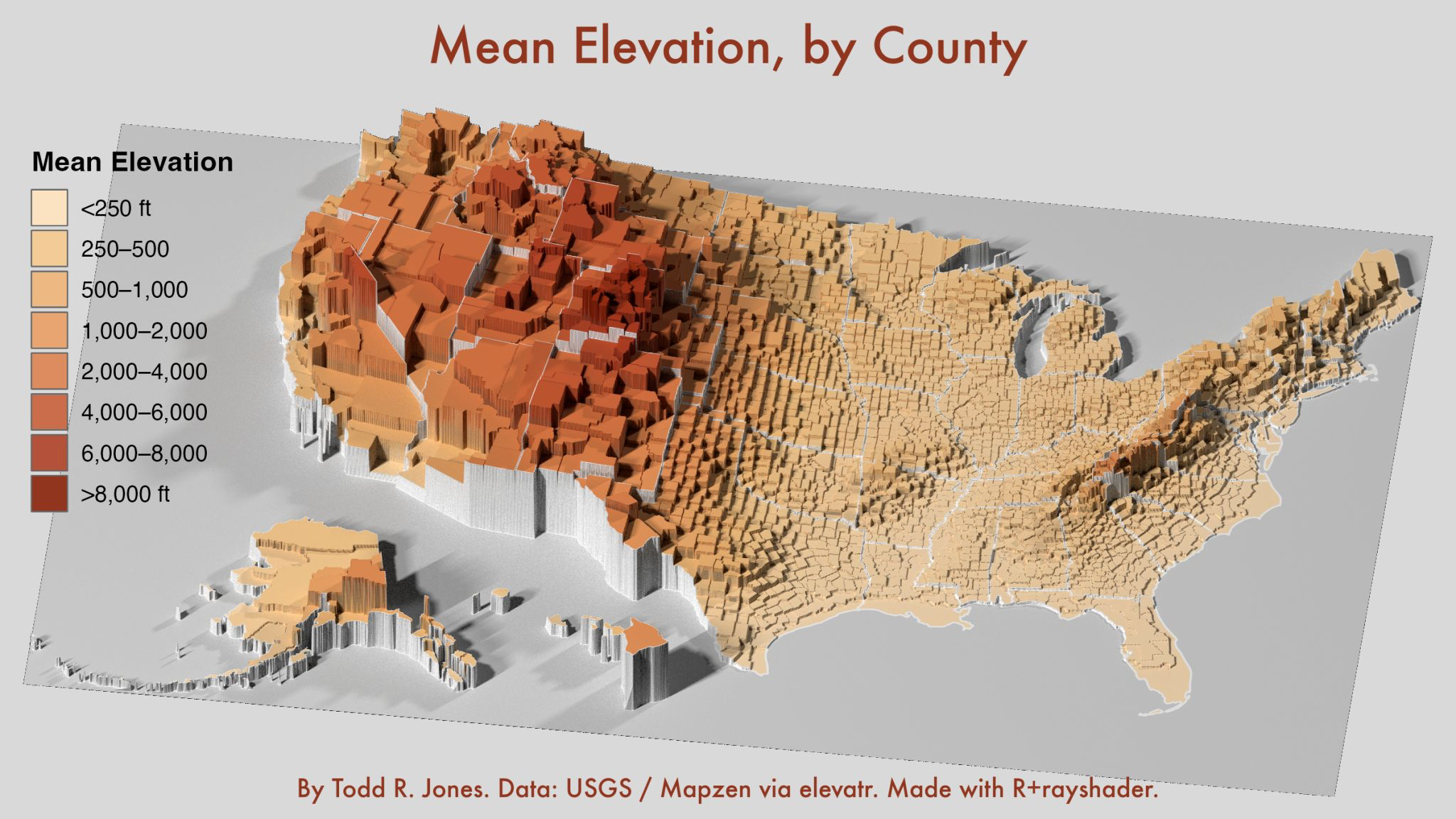
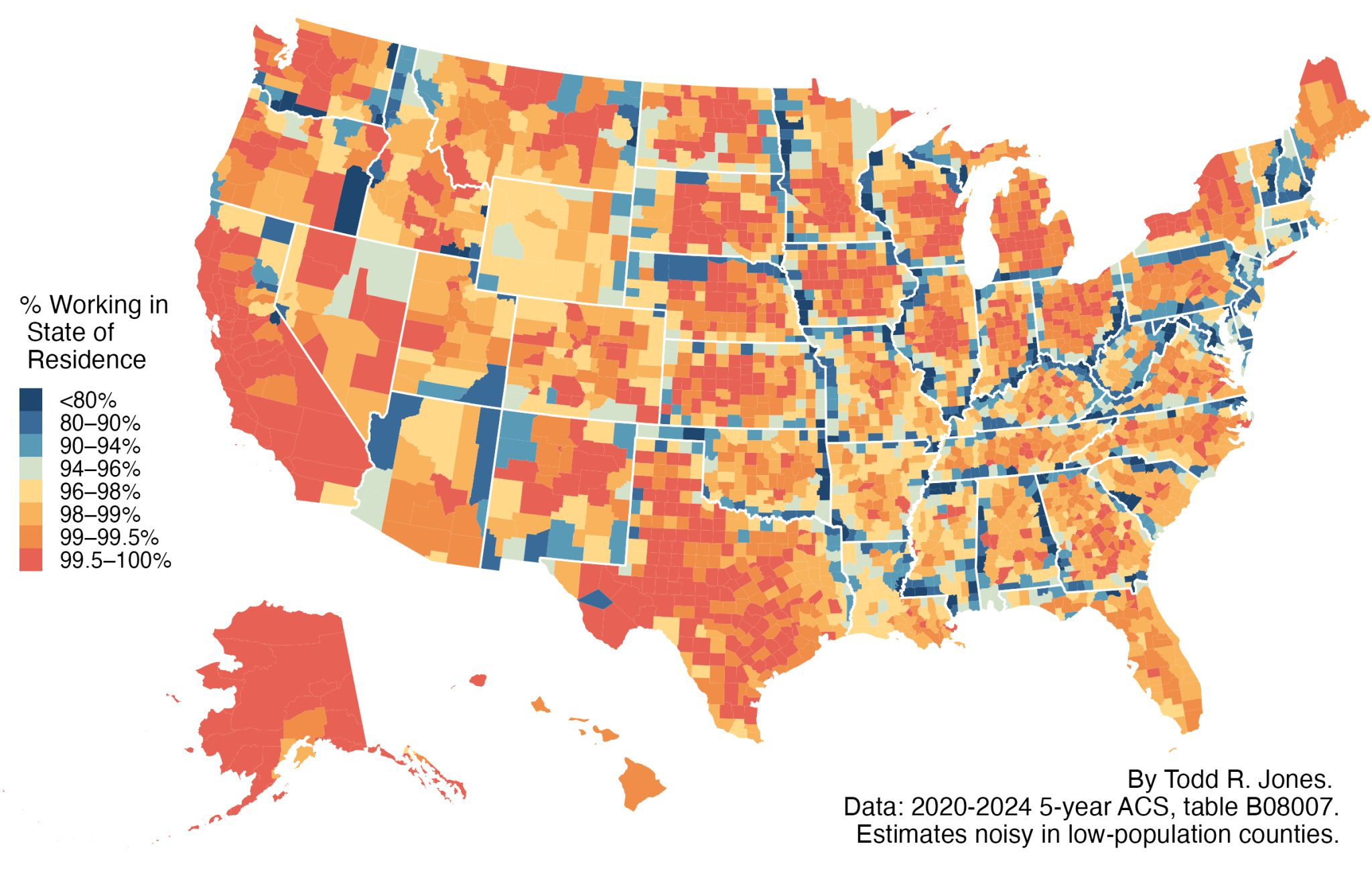
24) County elevation and working in state of residence: Geography still shapes labor markets. Terrain, state lines, and regional job centers all influence what a realistic commute looks like and how far a workforce conversation should extend beyond a single jurisdiction.
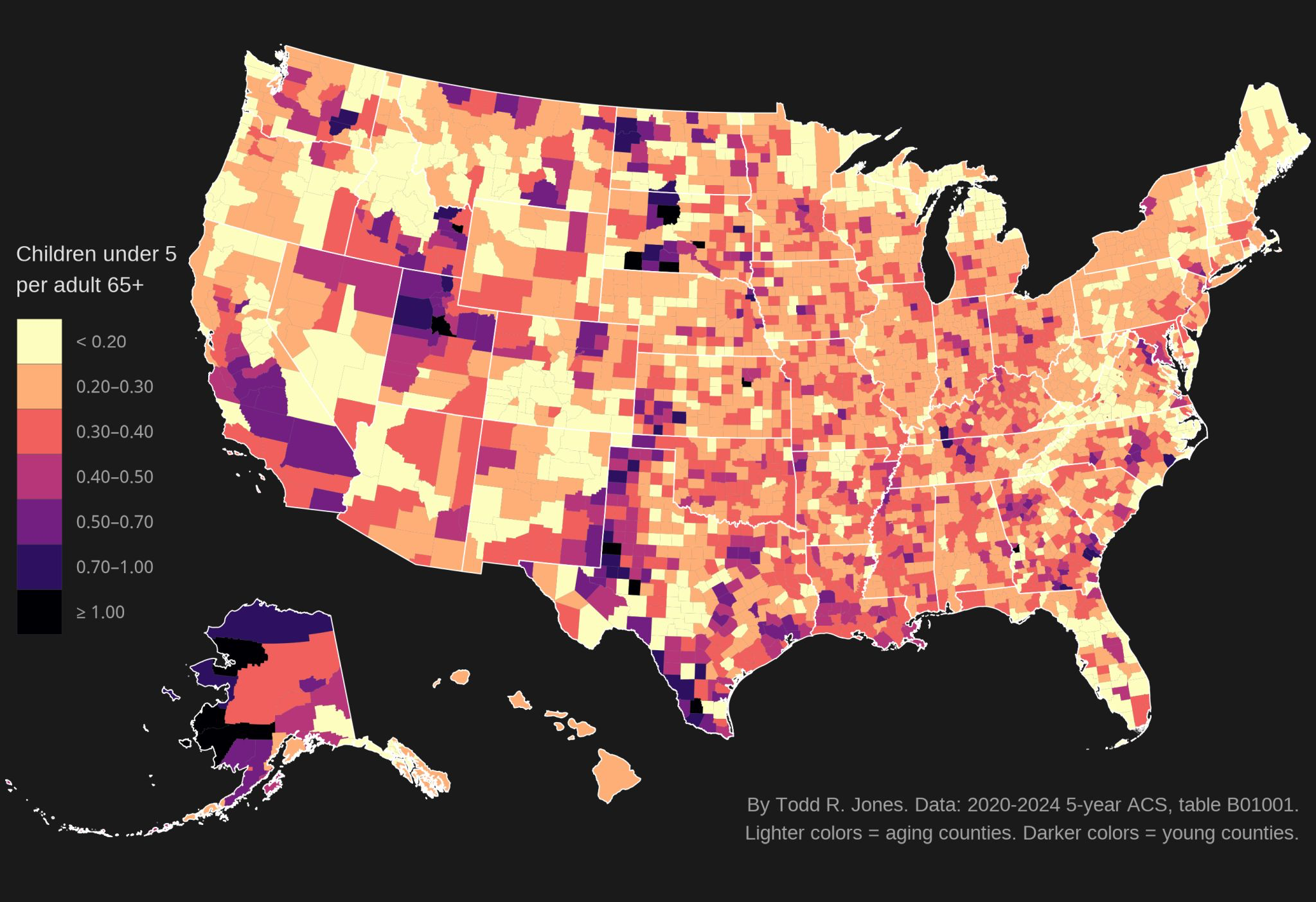
25) Children under 5 per adult 65 and older: Age structure is not evenly distributed.
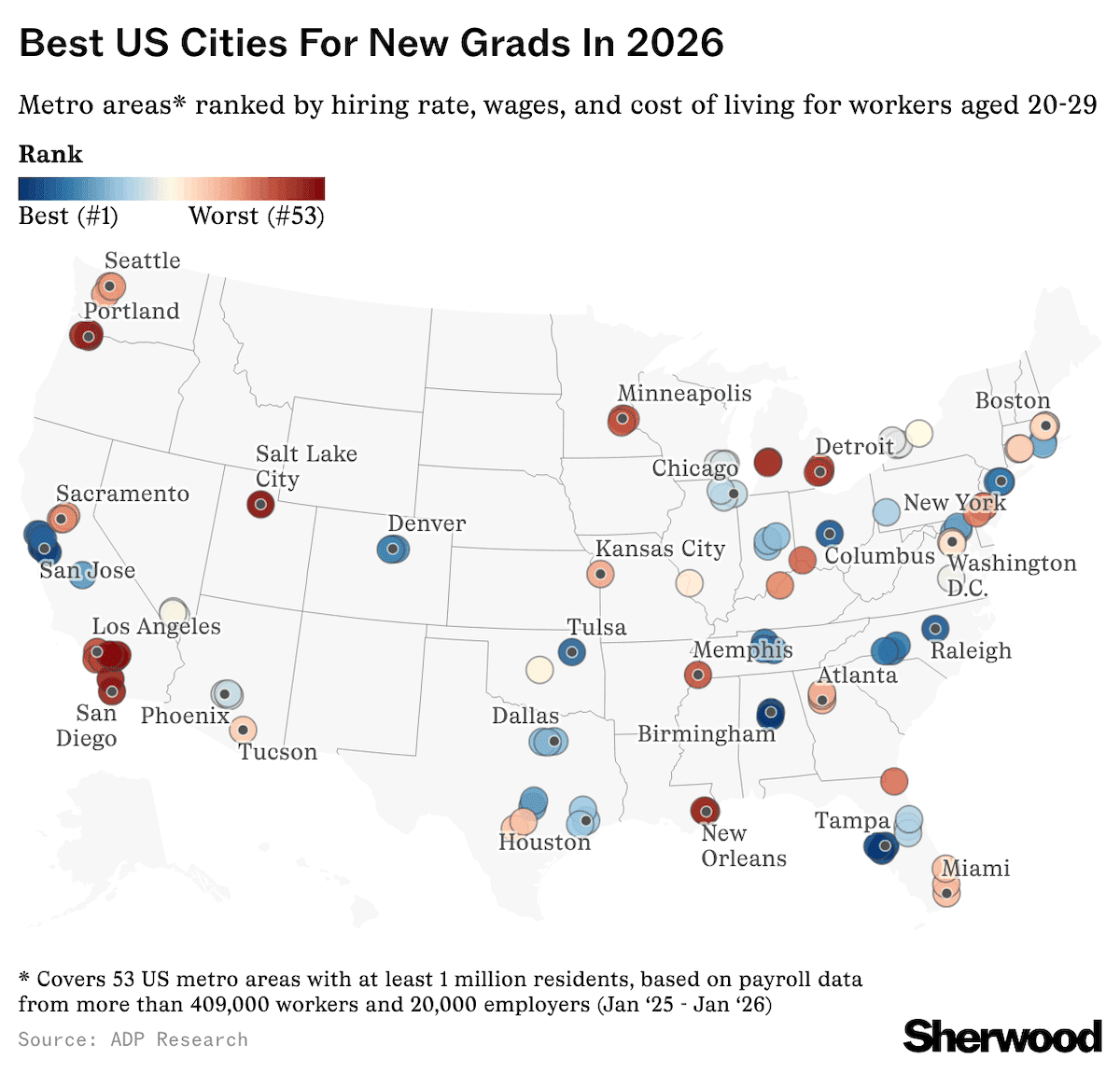
26) Which U.S. cities give new grads the best shot in 2026?: The best launch market is not always the most prestigious one.
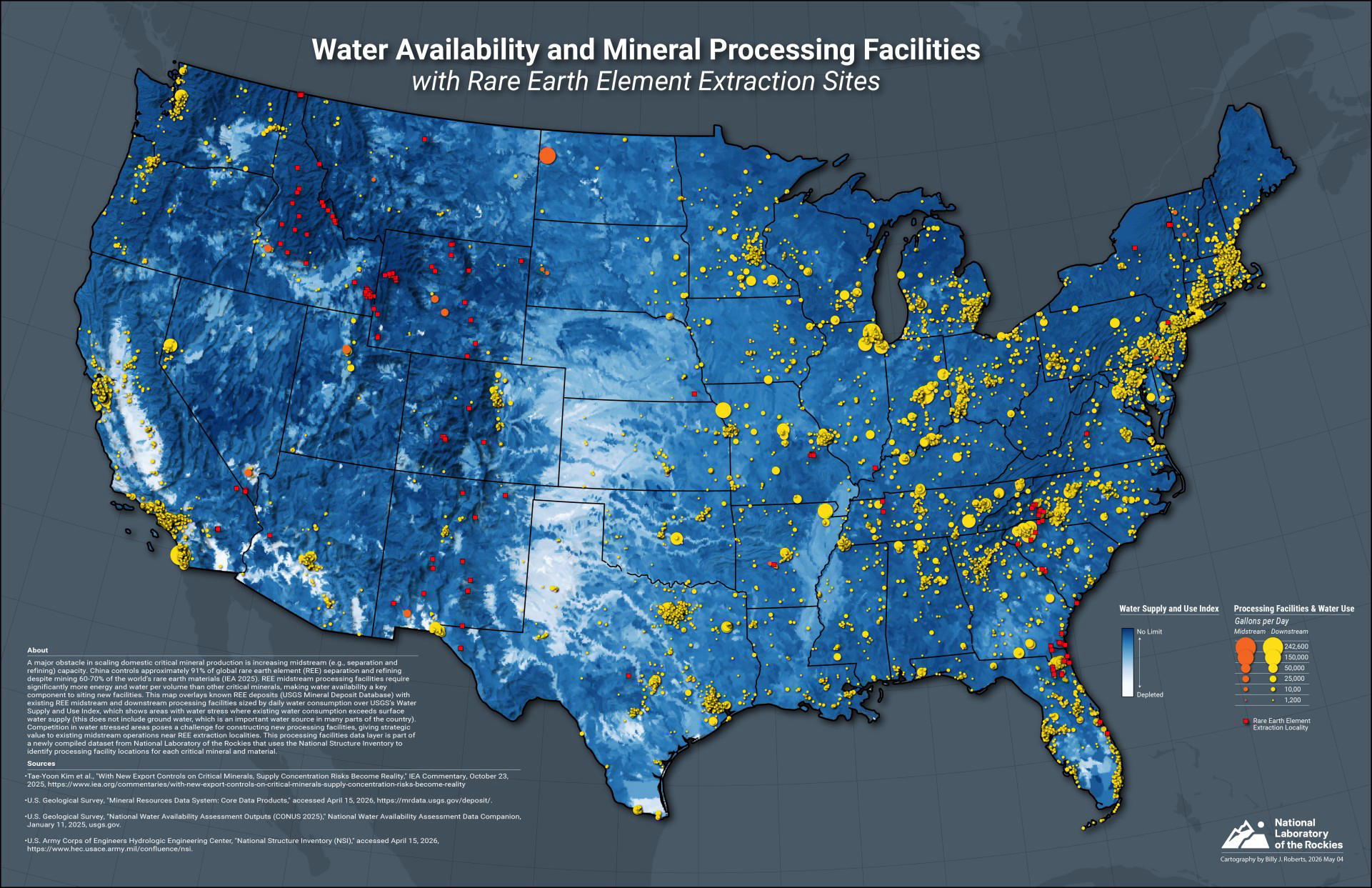
27) Water availability and mineral processing facilities: Critical-mineral strategy has a water map underneath it.
That's it for this week. Thanks again for reading!