19 Things Economic Developers Need to Know This Week
The stories Dane thinks you need to see. June 4, 2026 edition.

Welcome to this week's issue of What Economic Developers Need to Know This Week, where we collect links, charts, and ideas about the economy and place.
This week: 19 stories, graphics, and rabbit holes that are mostly relevant to economic development.
If you are wondering what to do with the info in this newsletter: send one item to a board member or elected official who still thinks economic development happens by accident.
Today's email is brought to you by Resource Development Group
Resource Development Group and Convergent Nonprofit Solutions have recently announced a merger of these two well respected firms. RDG is now operating as Resource Development Group, a Convergent Company and will lead the combined operations in economic development and chamber engagements. Meanwhile, the Convergent banner will take the forefront on efforts on supporting traditional philanthropic and higher education organizations
This merger maintains RDG's innovative and custom approach while also creating the deepest bench of economic development and chamber fundraising expertise in the industry, the most complete data set in the country regarding economic development and chamber funding, and the greatest flexibility to be able to support engagement models tailored specifically to every market, regardless of size.
Whether you’re a single county EDO ready to kick off your first fundraising campaign or a large regional organization on your third funding cycle, they have the team and experience to get you the results you’re looking for.
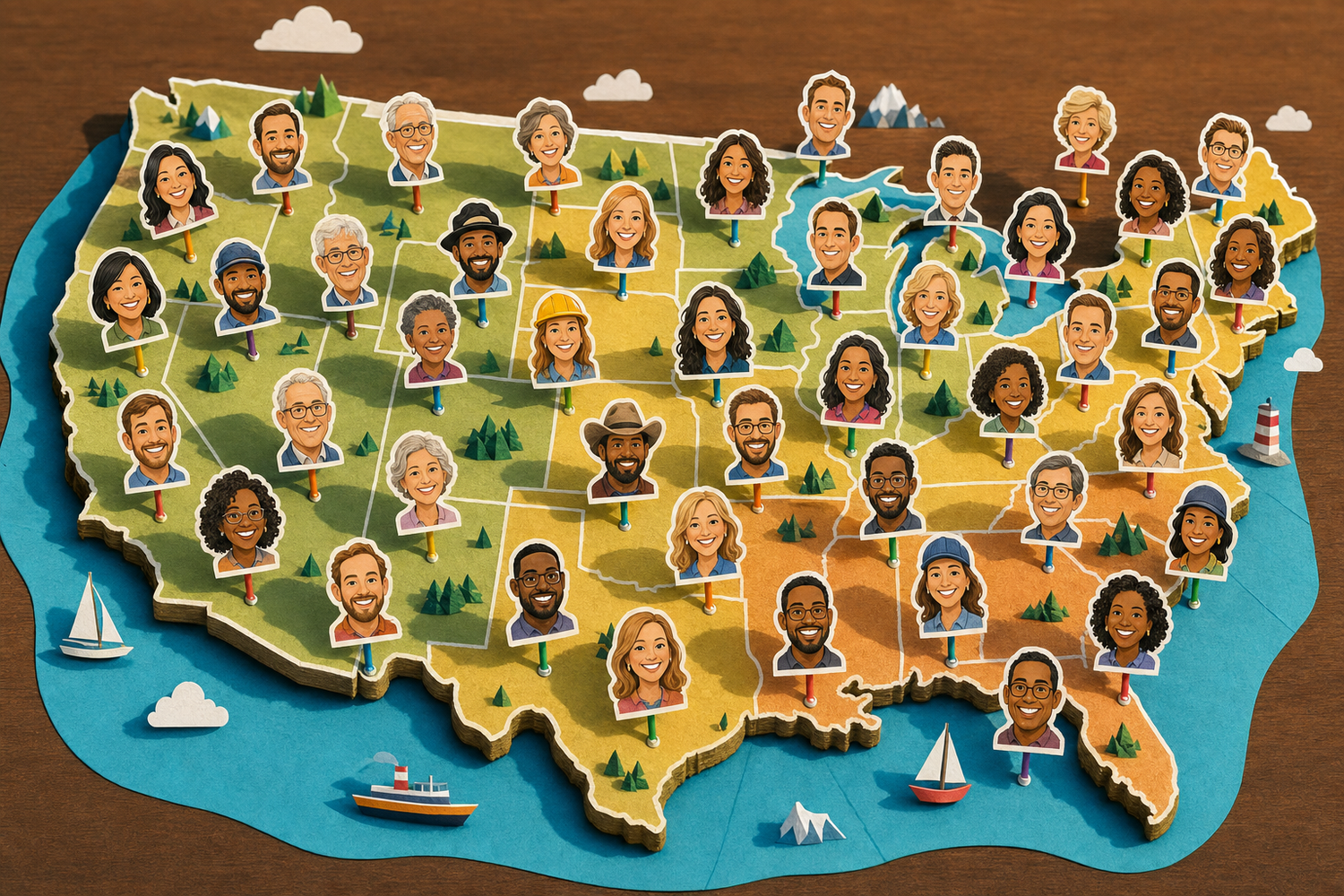
1) Economic development and developers in the news #246: 83 economic development executives and organizations in 28 states. Economic development is more interesting than people think. Read: Economic Development and Developers in the News #246.
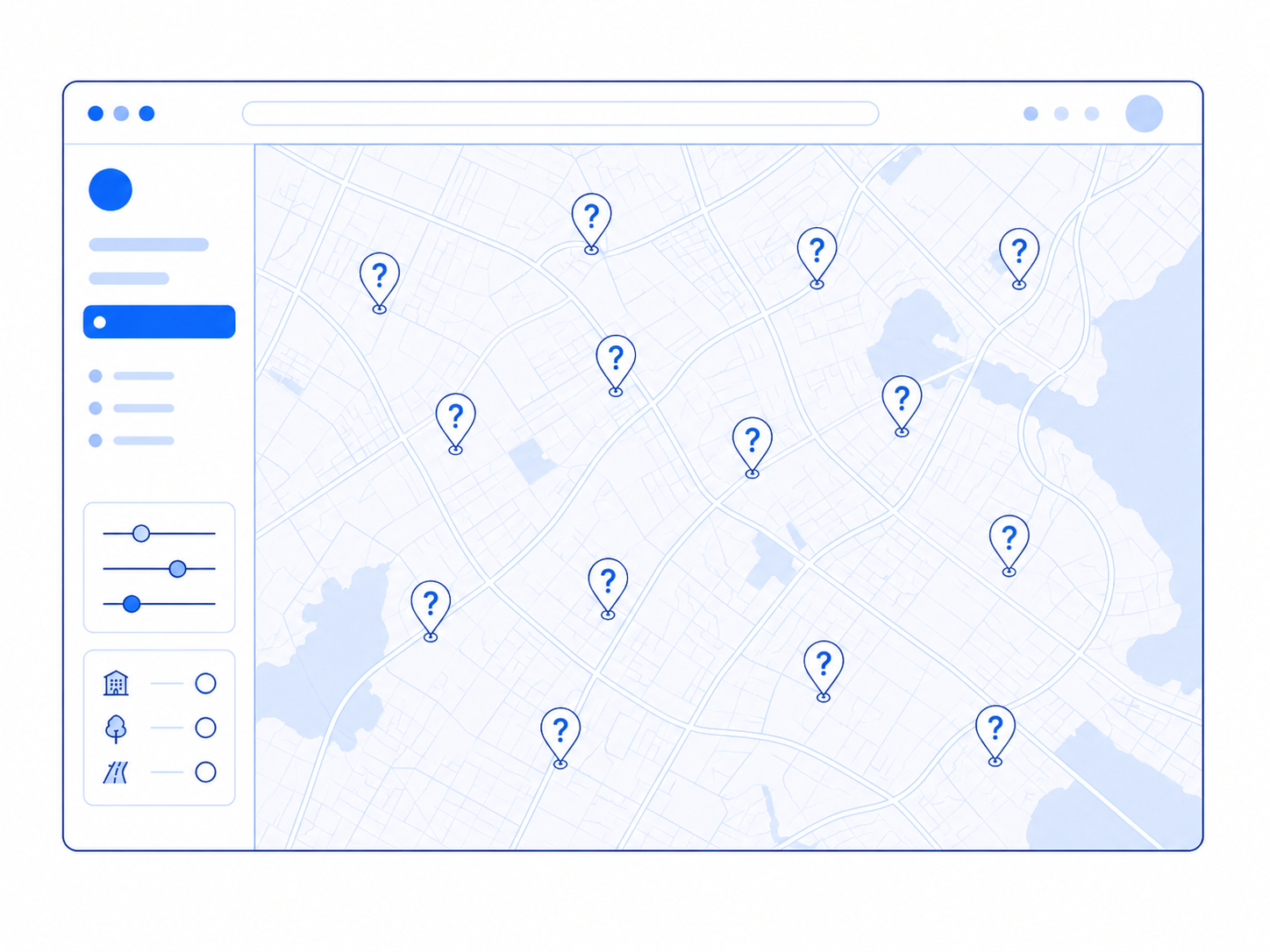
2) Your property map probably can't answer an RFI: I built Sitehunt because property maps don’t answer questions by themselves. They are fun to look at, but when an RFI comes in, the work usually moves somewhere else.
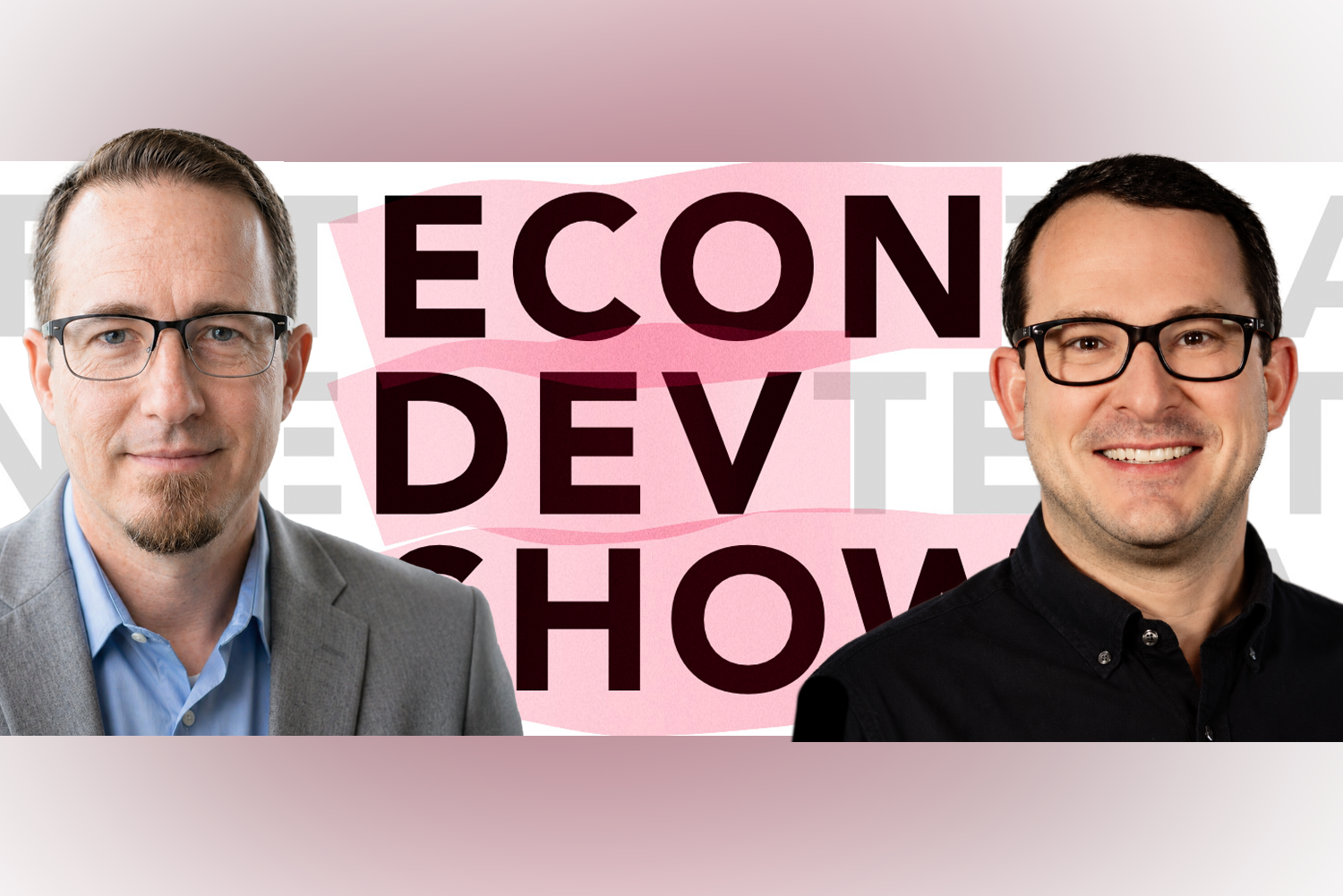
3) Podcast 221: In Huntsville, Alabama, music is part of the economic development strategy. Listen: Music as Economic Development with Matt Mandrella.
4) 26 new economic development jobs last week: Roles in 15 states, from $43,000 to $223,000. Browse: 26 New Economic Development Jobs This Week.

5) Last week's economic development and developers in the news #245: 23 economic development executives and organizations in 25 states. Read: Economic Development and Developers in the News #245.
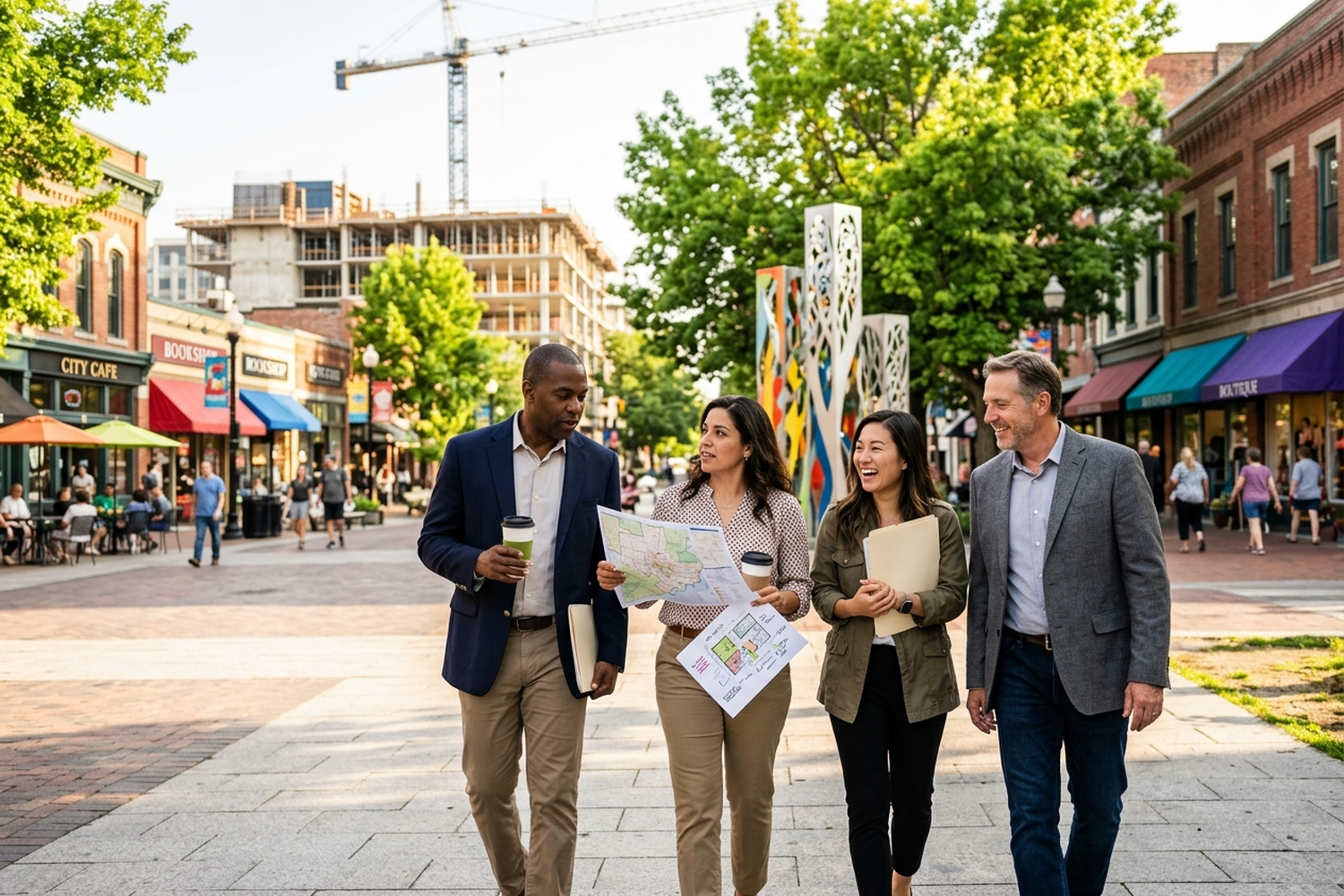
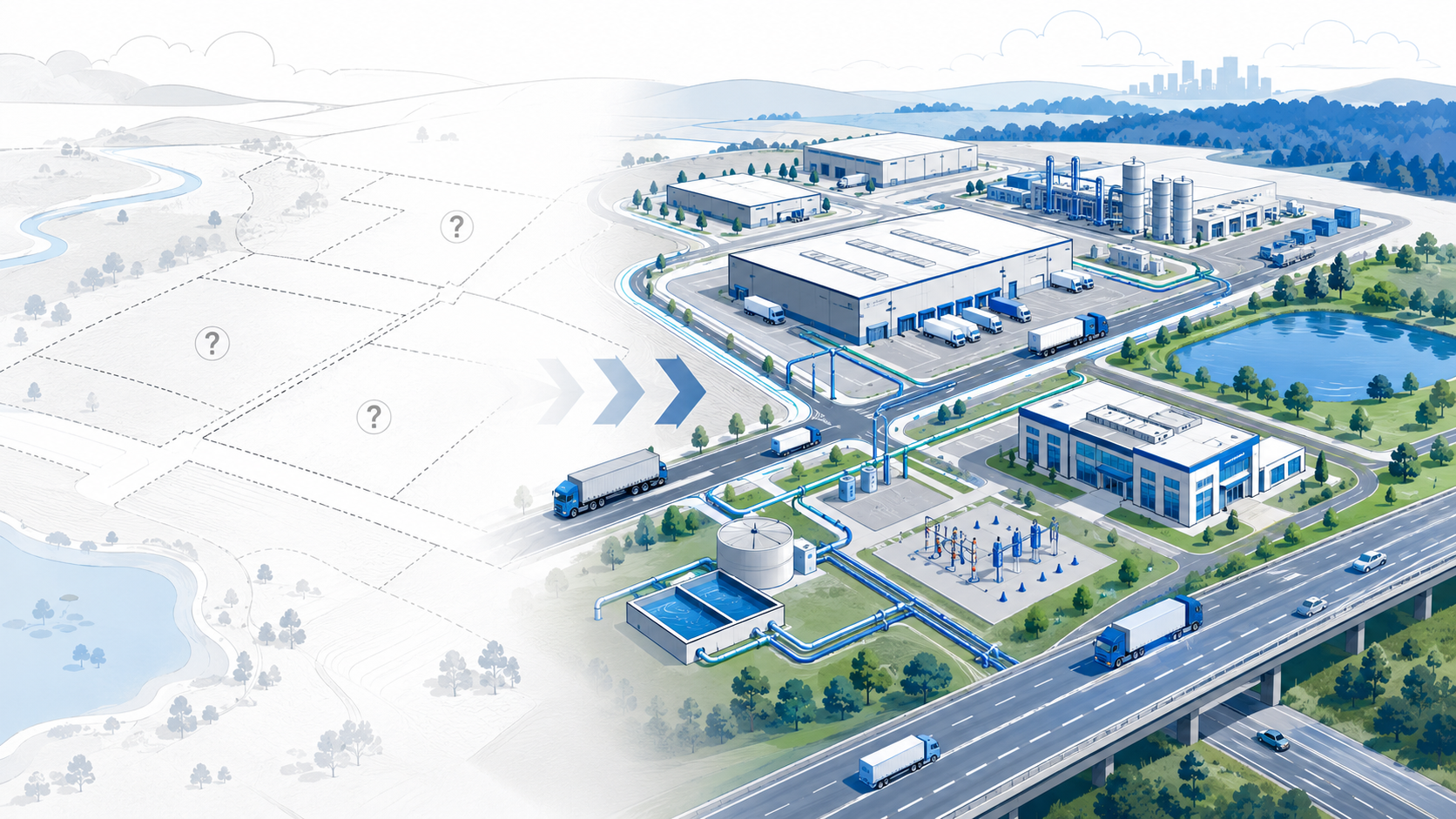
6) What a pre-positioned industrial park actually does for economic development: Land is not industrial product until a buyer can act on it. The value is in removing uncertainty before the prospect shows up. Read: What a Pre-Positioned Industrial Park Actually Does for Economic Development.
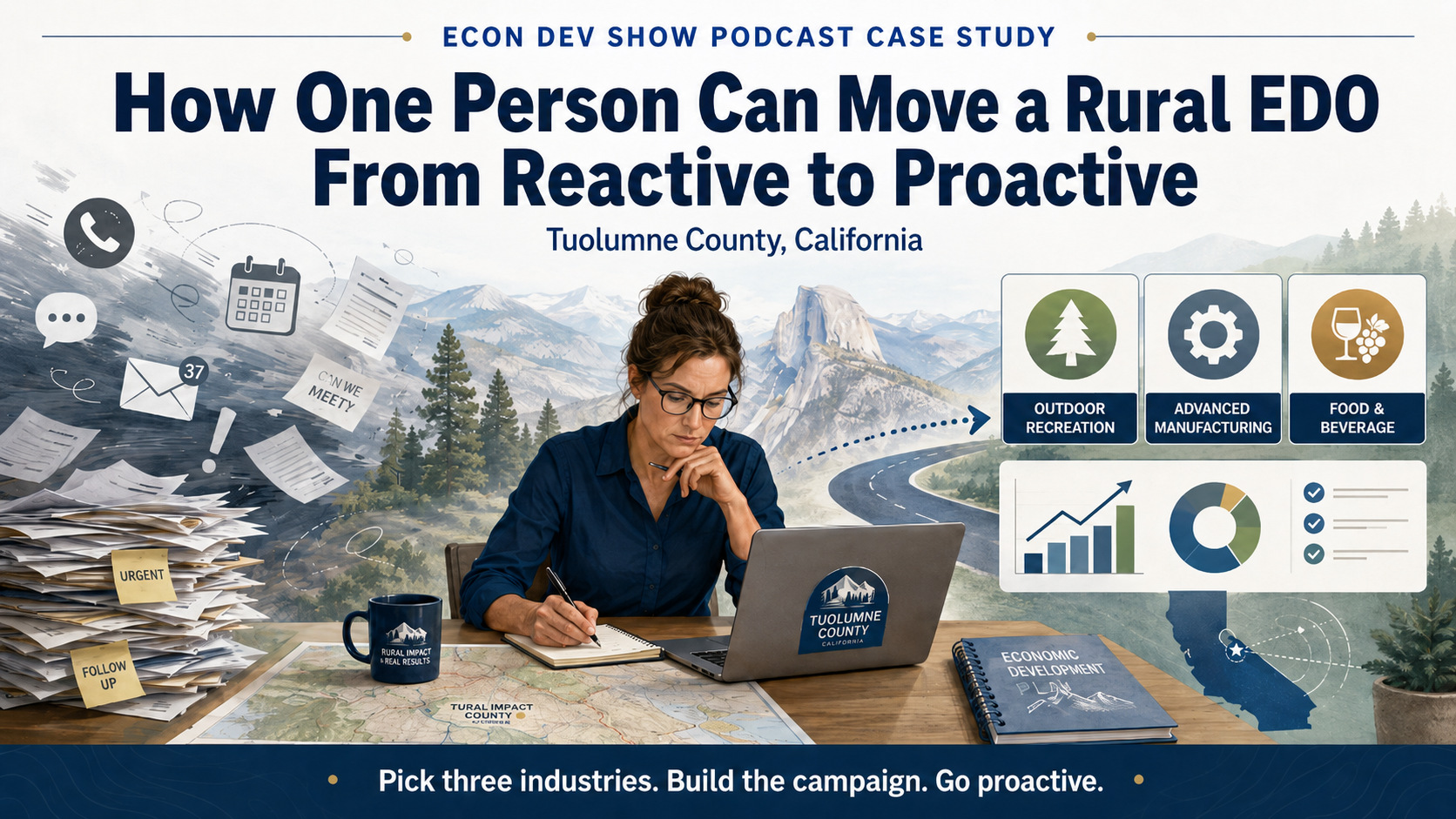
7) How a staff-of-one EDO can go proactive: Small teams still need a system. The goal is not doing everything, it is choosing the few relationships and follow-ups that can compound. Read: How a Staff-of-One EDO Can Go Proactive.
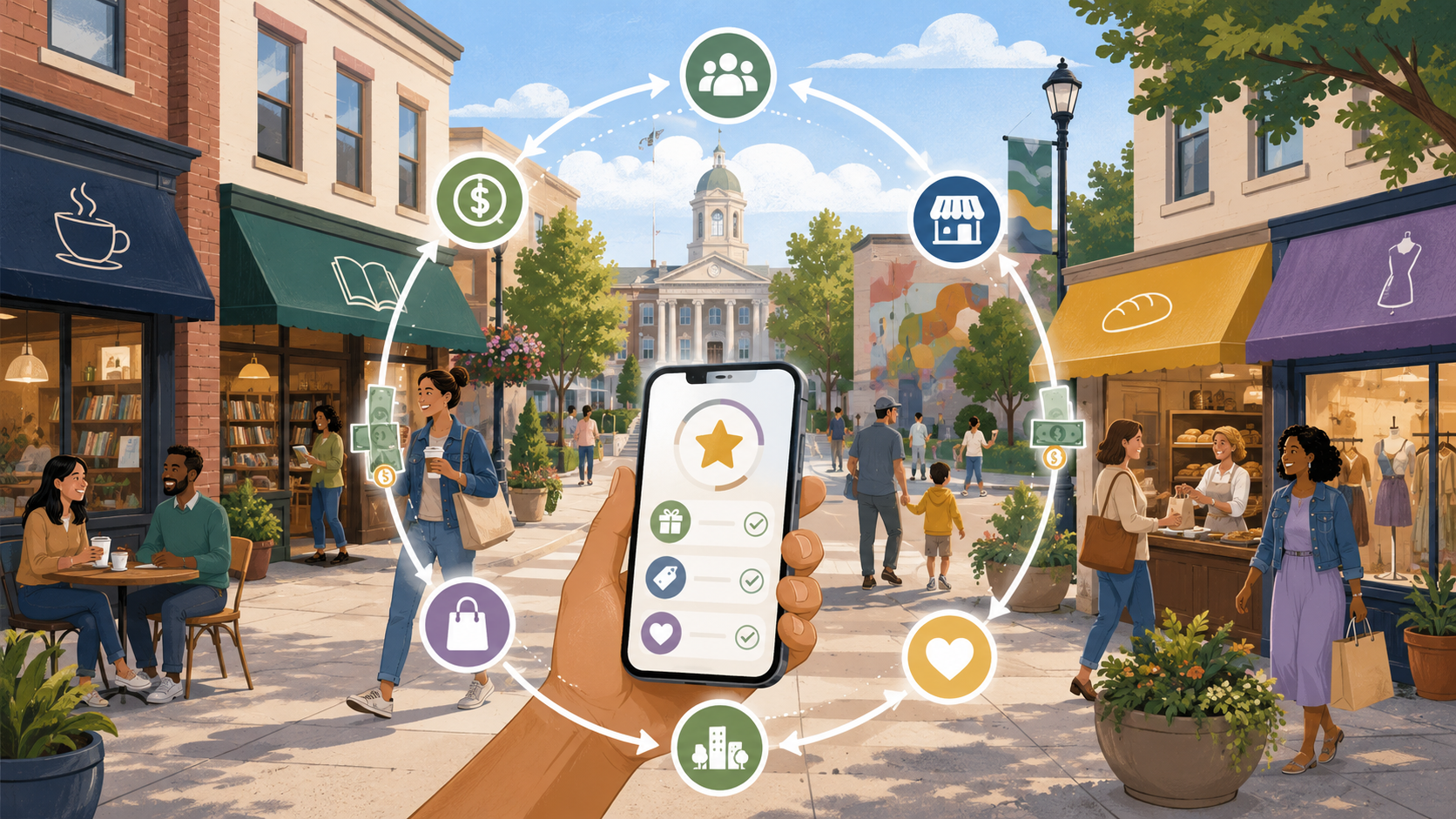
8) Shop local is not a slogan. It is a system: Local spending changes behavior only when the model works. Incentives, merchants, residents, and measurement have to pull in the same direction. Read: Shop Local Is Not a Slogan. It Is a System..
9) The economic developer as chief remover of obstacles: A better job description: Economic development should be judged by what friction it removes. Read: The Economic Developer as Chief Remover of Obstacles.

10) Devin Hillsdon-Smith on what site selectors actually want: Credibility beats readiness language. Communities need specific answers, documentation, speed, and risk reduction. Read: What Site Selectors Actually Want.
Are your sites RFI-ready?
Sitehunt helps economic development teams keep their sites and buildings organized, searchable, updated, and ready to package when a prospect asks.
No more scrambling through spreadsheets, GIS layers, PDFs, shared folders, and old emails when the next RFI lands.
Econ Dev Show readers can schedule a 15-minute exploratory call with Sitehunt.
Not a demo. Just a quick conversation about your property data workflow and where the bottlenecks are.
11) Where are the economies of scale in homebuilding?: There aren't really any, unless we build them in factories.
12) West Coast cities turn to vacancy taxes to grapple with housing crisis: Cities are trying to push idle property back into use. The economic development question is whether local rules change owner behavior without creating new distortions.
13) Americans are about to get a lot richer: Flatbed trucking demand is a hard-to-fake industrial signal. The video connects flatbed rejection rates, the I-35 corridor, reshoring, data centers, and AI capital spending.
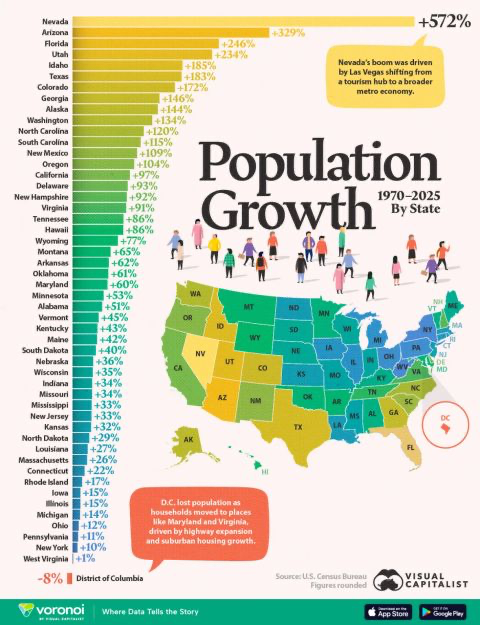
14) Population growth by state, 1970-2025: Long-run growth shifts markets, labor, and political weight. Nevada, Arizona, Florida, Utah, Idaho, and Texas sit near the top, while D.C. is the negative outlier.
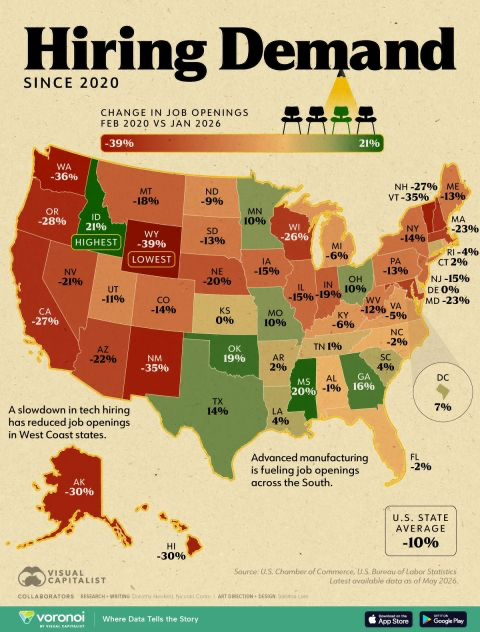
15) Hiring demand since 2020: The labor market is changing unevenly, and is highest in Oklahoma.
16) Real-estate agents are quitting the slow housing market: In fourth year of struggling market, even real-estate professionals who made it this far are reaching breaking point.
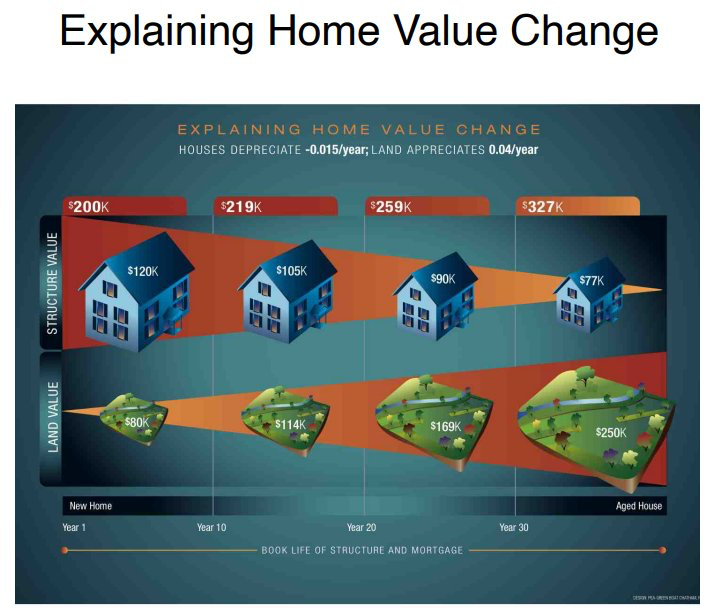
17) Land appreciates, homes depreciate: A home's value is two stories layered together. We can't think about the housing shortage (and how we recover) without acknowledging this. Read: Land Appreciates, Homes Depreciate.
18) Damien Denmark: Communities grow at the speed of relationships. The work still comes down to showing up, listening, earning trust, and helping people move things forward. Read: How a Move to Liberal, Kansas Changed My Life.
19) Who ya gonna call?: Rural counties miss opportunities because businesses, railroads, and developers often have nobody local to call. The fix: build county-wide EDOs that actually represent the whole county, not just the county seat. Small towns usually can’t fund economic development alone, but several towns pooling resources can support at least a part-time or contracted ED presence. The key is structure: real board representation, clear bylaws, shared funding, and someone whose job is to know the land, utilities, buildings, owners, and local contacts. The goal is not a big bureaucracy. It is much simpler: be findable, answer the phone, and know the county well enough to help when opportunity comes looking.